How My Family Celebrates Mid-Autumn Festival in China: A Different Mid-Autumn Festival
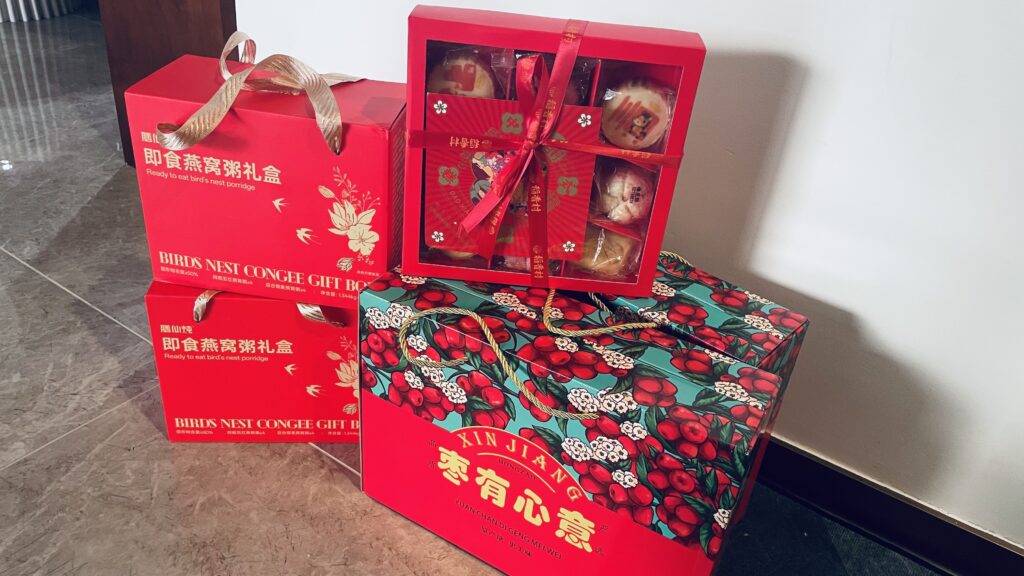
There are three red gift boxes lined up by my front door right now, and I keep almost tripping over them every time I walk past.
The Mid-Autumn Festival is two days away, and for the first time in a while, I’m not spending it the way regional customs might suggest.
In many parts of China, Mid-Autumn ranks as the second-biggest homecoming occasion after the Spring Festival. Married daughters traditionally bring their spouse and children back to their birth family to “send festival greetings”, taking mooncakes, wine, fruit and meat as gifts. This custom has deep roots; similar homecoming traditions for married women can even be traced back centuries, such as the Dragon Boat Festival once being known as the “Daughters’ Festival”, when married daughters also returned to their parents’ home.
Our family setup is this: my parents’ home is a 2.5-hour drive away, while my in-laws live just one hour by car. The official Mid-Autumn break plus the weekend gives us three days off. This year’s schedule is unusual though — after the Mid-Autumn holiday, we only have three working days before the 7-day National Day holiday.
So we made a practical plan: spend Mid-Autumn with my husband’s parents, then travel back to my parents’ house for National Day, and stay for five or six days there. That way we get quality longer time with my family.
My younger brother and his girlfriend also settled in the same city in Hunan where we live, only a 30-minute drive from our place. We’ll invite them over to join our gathering. No trip back to my parents’ house for Mid-Autumn itself. No one big table with everyone sitting around it at the same time. Instead, my husband is taking our daughter to his parents’ place for lunch, my younger brother and his girlfriend are coming to ours for a barbecue, and somewhere in the middle of the afternoon, all of us are supposed to end up in the same room.
It’s not the postcard version of a Chinese holiday. But it’s ours, a different Mid-Autumn Festival, and honestly, I’ve made peace with that. Here are the five real Mid-Autumn Festival traditions — gifts, food, logistics, and all — that make up how my family actually celebrates Mid-Autumn Festival in China this year.
1. Understanding What the Mid-Autumn Festival Actually Is
If you’re not familiar with it, the Mid-Autumn Festival — 中秋节,or Zhōngqiū Jié — falls on the 15th day of the eighth lunar month, which usually lands somewhere in September or early October on the Western calendar. This year, that’s September 25, 2026.
The name literally means “middle of autumn,” and the festival has always been tied to the full moon: family reunion, gratitude for the harvest, and the quiet hope that everyone you love ends up under the same sky, even if not the same roof. For our family, Mid-Autumn Festival 2026 has meant rethinking what that “same sky” actually looks like when two households are involved.
The food most people associate with it is the mooncake, small, dense, often filled with lotus paste or red bean, usually stamped with a pattern on top. A traditional formal Mid-Autumn family feast would typically feature eight main dishes, and many families serve hairy crabs as a seasonal highlight. This year, we’re skipping that elaborate spread and swapping it for a casual backyard barbecue instead, though I’ve kept aside five Daoxiangcun mooncakes for us — my brother, his girlfriend, and our little family — to keep a small festive ritual intact.
But if you actually live here, the festival is less about the mooncakes and more about the logistics of getting your whole extended family fed and seen in one 24-hour window. Which is exactly the part nobody warns you about.
2. Why We’re Skipping the “Big Reunion” This Year
My husband’s parents live one hour’s drive from us. My own parents live 2.5 hours away, far enough that a round-trip Mid-Autumn Festival visit would eat up most of the holiday just in travel.
We’re already planning to go back and see my parents during the upcoming National Day holiday, staying for five or six days, so this time around, I made the call to skip the long trip and stay local. That meant splitting the day instead of merging it.
My husband and daughter will spend the morning and part of the early afternoon with his parents. I’ll stay home, get the barbecue ready, and host my brother and his girlfriend. Then everyone comes back together once lunch on that side wraps up.
It sounds a little chaotic written out like this. In practice, it’s just what happens when a family has more than one household to think about. Nobody sat down and planned it as a system, it’s just the version of “together” that actually fits our week. These are exactly the kind of moving pieces I now keep on a Holidays To Do List instead of trying to hold them all in my head.
3. The Gifts: One Set, Made in Duplicate
If there’s one part of Chinese holidays I still genuinely enjoy, it’s picking out Mid-Autumn Festival gifts. Not buying them — picking them. There’s a difference. A gift for your parents during Mid-Autumn Festival isn’t really about the object. It’s a small, wordless way of saying “I thought about you,” and I take that part seriously every year.
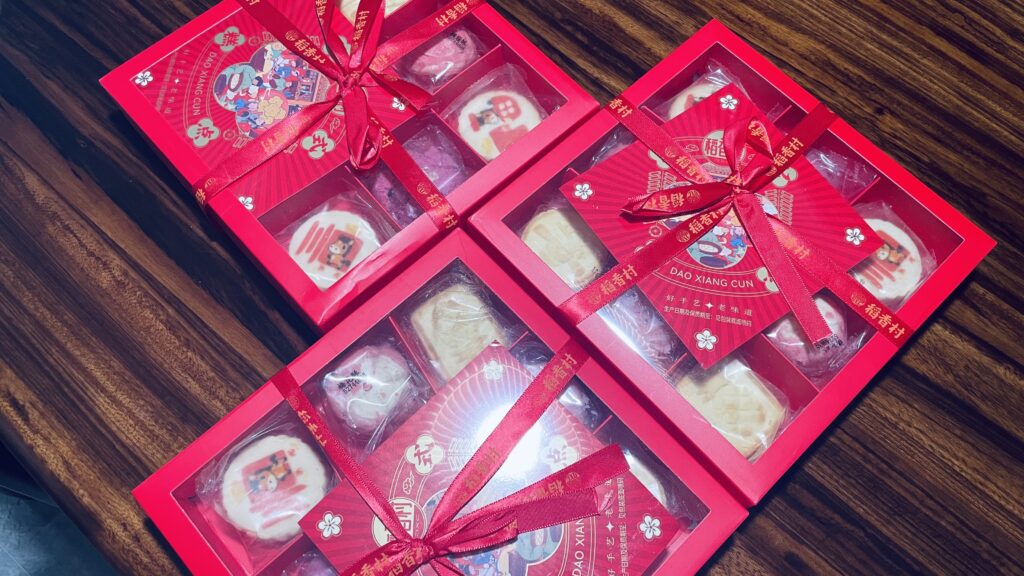
This year I put together one gift set and had it made in duplicate, one for my husband’s parents, one for mine. We bought three boxes of Daoxiangcun pastries total; the third is for our own family to sample and enjoy, so we never open or damage the gift boxes meant for our parents. Once the gift itself is decided, checking off specific items on a Holidays Shopping List is how I make sure nothing gets left behind at the store.
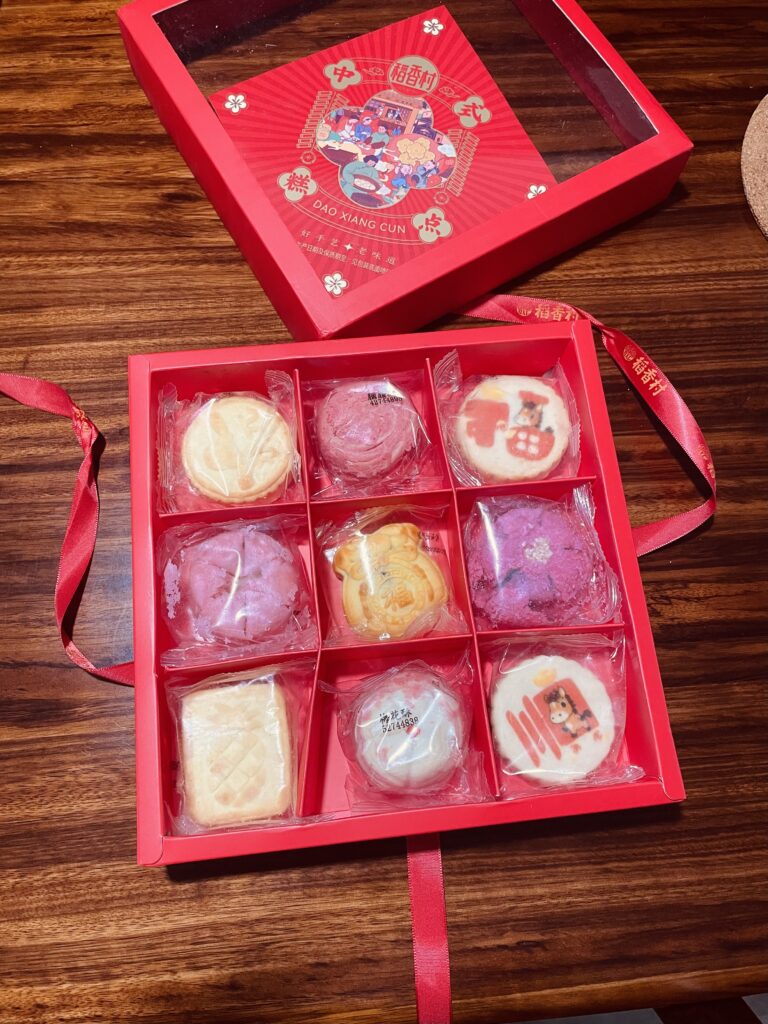
A Daoxiangcun mooncake and pastry box. Daoxiangcun is one of those old-school Beijing pastry brands that basically every Chinese household recognizes on sight. Our gift boxes came as a nine-piece box, each pastry wrapped individually in its own compartment: a mix of classic lotus-paste rounds, a couple of pink rose-flavored ones. Here’s an important detail: my mother-in-law has diabetes and does not really care for Daoxiangcun sweets. My father-in-law, my dad and my mom, however, can enjoy them without issue. That’s part of why I paired these pastry boxes with extra practical gifts for the moms.
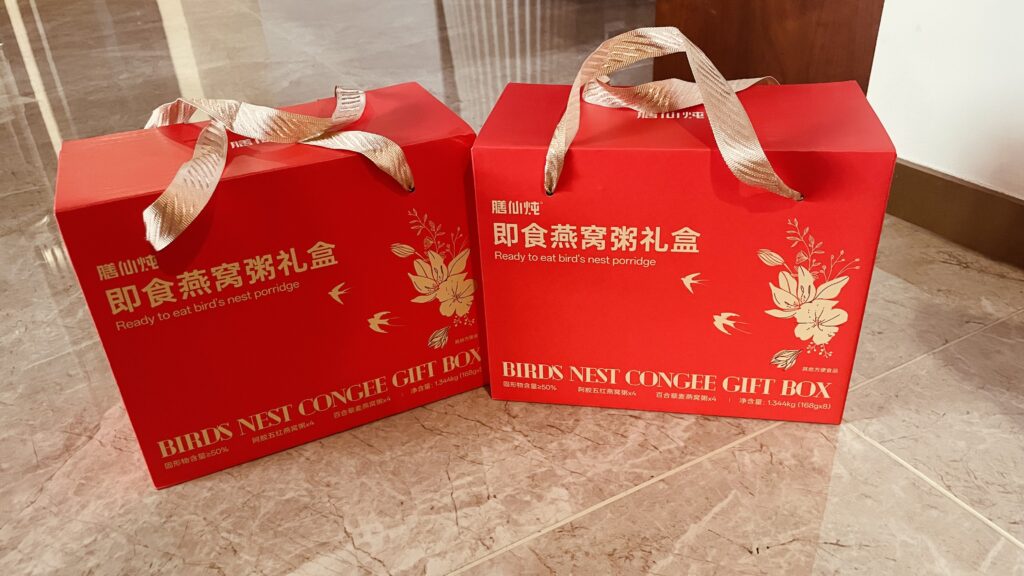
A ready-to-eat bird’s nest congee box. This one is less “festival tradition” and more “thing I know they’ll actually use.” It comes packed as eight individual pouches, fully ready to eat, no heating required at all, and it’s the kind of gift that quietly gets used up over the following weeks instead of sitting unused in a cupboard.
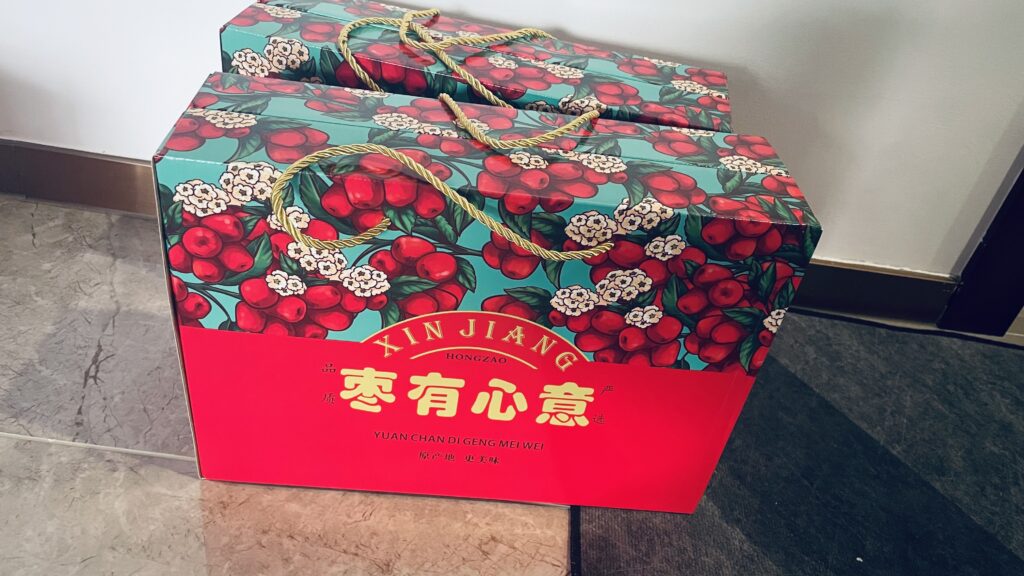
A box of Xinjiang red dates. Red dates show up in Chinese cooking constantly — soups, teas, breakfast congee — so this is one of those gifts that’s genuinely useful rather than purely decorative. The box itself is worth mentioning too: a teal background covered in painted red fruit and little white blossoms, with the brand’s name stamped across a red band at the bottom. It photographs better than most food packaging has any right to.
Something small and practical for both moms, on top of the traditional set. I picked vitamins for my mother-in-law and my own mother. I like pairing something festive with something useful, a beautiful box is nice, but knowing the person opening it will actually reach for it later is what makes a gift feel worth giving.
We Tasted Them First — And I Don’t Regret It
Before either gift box left the house, the three of us sat down and split one of the pastries from our own personal Daoxiangcun box between us, mostly out of curiosity. I wanted to taste what we planned to gift our parents, and I’m glad we did.
I picked the one called 福气满满 — roughly, “full of good fortune” — a small round pouch-shaped pastry with a soft lotus filling and just enough sweetness to make you want a second bite you’re not going to get, because your daughter has already claimed it. My daughter went straight for the 状元饼,the “top scholar” cake traditionally associated with academic success and good luck for the year ahead, and then circled back for a 凤梨酥,a dense little pineapple shortbread that disappeared from her hand faster than I could take a photo of it. My husband ended up with the 梅花酥,a flaky, layered pastry folded to look like a plum blossom, with a nutty filling that’s a little more subtle than the others.
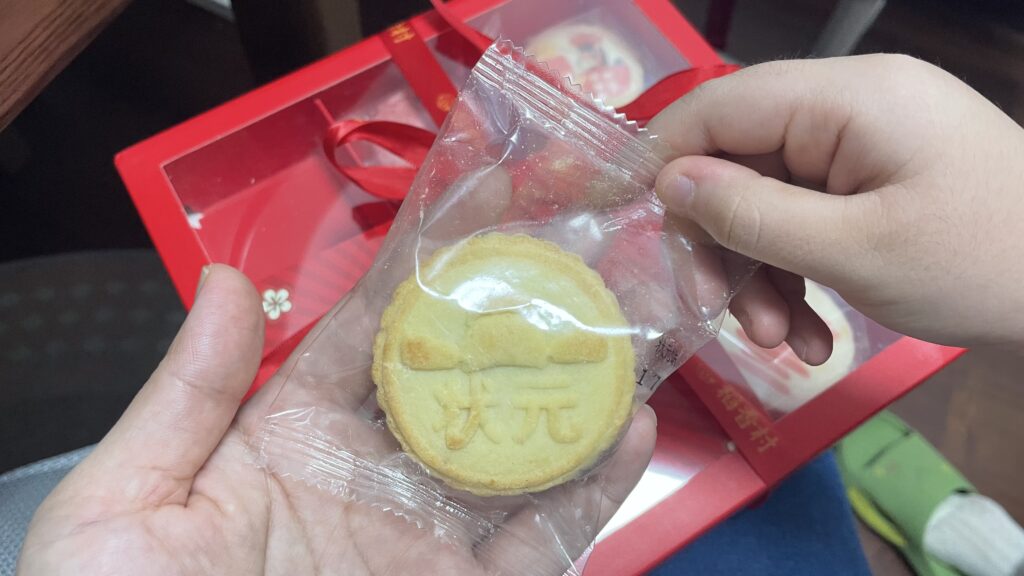
Every single one was better than I expected from a gift-box pastry, genuinely delicate, not overly sweet, the kind of quality where you can tell someone actually cared about the recipe instead of just the packaging. We hadn’t even reached the actual festival yet, and the three of us were already sitting at the kitchen table saying “okay, this already feels like Mid-Autumn Festival.” That’s a good sign for a gift you haven’t even given away yet.
If you’re outside China and want to try something in this spirit, Daoxiangcun doesn’t ship internationally, but this mixed mini-mooncake box or this Cantonese-style assortment get you close to the same idea, a few different fillings in one box, good for sampling before you commit to a favorite.
My husband will take one full set to his parents’ place this weekend. I’ll bring the other set with us when we visit my own parents during National Day. Same gifts, different day, different household, and somehow that doesn’t bother me the way I thought it might.
4. Yes, We’re Having a Barbecue for Mid-Autumn Festival
Here’s the part of the plan that might sound a little unconventional: while my husband and daughter are at his parents’ for a traditional lunch, I’m staying home to prep a full backyard-style barbecue for when my brother and his girlfriend arrive.
The list so far (the same list living on the Table / Menu Plan block of my Family Celebration Planner, so nothing gets forgotten at the store):
- Shrimp
- Beef fat
- Lamb skewers
- Beef
- Squid
- Chicken wings
- Red bell peppers
- Beef-wrapped enoki mushrooms
- Chinese chives
- Grilled garlic
- Fried rice, because no meal in my house is complete without a starch someone will inevitably ask for seconds of
It’s not remotely a “traditional” Mid-Autumn Festival table. There’s no whole fish, no elaborate eight-dish spread or hairy crabs this time. It’s just good food, cooked outside, eaten with people I like being around. And if I’m honest, I think I’ve come to prefer this version. We’ll pull out those five reserved Daoxiangcun mooncakes after dinner, to keep that small mooncake ritual alive while we watch the moon.
5. What “Reunion” Actually Looks Like in Our Family
The word most associated with this holiday is tuányuán — reunion, togetherness, everyone in one place. But the longer I live this life, the less I think reunion has to mean “all at the same table at the same hour.”
This year, reunion looks like my husband and daughter having lunch across town while I’m at home lighting a grill. It looks like my brother showing up with his girlfriend before the sun goes down. It looks like everyone eventually converging in one kitchen by evening, even if we didn’t all start the day in the same place.
I still think that counts.
Celebrating With a Kid in the Mix
My daughter is at the age where she understands a holiday is happening — there are gifts, there’s food she doesn’t normally get, and everyone seems a little more relaxed than usual — but she’s not old enough to care about the “correct” way to do any of it. For her, Mid-Autumn Festival is a plate of pastries she gets to pick favorites from, a barbecue smell in the evening, and hopefully a clear enough sky to actually see the moon.
I’ve stopped worrying about whether she’s absorbing the “right” version of the tradition. She’s absorbing a version — ours — and that seems like enough. She’ll remember reaching for a second pineapple cake before she remembers anything about the lunar calendar, and honestly, that feels right.
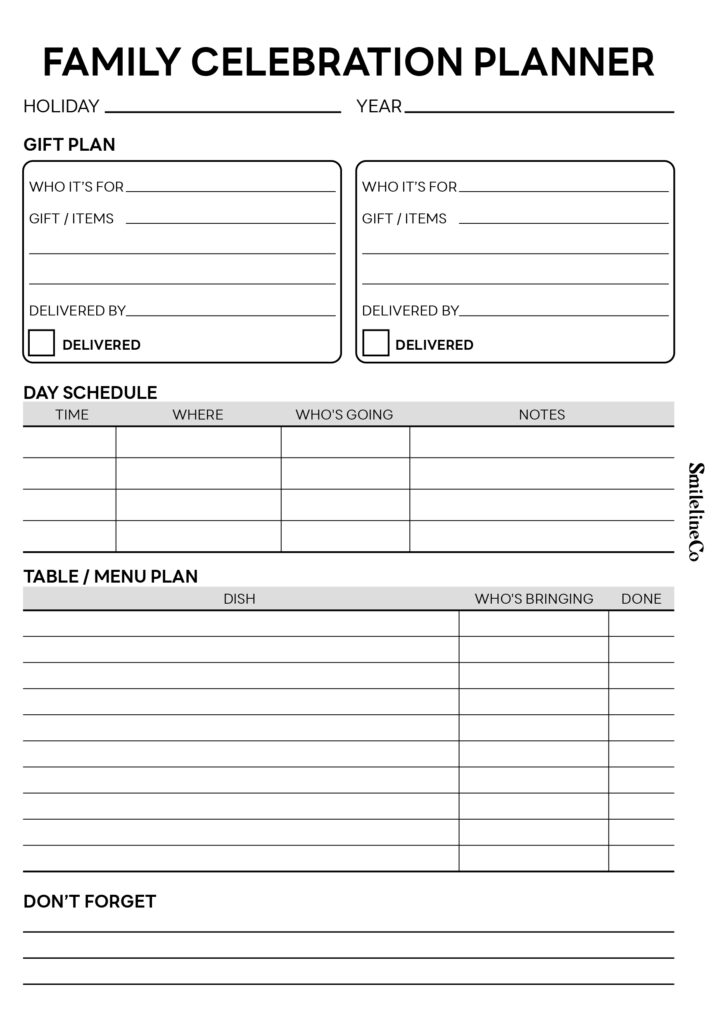
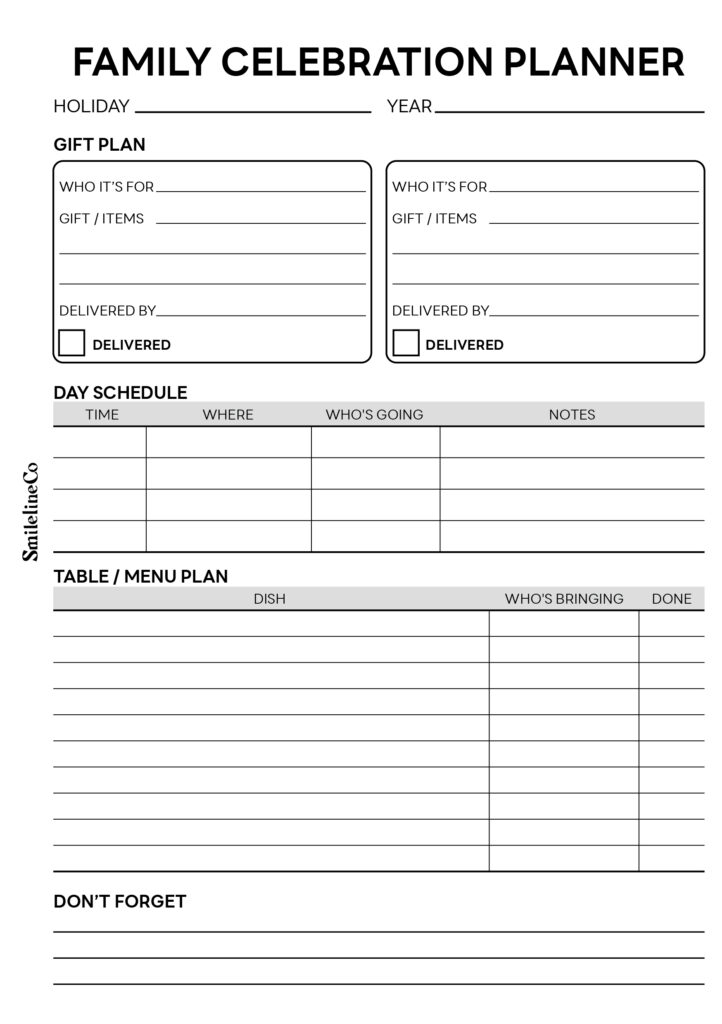
This is one of those weeks where I wish I’d had a single page to keep everything on — instead of half a gift list in my notes app and half of it in my head. So I made one. The Family Celebration Planner is a simple one-page layout with a gift-list column for each household and a time-blocked schedule for the day, so you can see who’s going where and what they’re bringing without holding all of it in your head at once. It’s exactly the kind of thing I wish I’d printed out before this week started. (It’s also part of a bigger set called The Holidays Organizer, if you like keeping one system going for every holiday, not just this one.)
Download the Family Celebration Planner →
That’s the Plan — Real Life Comes Next
So that’s where things stand two days out from our Chinese Mid-Autumn Festival celebration: gifts packed , barbecue ingredients half-bought, and a schedule that only makes sense if you already know our family. I’ll be back after the festival to tell you how it actually went, whether the barbecue ran long, what disappeared off the table first, whether we got a clear sky for the moon, and how our little mooncake ritual turned out. I’ll be using the Mid-Autumn Festival Memories Page to write it all down before it blurs together.
Happy Mid-Autumn Festival — 中秋节快乐!
Read the follow-up: Chinese Mid-Autumn Festival: A Real Family Celebration in China — find out how our Hunan family’s split Mid-Autumn day unfolded, from the backyard barbecue and mooncake ritual to how our custom festival gifts landed with everyone.
A little note from SmilelineCo:
Printables, graphics, and design elements on this site are created by Smile of SmilelineCo and are for personal use only. Please don’t alter them, resell them, or redistribute them, for free or for profit, without written permission from me. If you’d like to share something with a friend, family member, or your community, please share the link to this blog post or to the shop page instead of the files themselves. Thank you for supporting my shop. Wishing you a wonderful life. ❤️