Our $8.16 Family Dinner in China: The $10 Challenge
How much does it cost for a family dinner in China, three people, sitting down at a real restaurant and ordering a normal meal?
Honestly, if you’d asked me before this, I wouldn’t have known the answer. When we go out to eat, we don’t usually calculate the cost per person. We order what we want, pay the bill, and go home.
But this time, we decided to try something a little different: Could a family of three sit down at a restaurant for a full dinner, and keep the total under $10?
Not cooking at home. Not grabbing bread or instant noodles to get by. A real sit-down dinner, with normal dishes, at a normal restaurant.
The answer turned out to be: yes.
Not only did we all get full, there was food left over on the table.
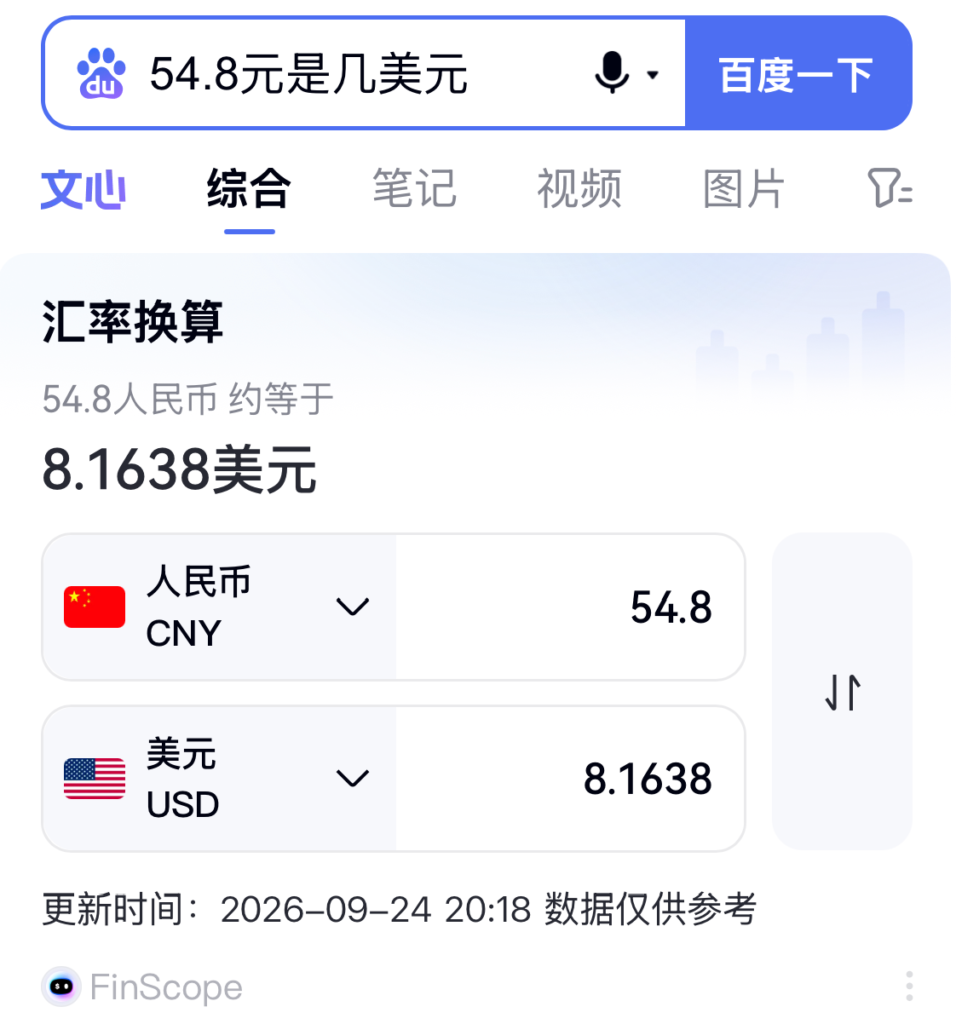
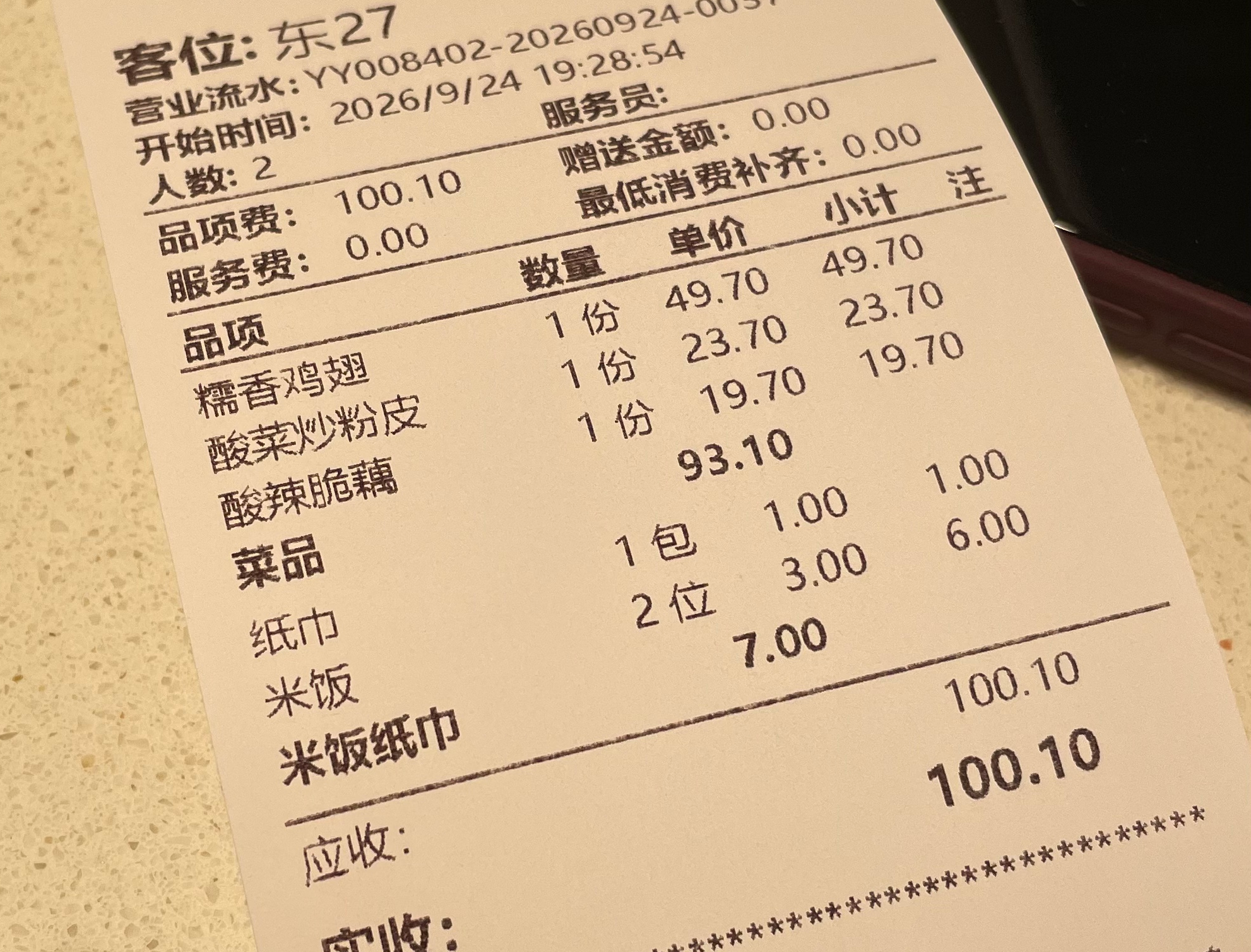
The restaurant’s original bill came to ¥100.10. But we’d already bought two ¥50 group-buying vouchers in advance, so what we actually paid was just ¥54.80, about $8.16 at that day’s exchange rate.
So this is our $8.16 family dinner in China.
Why We Decided to Try a $10 Dinner Challenge
There wasn’t really a special reason. Sometimes small ideas just show up in the middle of ordinary life.
That evening, as we were getting ready to go out for dinner, I found myself wondering: could three of us sit down at a restaurant, eat a full meal, and actually keep it under $10? Ten dollars didn’t sound like a huge budget on its own, but for three people, at a sit-down restaurant, with a full dinner, it suddenly felt like an interesting little experiment.
So we just tried it. I didn’t plan it out in detail, no calculating how much each dish “should” cost, and no hunting for the cheapest restaurant in town just for the sake of the challenge. We picked a restaurant we’d happily eat at on any other day and just saw what would happen.
How Chinese Group-Buying Coupons Made It Possible
This is probably the part that needs the most explaining: how did a ¥100.10 restaurant bill turn into a real cost of ¥54.80?
In China, it’s common to find restaurants offering group-buying deals through local lifestyle apps. Search for a restaurant on one of these platforms, and you may see deals such as:
- ¥50 voucher valid for ¥100 of food
- ¥79 voucher valid for ¥100 of food
- Set meals for two or three people
- Bundled dish combinations
The exact deal depends on the restaurant and the platform.
This time, we bought two ¥50 vouchers. Together, their face value was ¥100, but we only paid ¥54.80 to purchase both of them.
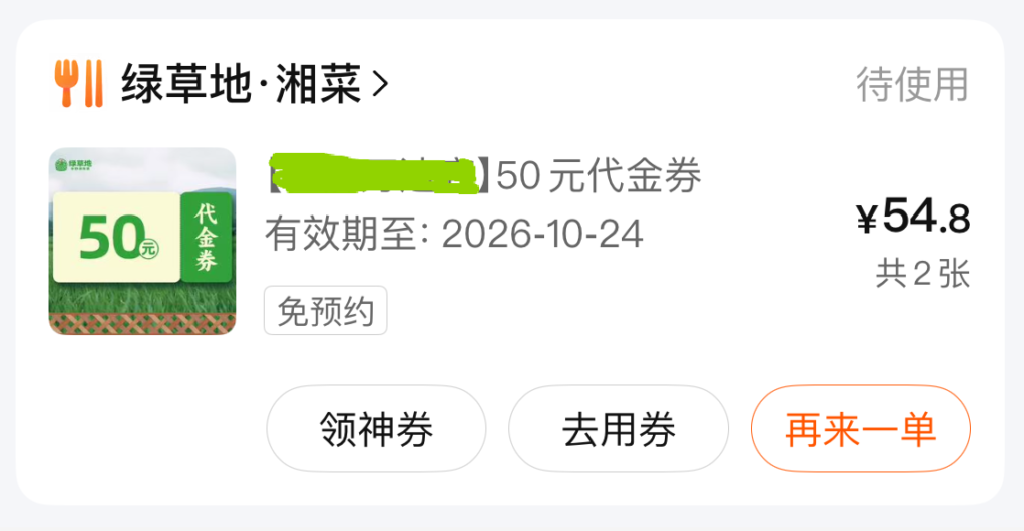
After the meal, we used both vouchers to settle the bill directly.
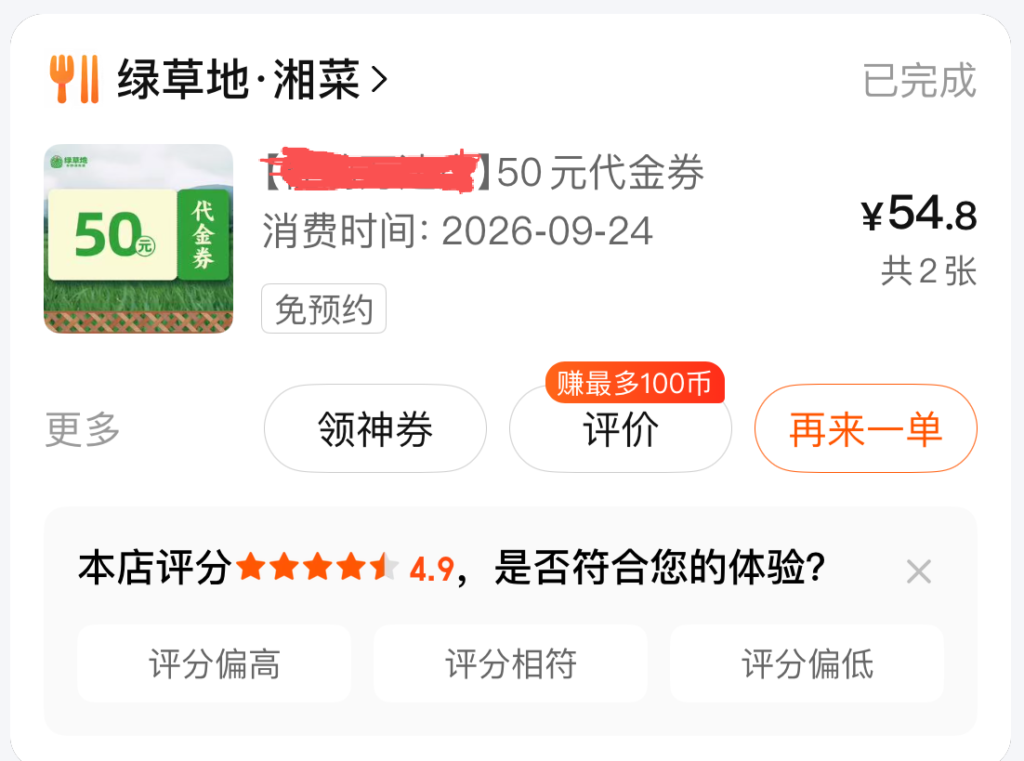
So there are really two numbers here:
- Restaurant’s original bill: ¥100.10
- What we actually paid for the vouchers: ¥54.80
Which means the actual cost of this dinner was:
¥54.80 ≈ $8.16
Honestly, this is one of the most interesting parts of the whole experiment to me, not the discount itself, but how ordinary this kind of deal can feel in everyday life here.
Before eating out, grabbing coffee, going to the movies, or doing other activities, checking whether there’s a group-buying deal available can simply be part of the routine.
So What Did $8.16 Actually Buy Us?
Here’s the real question: what can a family dinner in China for three people, at $8.16, actually look like on the table?
We ordered three dishes in total.
1. Sticky Rice Chicken Wings with Corn
This dish arrived in a bamboo steamer: a base of sticky rice with chicken wings steamed right into it, topped with sweet corn and finished with chopped scallions.
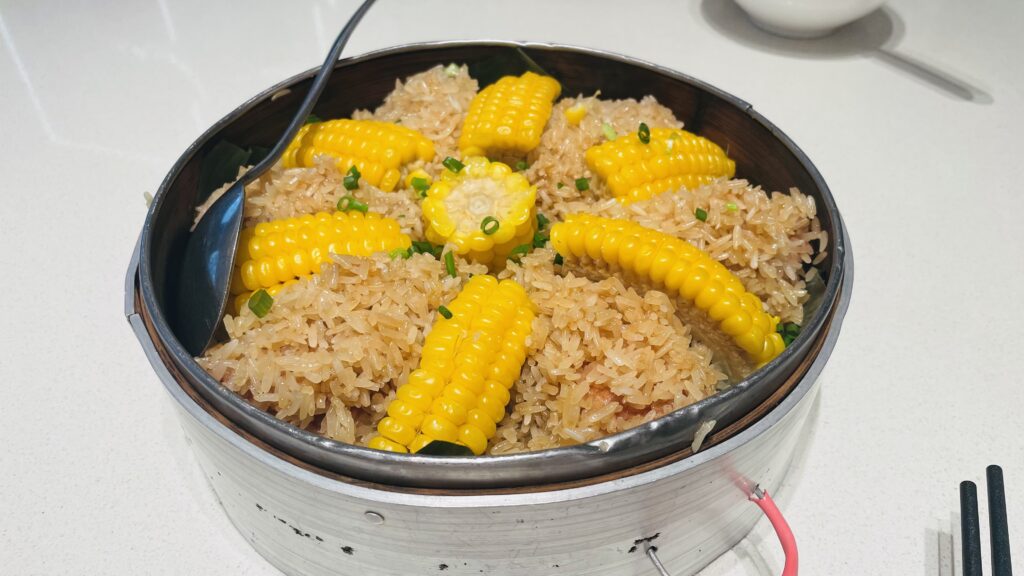
The rice soaks up the juices from the chicken as it steams, while the corn adds a little natural sweetness.
It is the kind of dish that combines starch and protein in one dish, and it’s easy for a family to share.
2. Stir-Fried Glass Noodle Sheets with Pickled Mustard Greens
Glass noodle sheets, or fen pi, are a chewy, slightly elastic ingredient commonly found in Chinese cooking.
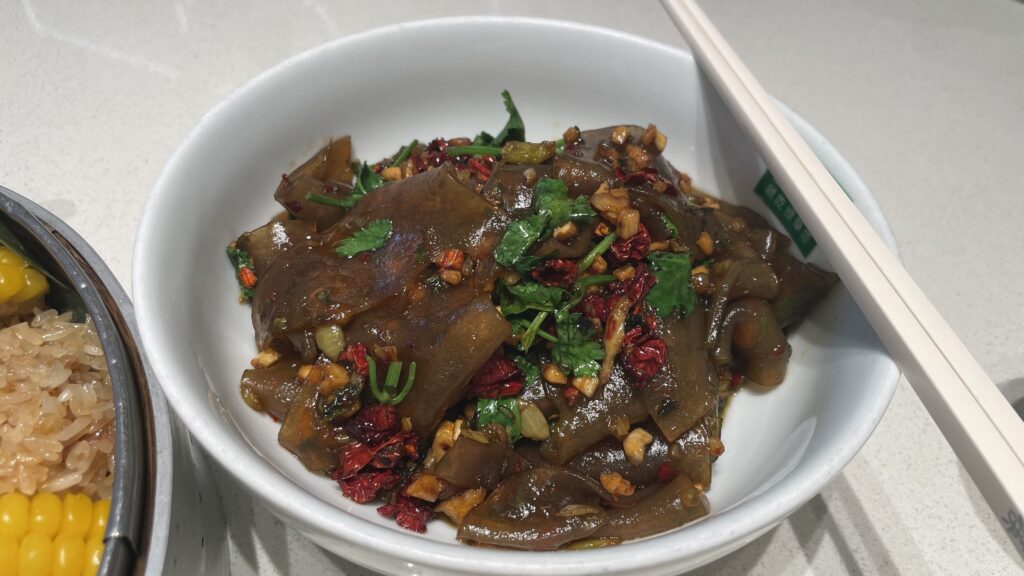
Once stir-fried, they soak up the flavor from the pickled mustard greens and seasoning.
It might not look like a typical “main dish” to a Western reader, but for us, it’s a familiar, home-style flavor — and it goes especially well with rice.
3. Sweet and Sour Crispy Lotus Root
Lotus root is exactly what it sounds like: the root of the lotus plant, which grows underwater in mud.
Sliced and stir-fried, it has a distinctly crisp texture. It is crunchy in a way that can be quite different from the vegetables many Western diners are used to.
This version had a little sourness and heat, and it was probably the most flavor-forward dish on the table.
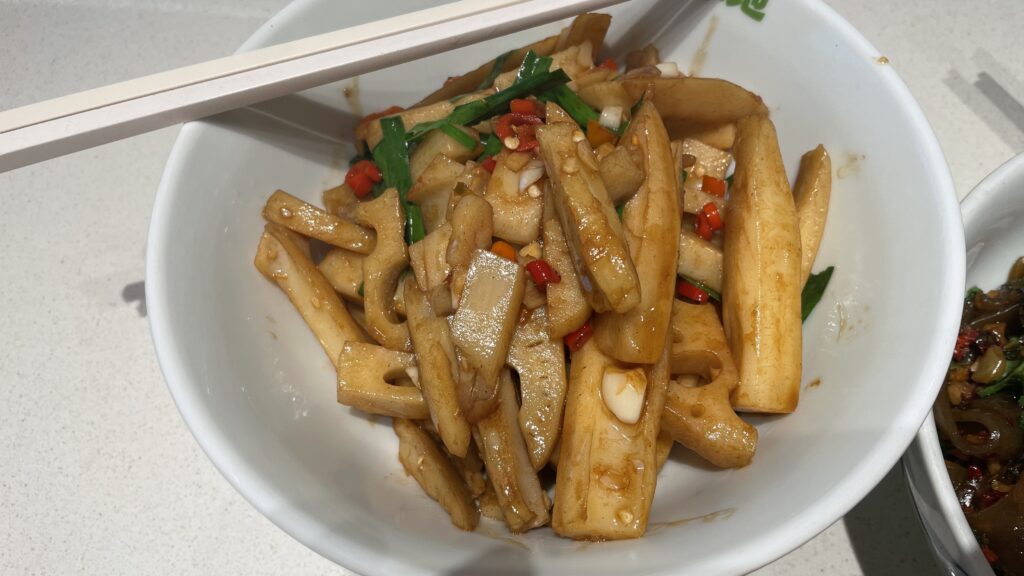
If you’ve never had lotus root before, it’s one of those Chinese ingredients that can be surprisingly fun to discover.
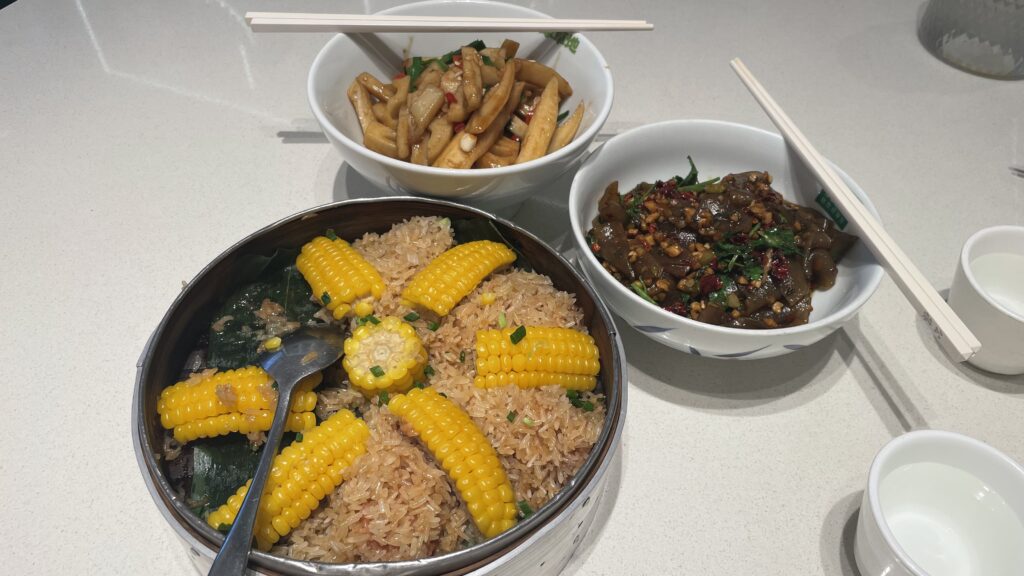
Alongside the three dishes, we also had rice, lemon water, and napkins.
So this wasn’t a case of ordering three tiny dishes just to hit a $10 target. We sat down and had a genuinely complete dinner, and with three dishes on the table, it actually looked pretty generous.
We ate together, talked, and — somewhat to my surprise — we all got full, and there was still food left over.
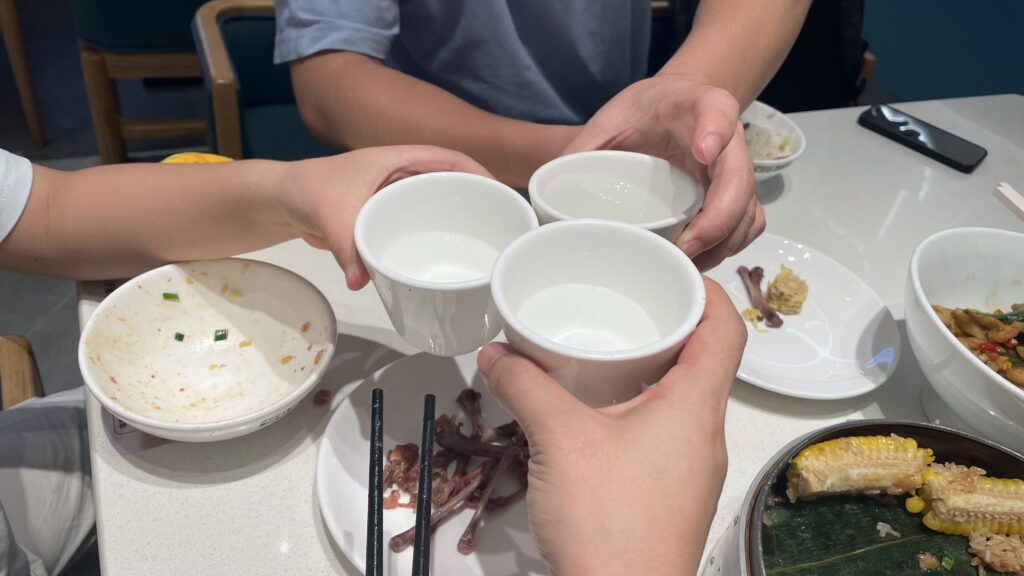
Was It Really Only $8 and Change?
Yes.
Based on what we actually paid for the two vouchers:
| Item | Details |
|---|---|
| Family size | 3 people |
| Main dishes | 3 |
| Rice | Included |
| Drinks | Included |
| Restaurant’s original bill | ¥100.10 |
| Actual cost of two vouchers | ¥54.80 |
| Converted at that day’s exchange rate | ≈ $8.16 |
3 people · 3 dishes · 1 full dinner · ¥54.80 ≈ $8.16 — with leftovers.
A Little Money Challenge of Your Own
This dinner also reminded me how useful it can be to simply write down what you actually spend.
I make simple printable pages for things like budgeting, spending, and small money goals — not because I think every part of life needs to become a spreadsheet, but because sometimes seeing a number on paper makes a little experiment more fun.
If you like this kind of small challenge, you can browse the Budget & Finance Printables and find a page that works for your own everyday spending.
What Actually Made This Dinner Memorable Wasn’t the Price
Honestly, after the meal, what stuck with me wasn’t “we only spent $8.” For us, this wasn’t a dinner where we needed to count every cent.
What actually made it interesting was this: We had a completely ordinary family dinner in a completely ordinary way. No special preparation. No over-ordering for the sake of photos. No hunting down the cheapest restaurant in town to win a challenge.
We just walked into a restaurant we’d normally eat at, sat down, ordered what we felt like eating, talked through the meal as a family, noticed there was food left over, pulled out the two vouchers on our phone, paid, and went home.
That’s just life.
Group Buying Is Just Part of Everyday Life Here
If you live outside China, “buy a voucher on your phone first, then use it at the restaurant” might sound like an unusual extra step. For us, it’s a very normal way to look for a deal before paying for everyday things.
Sometimes you’ll find that something originally priced at ¥100 doesn’t actually have to cost ¥100. That said, this doesn’t mean every restaurant in China is cheap, or that any family of three can eat out anywhere in the country for under $10.
Prices vary a lot depending on the city, the restaurant, the dishes, and local spending habits. We just happened to come across a good deal that day: ¥100.10 down to ¥54.80.
That’s the real story behind this particular dinner.
Not Every Dinner in China Costs $8
I want to be clear about this: this isn’t an article about “how cheap it is to eat in China.” It’s not telling you that $10 will guarantee a family of three a full meal anywhere in the country.
Choose a pricier restaurant, order different dishes, or skip the coupon, and the bill could easily be much higher. Even the same restaurant can produce very different totals depending on what you order.
This was simply our family’s real dinner on one particular day. Not a national average. Just a real slice of ordinary life.
And honestly, I think that’s exactly what makes it worth writing about.
So, Was the $10 Challenge Successful?
If we measure it against the goal we set for ourselves — a family of three, sitting down at a restaurant, having a complete dinner for under $10 — the answer is simple: Yes.
We spent ¥54.80 ≈ $8.16 on three dishes, rice, and drinks. All three of us were full, with food left over. To me, this was a small but genuinely fun life experiment. But more than “how much we saved,” what I really enjoy is capturing this kind of ordinary moment.
Years from now, we probably won’t remember exactly how much we spent that night.
But I think I’ll still remember this: The three of us sitting together for dinner. Sticky rice chicken wings, glass noodles, and crispy lotus root on the table. Eating until we were full. A little food left over. Then paying ¥54.80 with two vouchers on my phone before heading home.
That’s our $8.16 family dinner in China.
Bring the Flavors Home
We didn’t cook this meal ourselves, but two of these dishes — the pickled greens with glass noodles and the crispy lotus root — are simple enough to stir-fry at home if you want to try.
If you don’t already have one, a good carbon steel wok makes a real difference for stir-frying vegetables like these — it gets hot fast and gives that slightly charred edge you can’t get from a regular non-stick pan. This is the one we’d recommend .
A little note from SmilelineCo:
Printables, graphics, and design elements on this site are created by Smile of SmilelineCo and are for personal use only. Please don’t alter them, resell them, or redistribute them, for free or for profit, without written permission from me. If you’d like to share something with a friend, family member, or your community, please share the link to this blog post or to the shop page instead of the files themselves. Thank you for supporting my shop. Wishing you a wonderful life. ❤️