An Ordinary Family Dinner in China
What does a family dinner in China actually look like? For us, it looks like a regular weeknight in Changsha, Hunan: a school pickup, a counter full of vegetables, a pot of soup on the stove, and a husband who walks in halfway through and takes over the wok.
There was nothing special about this evening. No holiday. No guests. No restaurant. No big plans. I picked up my daughter from school, came home, and started on dinner.
Four dishes, three people. That’s it.
I filmed it anyway, and this post is the written version of that video. If you’re curious what ordinary life in China feels like from inside a normal home kitchen, pull up a chair.
Picking Up My Daughter: Where a Family Dinner in China Really Starts
For a lot of Chinese families, dinner doesn’t start in the kitchen. It starts at the school gate.
You pick up your kid, you ask how the day went, and meanwhile your brain is already working on a different question: what are we eating tonight, and do we have time to make it?
It’s only an eight-minute walk each way, but I really like it. The moment we get home, everything shifts into a different gear. Homework, hand-washing, dinner, a hundred little things all happening at once.
Sometimes I think being a mom means spending half your day thinking about three things at the same time. At pickup, I’m thinking about dinner. While cooking, I’m thinking about homework. At the table, I’m thinking about tomorrow.
But that evening, I didn’t want to overthink it. Home, cook, eat. That was the plan.
Prepping the Ingredients for a Chinese Family Dinner
Once we’re home, the first thing I do isn’t turn on the stove. It’s prep.
In home cooking in China, the order is almost the reverse of what people expect. You wash and cut everything first, line it all up within reach, and only then do you start cooking. Once the wok is hot, there’s no time to go looking for things.
That night I was working with three ingredients you’ll see a lot in home cooking in China: lotus root, taro, and winter melon. If you didn’t grow up here, they might look unfamiliar. To us, they’re so ordinary we barely think about them.
In fact, I brought all three back from my parents’ place during the National Day holiday, so they were basically free. Everything else for the meal came to under 20 yuan, about three dollars.
I used the lotus root two ways: diced for the fried rice, and sliced thin for a spicy dish. Same ingredient, two completely different results. Cut lotus root turns dark quickly, so the slices go straight into a bowl of water. It’s one of those little kitchen habits you pick up over time.
Winter melon, on its own, is very mild. That’s exactly the point. Because it’s so mild, it picks up the flavor of everything around it.
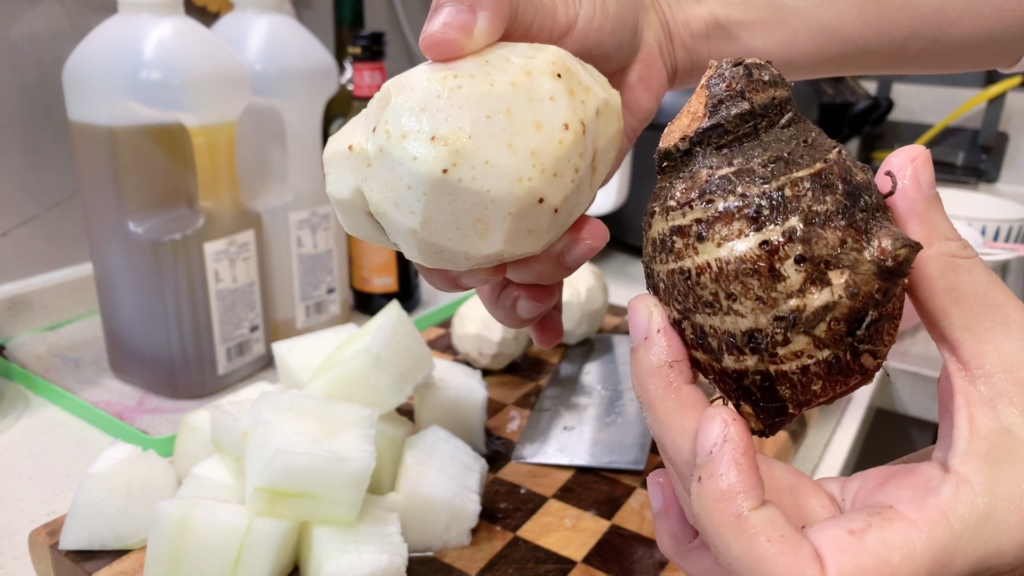
I don’t really follow a plan when I prep. I look at what we have, think about what everyone feels like eating, and figure it out from there.
Taro and Pork Rib Soup: Start the Slow Dish First
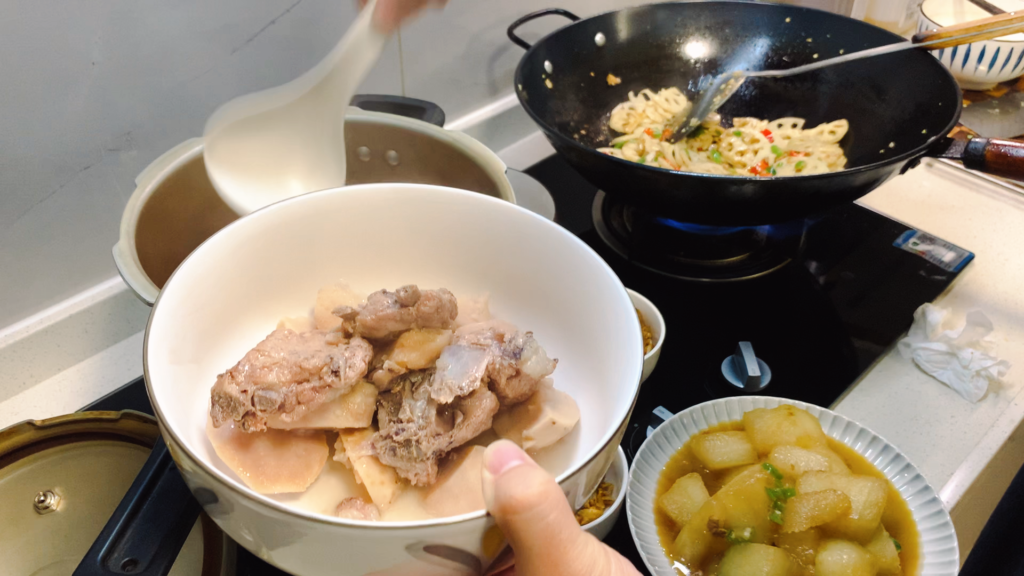
The first thing on the stove for our Chinese family dinner was the taro and pork rib soup.
Why this one first? Because it takes the longest. Once it’s going, you can leave it alone and let it do its thing. That’s a basic rhythm in home cooking in China: start the slow dish first, then work on the fast ones.
The ribs go into cold water first, and I bring it up to a boil, skimming off the foam. It’s a bit of a hassle, but it helps keep the broth clear instead of cloudy.
Then comes the taro. I love taro. When it cooks down, it turns soft and a little starchy, and some of it melts into the broth and thickens it naturally. One spoonful of soup, one bite of soft taro, one bite of rib. It’s deeply satisfying.
A lot of people assume Chinese cooking is complicated, but a home-style stew really isn’t. There aren’t many tricks. It mostly comes down to patience: low heat, and time.
While the soup simmered for about forty minutes, I wasn’t standing around. I was prepping the rice, thinking about the next dish, and checking the pot now and then. That’s what a real home kitchen looks like: three things going at once, and none of them in a rush.
Lotus Root Egg Fried Rice, and the Moment the Door Opened
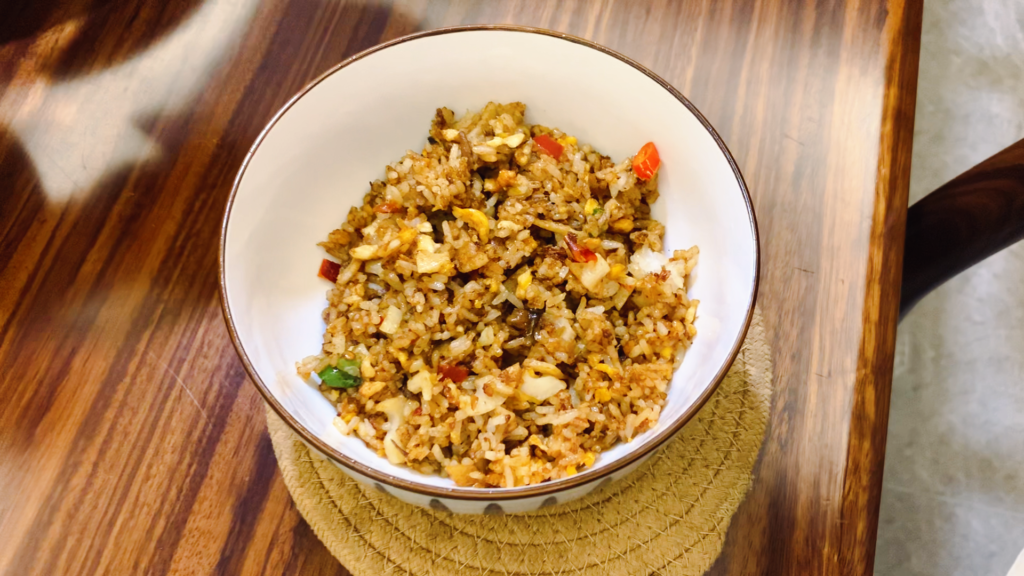
With the soup on, it was time for the lotus root and egg fried rice.
Egg fried rice might be the most familiar home-cooked dish in China. Almost everyone can make it, and almost everyone makes it a little differently. I added diced lotus root, which stays crunchy when stir-fried and makes a nice contrast with the soft rice. Soft rice, fragrant egg, crisp lotus root. Every bite is a little different.
There’s a small trick to fried rice: don’t rush it. You want the rice to stay loose instead of turning into one big clump, so I kept stirring and gave it a little time.
And right in the middle of the fried rice, my husband got home.
When My Husband Takes Over the Wok
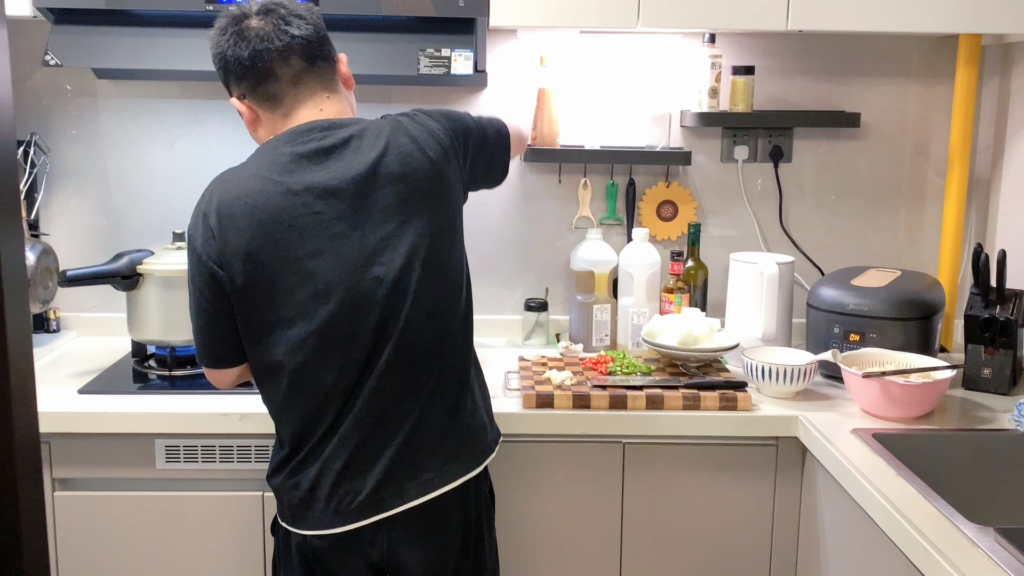
He walked in, put his things down, glanced at the pan, and came straight over, like it was the most natural thing in the world.
The fried rice was almost done. He took the spatula and finished it off. I handed it over and picked up the camera.
My husband came home, took over the wok, and I took over the camera.
That’s how it works in our house. There’s no rule about who cooks. Whoever’s home, whoever has the time, whoever happens to be in the kitchen, they just take over.
And honestly? My husband is the better cook. I’ll say it.
It’s a small thing, but it’s a big part of how our family dinner in China comes together on a busy weeknight.
From that point on, the next two dishes were his: braised winter melon and spicy lotus root.
Braised Winter Melon and Spicy Lotus Root
Braised Winter Melon
If you simply boil a piece of winter melon, you’ll find it has almost no flavor, just a hint of sweetness. But that’s actually the best thing about it. In a braise, the melon soaks up the light soy sauce, the oil, and all the seasonings. It’s a real flavor sponge: whatever you give it, it becomes.
That’s why winter melon shows up on our table so often. It’s cheap, it’s everyday, and it doesn’t ask for much. You don’t need any special skill to turn it into a good, simple dinner.
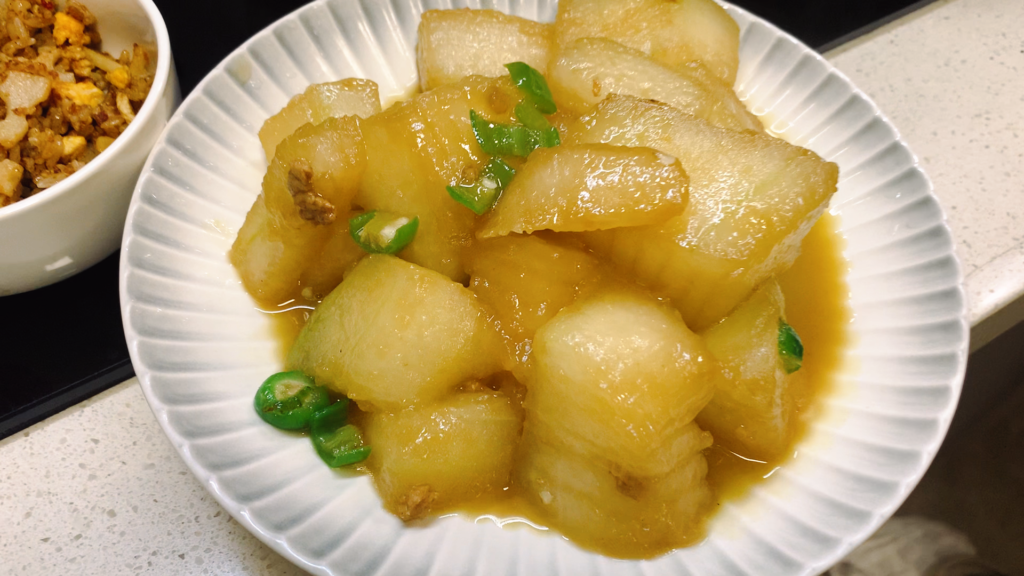
Standing behind the camera felt a little strange. When I’m the one at the stove, my head is always one step ahead: this still needs cutting, that isn’t in the pan yet, should I check the soup? But behind the camera, I could just watch. And I have to say, watching him cook so calmly and carefully was kind of nice. A man doing housework really is the most attractive thing there is.
Everybody cooks a little differently. Some people are fast, some are slow, some season heavily, some go light. Give the same dish to a different cook and the taste changes a little. That’s what I love most about home cooking: there’s no right answer. Every family has its own version.
Spicy Lotus Root, Hunan Home Cooking at Its Simplest
The last dish was spicy lotus root slices, and this one is very Hunan. Here, spicy food is just part of everyday eating, and a lot of us grow up with chili on the table. If you want the bigger picture, Hunan cuisine is well known for it.
This dish used the slices that had been soaking in water. The soak does two things: it stops the lotus root from turning dark, and it washes off surface starch, which keeps the slices crunchy when they hit the wok.
The heat goes up, and everything moves fast. The lotus root stays crisp, and with the chili it ends up crunchy, spicy, and slightly tangy. It’s the kind of dish that makes you want another bowl of rice. That’s Hunan home cooking in a nutshell: simple ingredients, strong flavor, no fuss.
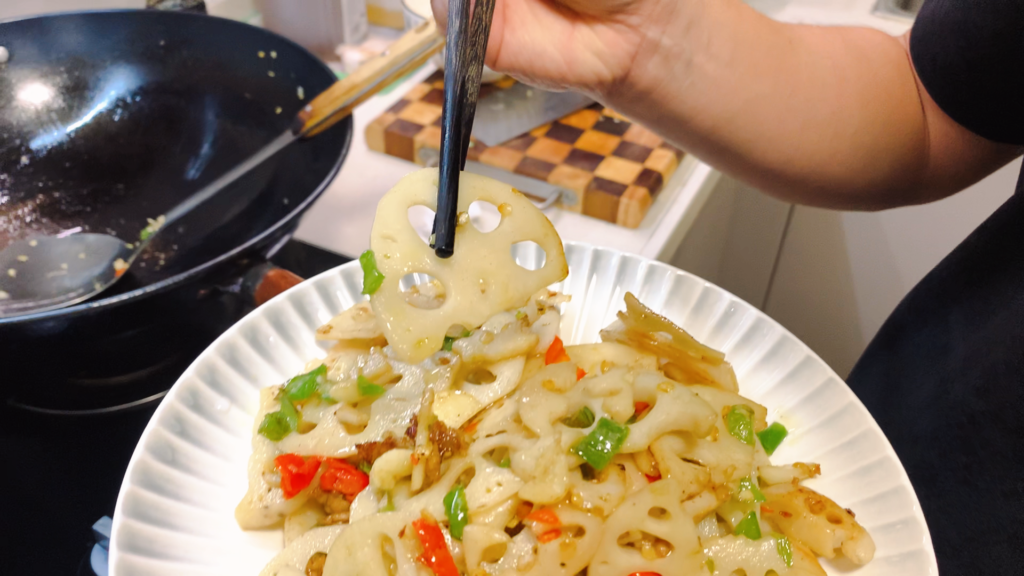
Notice that we used lotus root twice: diced in the fried rice, sliced in the spicy dish. Same ingredient, different shape, different seasoning, two completely different dishes. In Chinese home cooking, an ingredient almost never has just one way to be cooked.
A Shared Table: What a Chinese Family Dinner Looks Like at Home
When everything was done, my husband carried the dishes to the table one by one. He’s the type who likes things to look right. He wipes the bottom of every bowl before it goes on the table, and every time he finishes cooking, the first thing he does is clean the range hood.
A husband who cooks, cleans, and cares about how everything looks on the table? I’ll take it.
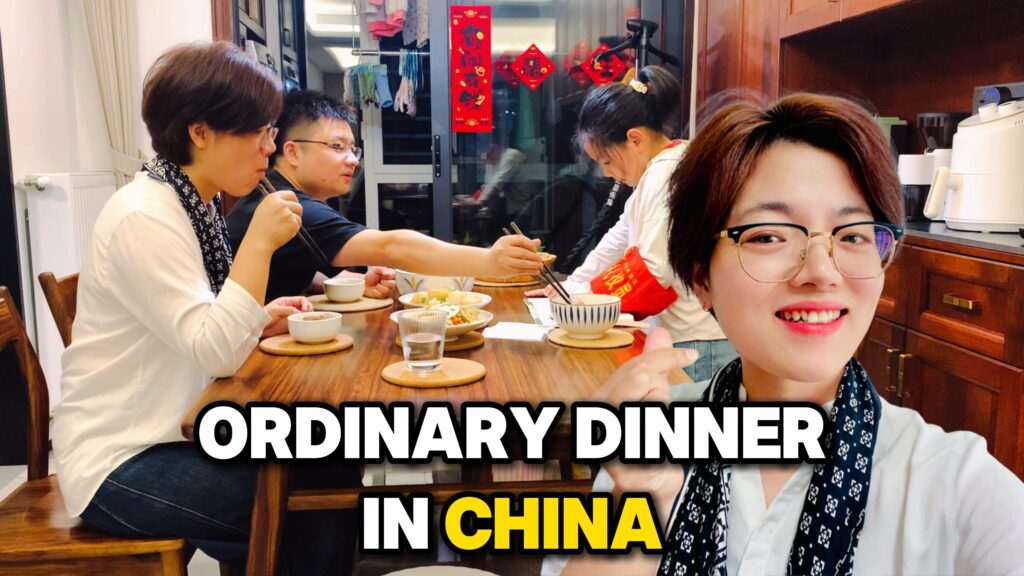
So here was the full menu for our family dinner in China: a pot of taro and pork rib soup, lotus root egg fried rice, braised winter melon, and spicy lotus root. Four dishes, three people. This is Hunan home cooking at its most ordinary: familiar vegetables, a few dishes, and a shared table.
In our home, the dishes go in the middle of the table and everyone shares. You see something you want, you reach for it with your chopsticks. It’s not a special rule, just a habit: the table is shared.
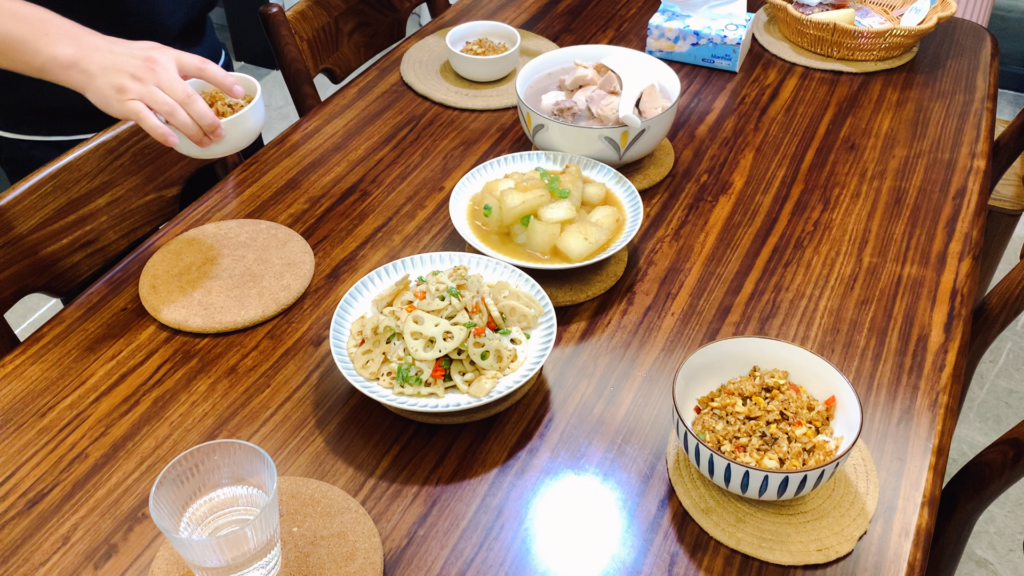
This is the everyday rhythm of a Chinese family dinner, and it doesn’t take a lot of money either. If you’re curious about the budget side, we’ve also written about how our family of three had dinner for under $10 in China.
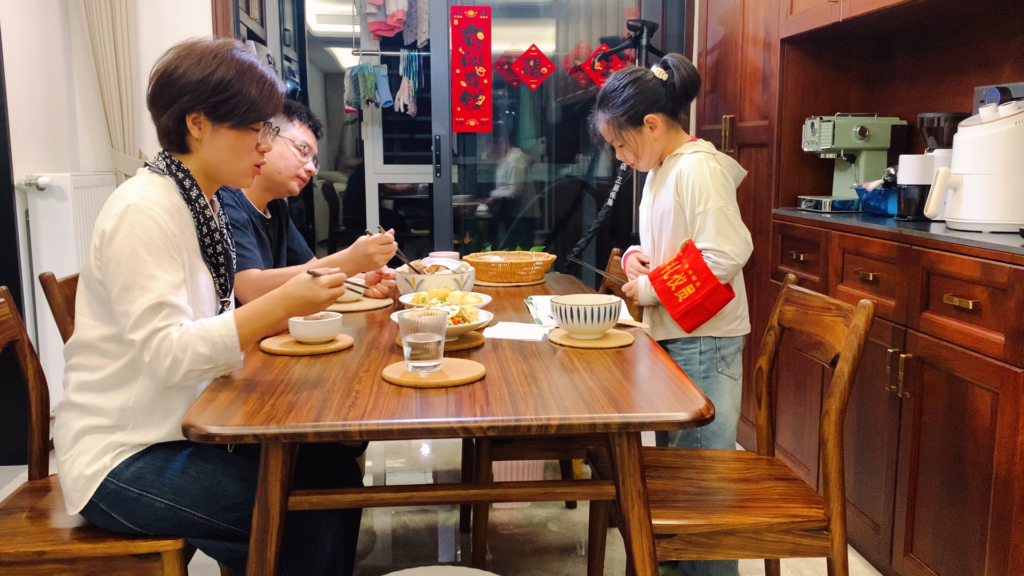
Mealtime is one of my favorite parts of the day. Not because the food is amazing, but because everyone is finally at the same table. After a long day, we get to sit down and talk about what happened.
Ordinary Life in China, One Evening at a Time
I’ll be honest: I hesitated before filming this one. Nothing special happened that night. No holiday, no trip, nothing you’d call a big moment worth recording.
But then I thought: maybe that’s exactly why it’s worth recording.
I don’t think you always have to go somewhere special to see what ordinary life in China looks like. Sometimes it’s right here at home. Picking up my daughter. Cooking dinner. Handing the spatula to my husband. Sitting down to eat together.
That’s an ordinary evening for us, and a very typical family dinner in China in our home. It’s the kind of everyday story we like sharing here. If you enjoy this, you might also like our Songya Lake family bike ride in Changsha.
Kitchen Tools Worth a Look
Affiliate disclosure: Some of the links in this section are affiliate links. If you buy through them, I may earn a small commission at no extra cost to you.
You don’t need fancy equipment for home cooking in China. A sharp knife, a good pan, a rice cooker, and a roomy cutting board cover most of what happened in this post. If you’re shopping for any of them, here are a few places to start.
A Chinese-Style Chef’s Knife
A Chinese chef’s knife has a wide, rectangular blade that handles chopping, slicing, and scooping prepped vegetables from the board into the pan. That’s handy for lotus root, winter melon, and taro. [ZWILLING Chinese chef’s knives] are one option to look at.
A Wok or Deep Sauté Pan
Stir-fried dishes like spicy lotus root need a pan that heats evenly and has room to toss food. [CAROTE cookware] includes woks, sauté pans, and saucepans, so you can compare shapes and sizes.
A Rice Cooker
Rice shows up at nearly every meal in our home, so a rice cooker is an appliance that stays busy. [Midea rice cookers] come in several capacities, so pick one based on how many people you usually cook for.
A Color-Block Cutting Board
Prepping is half the work of Chinese cooking, so a large board with enough space makes it much easier. A [cutting board] also makes the kitchen look a little more cheerful.
Watch the Video
If you’d like to see this family dinner in China from start to finish, you can watch the full video on Smile in China: from picking up my daughter and prepping the ingredients, to my husband coming home, taking over the wok, and the three of us finally sitting down to eat.
More Everyday Life in China
If you enjoy these small glimpses of ordinary life in China, you might also like:
- Songya Lake Family Bike Ride in Changsha: an evening bike ride with our daughter around Songya Lake.
- Our Mid-Autumn Day at Huaguoyuan Farm in Changsha: a family day out during the Mid-Autumn holiday.
- How Our Family of Three Had Dinner for Under $10 in China: another very ordinary family dinner.
So that’s what a family dinner in China looks like in our home in Changsha. But evenings like this are the ones I’d most like to remember, and maybe that’s why I wanted to write it down.
If you’d like to keep following our everyday life in China, you can find more on [Smile in China on YouTube]. Thanks for stopping by.
A little note from SmilelineCo:
Printables, graphics, and design elements on this site are created by Smile of SmilelineCo and are for personal use only. Please don’t alter them, resell them, or redistribute them, for free or for profit, without written permission from me. If you’d like to share something with a friend, family member, or your community, please share the link to this blog post or to the shop page instead of the files themselves. Thank you for supporting my shop. Wishing you a wonderful life. ❤️