Lunar Birthday in China: The Love I Never Got as a Kid
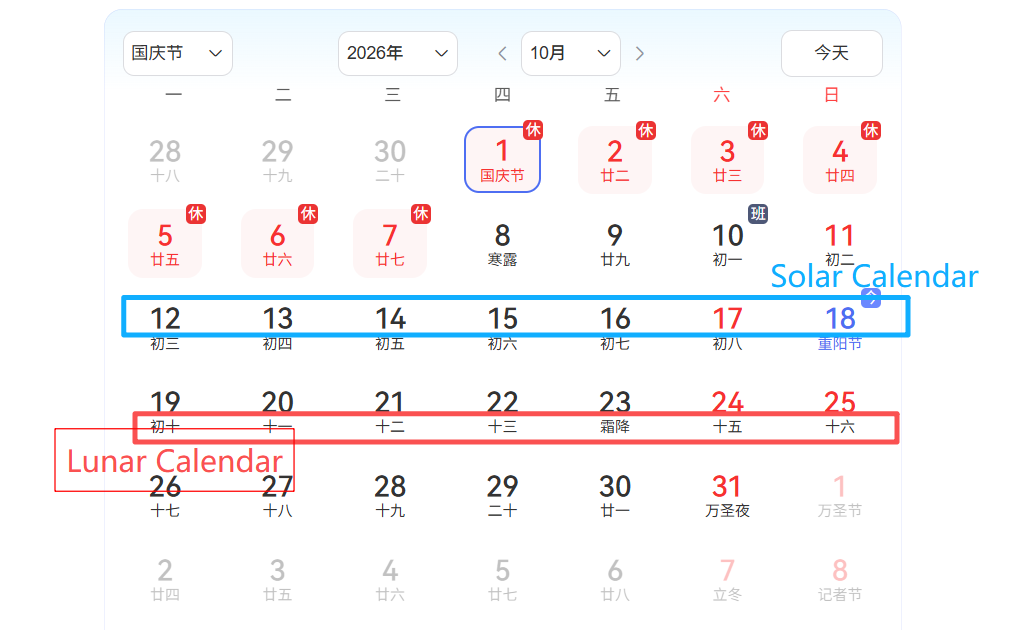
My daughter’s lunar birthday in China came first this year, on an ordinary weekday. Her birthday on the solar calendar, the regular one most of the world uses, falls on the weekend, so that’s when her proper party is planned. It would have been easy to let today slide by. But I didn’t want it to pass unnoticed.
So I cooked her a birthday dinner, with the dishes she asked for by name. It sounds small. For me, it carries a story about some oranges I never got to eat.
In this post, I’ll walk you through the day, from the school run to the birthday song. I’ll also share why I celebrate her lunar birthday in China with so much care, and what growing up unfavored taught me about love.
Affiliate links appear only in the Extended Reading section at the end of this post.
What Is a Lunar Birthday in China?
Birthdays in China can work a little differently than you might expect. Some people celebrate by the lunar calendar, the traditional one that follows the moon. Others use the solar calendar. Many families keep track of both.
If you’re curious, the Chinese calendar is a lunisolar system, which is why its dates never line up neatly with the regular ones. A lunar birthday lands on a different solar date every year. Some years it falls on a weekend. Some years it’s a school day with nothing planned.
In my own family, we’ve always followed the lunar calendar. The birthday printed on my Chinese ID card is even my lunar birthday, so it doesn’t match my birthday on the Western calendar. For us, a lunar birthday isn’t unusual at all.
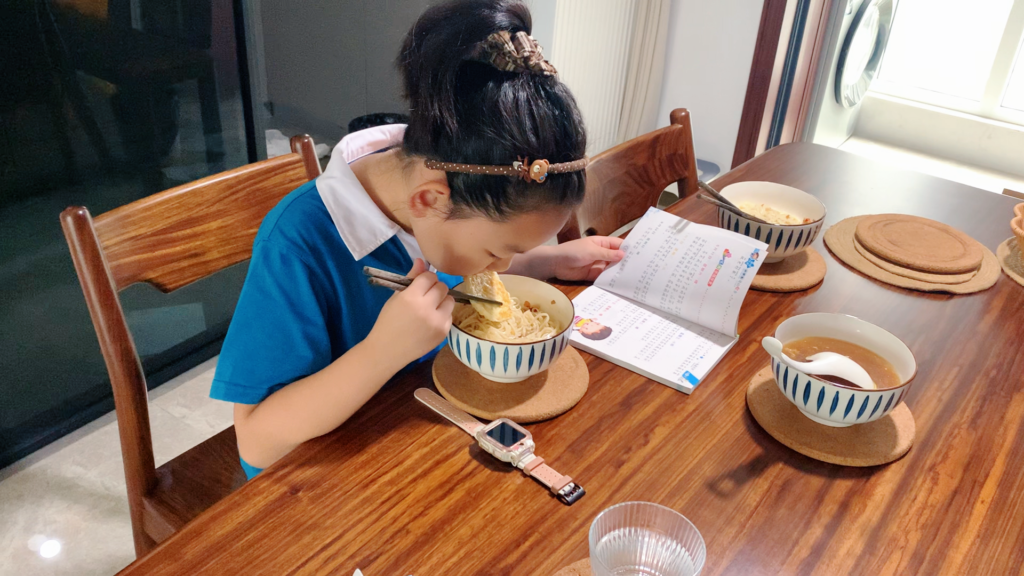
Traditionally, a birthday begins with food that carries a wish. The classic is Chinese longevity noodles (长寿面, chángshòu miàn). The birthday person eats a bowl of long noodles, often in one strand and never cut, as a wish for a long life. Many families top the bowl with an egg.
The birthday cake with candles is a more modern addition. Today it is part of almost every birthday in Chinese cities, right alongside the older traditions.
We’re pretty relaxed about all of this. Whichever birthday happens to fall on a weekend, a holiday, or a day when everyone has time, that’s usually the one we celebrate. This year, my daughter’s solar birthday is on a weekend, so her proper party is still ahead of us. Today, her lunar birthday came first.
A Lunar Birthday in China on an Ordinary Weekday
Today was supposed to be just another day. Get her ready, have breakfast, take her to school, come home and work, then have a normal dinner. Nothing special.
That morning, her breakfast bowl was Chinese longevity noodles, the way a birthday morning should start.
And yet, when I woke up, there was a stubborn little voice in the back of my mind. It kept saying: I don’t want today to pass unnoticed.
So I made a quiet decision. I wanted to give her a little celebration on this ordinary weekday, too. Nothing fancy. Just her favorite food, a cake, and a little bit of birthday magic.
Maybe she won’t remember the details one day. But I wanted her to know something simple: Mom didn’t forget.
Ordering a Birthday Dinner in China (and the Crab Water at My Door)
After dropping her off at school, I came home and ordered some of her favorite things online: fresh crab, shrimp, a dessert she loves, and some coconut milk. Autumn is crab season in much of China, so it felt like the right treat for the right month.
There would be no guests and no big celebration, just our little family having dinner together. Over the years, I’ve come to realize that love isn’t always found in big gestures. Sometimes it’s simply choosing to care about someone’s little things.
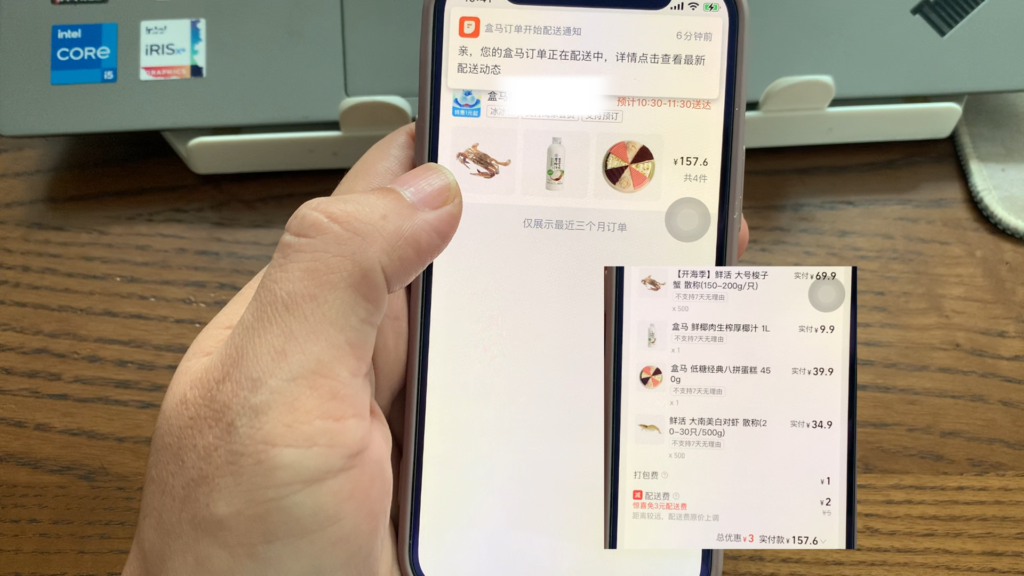
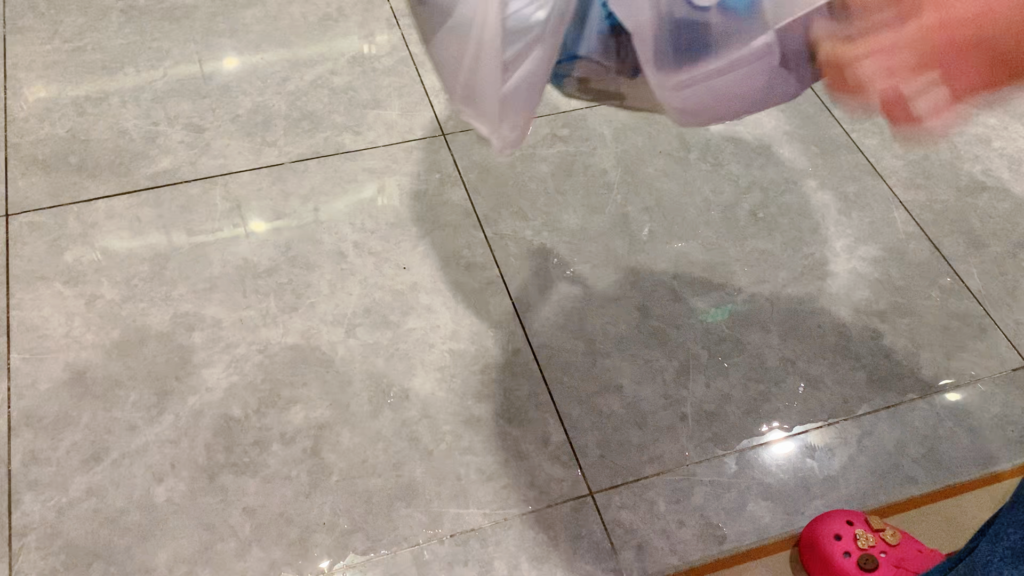
In my head, preparing a birthday dinner was supposed to feel peaceful. Maybe even a little romantic. The reality? First, I had to mop the floor. The bag holding the crabs had leaked, and there was a puddle right outside my front door.
So step one of my daughter’s birthday celebration was cleaning up crab water. That’s life, I guess. We imagine we’re creating some beautiful, special moment, and most of the time we’re dealing with little everyday messes.
But I didn’t mind, because I was doing it willingly. Nobody asked me to celebrate her lunar birthday in China. Nobody told me I had to buy all this food. I did it for one simple reason: she loves these things, and I wanted to do it for her.
And somehow, that little feeling of wanting to give took me back to my own childhood.
Growing Up Unfavored: The Oranges I Never Got
When I was a little girl, I had a very simple wish, too. I wanted to eat a few oranges.
My grandparents lived right next door, with only one wall between our homes. In many Chinese families, relatives live this close. That closeness can be warm. It also means there is nowhere to hide when love isn’t shared evenly.
Their yard had fruit trees. In autumn there were red dates and sweet, juicy oranges. To a child, those fruits felt like the greatest thing in the world.
But whenever I asked for one, I heard the same thing: “No, you can’t eat those. They’ve just been sprayed with pesticide. You’ll get sick.”
I was too young to question it. So I felt disappointed, and I walked away.
But our house was right next door. We knew what was happening in that yard, and when the trees had actually been treated. As I got older, I realized that “they’ve been sprayed with pesticide” wasn’t always a warning meant to protect me. Sometimes it was simply a reason to say no.
What I remember most is this. One day I’d be told the fruit couldn’t be touched because it was “poisonous.” Then, almost overnight, every orange and every red date would be gone, picked and taken to my aunt’s house, for the children my grandparents loved and spoiled.
At the time, I didn’t have words like “favoritism” or “family dynamics.” I just had one very simple question in my little heart: why could they eat the fruit openly, while I had to be told no? Their house was only a few steps away, and yet that distance felt enormous.
There were nights when my dad would quietly take my hand. When it was dark and nobody was around, he took me to the trees, and we secretly picked a few red dates and a couple of oranges.
Looking back, it almost sounds funny: a little girl sneaking around at night just to eat a few oranges. But back then, it didn’t feel funny. It hurt. The oranges were sweet, of course. But that sweetness always carried a little sadness with it, because I couldn’t understand why I had to be so careful just to have something I wanted.
How Family Favoritism Hurts Quietly
Many years later, I understood that the oranges weren’t what hurt most. What hurt was realizing that love isn’t always given equally. Some people are openly chosen. Some are naturally favored. And some children grow up wondering if they did something wrong, simply because they weren’t treated the same way.
Nothing dramatic happened to me. There were no huge arguments, no terrible fights, no moment I could point to and say, “That’s when everything changed.” It was much quieter than that: small differences, repeated over and over. Family favoritism is rarely loud, and those little things can stay with you much longer than anyone realizes.
If you also grew up feeling overlooked, I hope you can hear this: it was never a measure of your worth.
A Sentence From My Six-Year-Old Daughter
Then I grew up, built a family of my own, and became a mother. And that’s when I started to notice something strangely familiar.
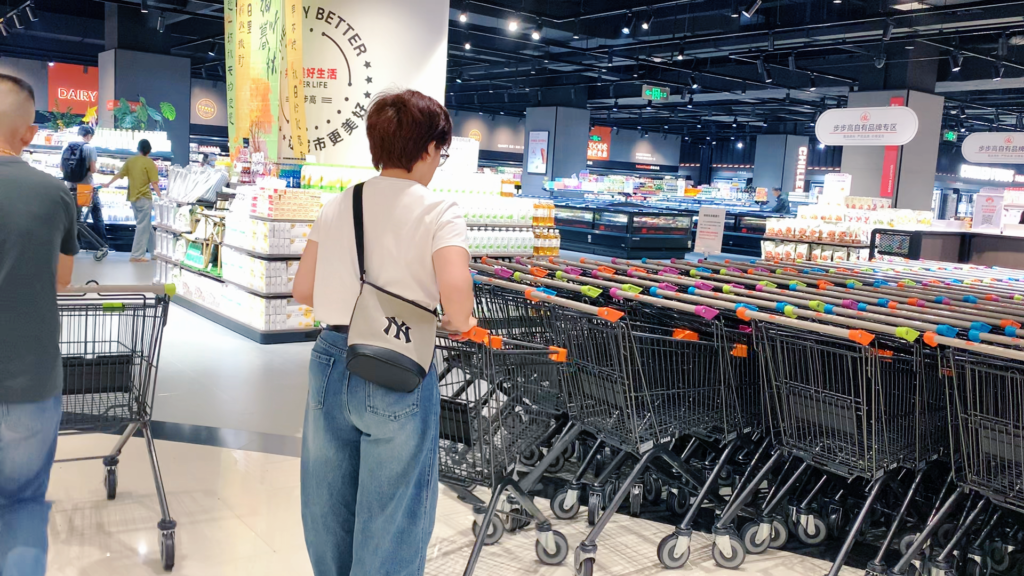
Around 2:30 that afternoon, I headed to the supermarket to pick out vegetables and ingredients. As I walked the aisles, I thought about something my daughter once said.
When she was a little over six, she was taking an art class. One day her teacher asked the children to go home and draw their grandparents. When she came home, she said casually, “Mom, I don’t have grandparents. I can only draw my maternal grandparents.”
I answered very naturally, “Of course. You can draw maternal grandparents.” Then I said, “But you do have grandparents.”
She replied right away: “They’re Tiantian’s (her cousin’s) grandparents.”
She was only six. She probably didn’t understand why those words hurt me. But they landed like a tiny splinter in my heart.
Children may not have words for favoritism. They may not understand family dynamics, or know how to explain why someone seems to love another child more. But they notice. They feel it. They know who makes them feel wanted, and who doesn’t.
In that moment, I wanted so badly to hurt on her behalf. But I also knew I didn’t want to pass my own resentment down to her. I didn’t want her to grow up believing she has to compete for someone’s love.
Making Peace With Family Favoritism
So over the years, I’ve stopped asking: Who should love whom more? Who should have treated whom better? Who was right, and who was wrong?
I’ve come to understand that these things don’t always have neat answers. People have their own preferences, attachments and blind spots. And we can’t force someone to love us the way we wish they would.
Someone Else’s Love Is a Gift, Not a Debt
I don’t blame the people who disappointed me when I was a child. And I don’t spend my days measuring who loves whom more today. Not because those things didn’t happen, but because I finally learned something that took me years: someone else’s love is a gift, not a debt they owe you.
When someone chooses to give you warmth, you can be grateful. When they don’t, you don’t have to spend your whole life asking why.
It took me years to stop looking outside myself for proof that I mattered, to build my own sense of safety, and to become someone who could comfort herself. Real wholeness doesn’t come from waiting for someone else to complete you. You build it slowly, inside yourself.
Looking back, I’m almost grateful to the little girl I used to be. Growing up unfavored taught me something I might never have learned otherwise: some family patterns can stop with you.
I can’t go back and pick those oranges for myself, and I can’t rewrite what happened. But I can decide what I pass on to my own child.
Choosing the Cake: Love in the Open
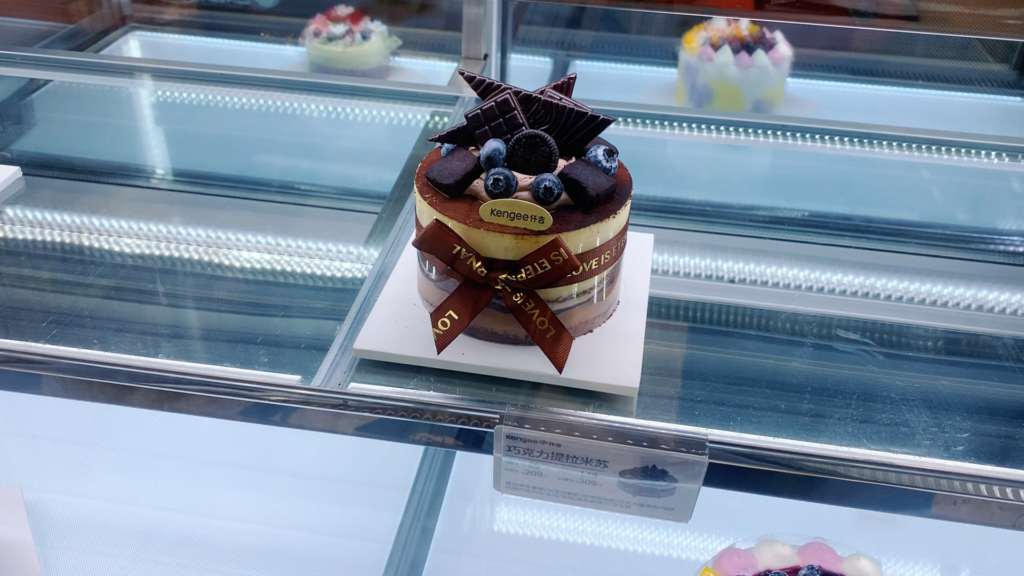
So I picked out the food she loves, and I stopped in front of the cake display to choose one for her.
She probably won’t remember what she ate today when she’s grown up. She may not remember the crab or the cake, or even that this was an ordinary weekday. But I hope she remembers how it felt: to know that, even on an ordinary day, someone cared enough to make it special for her.
Not because she got the best grades. Not because she was especially well-behaved. Not because she had to earn it. Simply because she was herself.
Her First Bite of Dessert
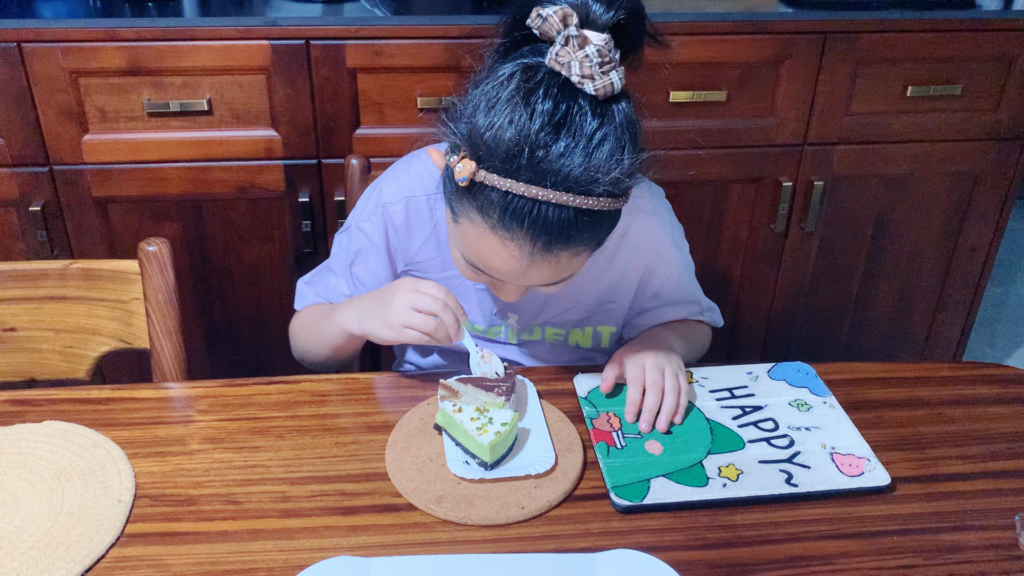
When I picked her up from school and brought her home, I gave her the dessert she loves.
That first bite of sweetness was out in the open.
What I Tell My Daughter About Loving Herself First
There’s one thing I tell my daughter again and again. It’s something I spent many years learning for myself: learning to love yourself is a lifelong lesson.
When people love you and choose you, be grateful. But if someone doesn’t love you the way you hoped, please don’t let that make you question your worth. You don’t have to feel less valuable just because someone prefers someone else. And you never have to earn love by being the “good girl.” You don’t have to be endlessly obedient. You don’t have to make yourself smaller just to keep other people happy.
More than anything, I want her to know this: in this family, she never has to earn her mother’s love.
I also know I can’t protect her from every unfair thing in this world. As she grows up, there will be people who don’t like her, and people who choose someone else. She will be overlooked and misunderstood sometimes, and there will be things she wants badly that simply don’t work out. That’s life.
I can’t put her in a world where she never gets hurt. What I can do is help her know who she is when the hurt comes. Someone else’s rejection doesn’t mean you’re not worthy. Someone choosing someone else doesn’t mean you’re not enough.
Cooking a Birthday Dinner in China
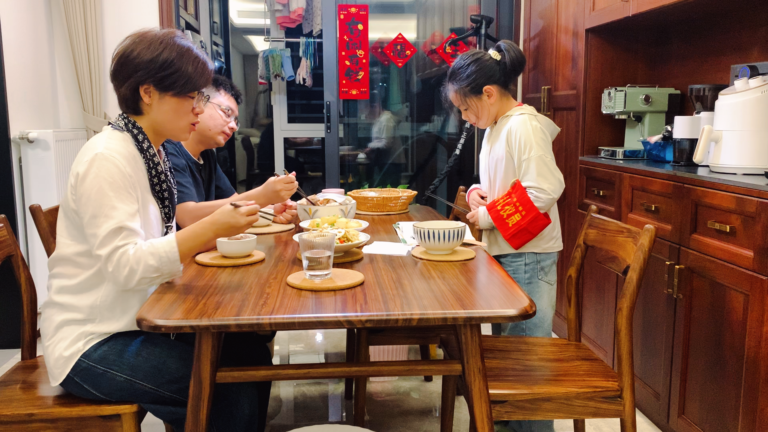
Then it was time to cook. My husband got home while I was still in the kitchen, and we got dinner onto the table together.
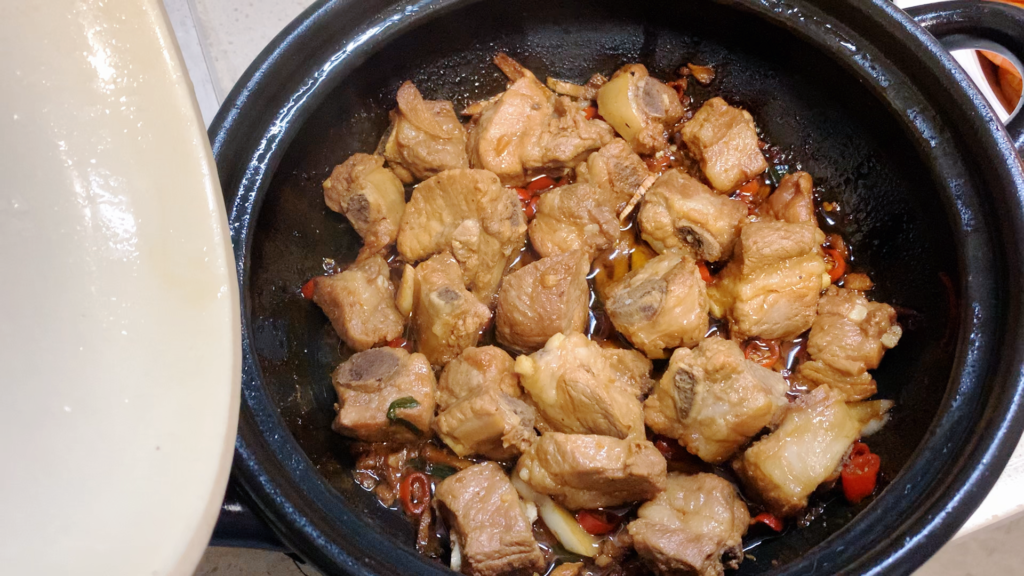
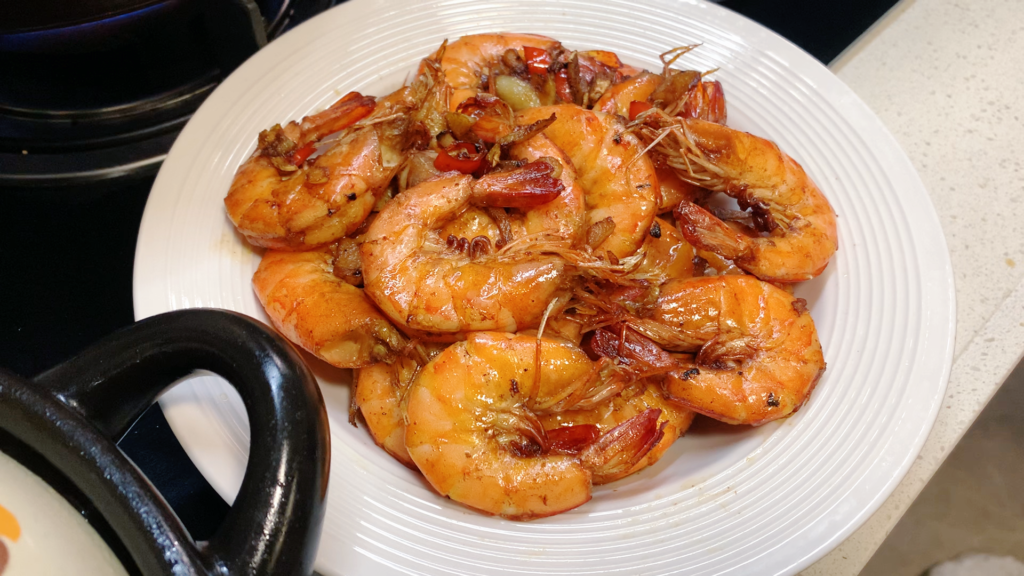
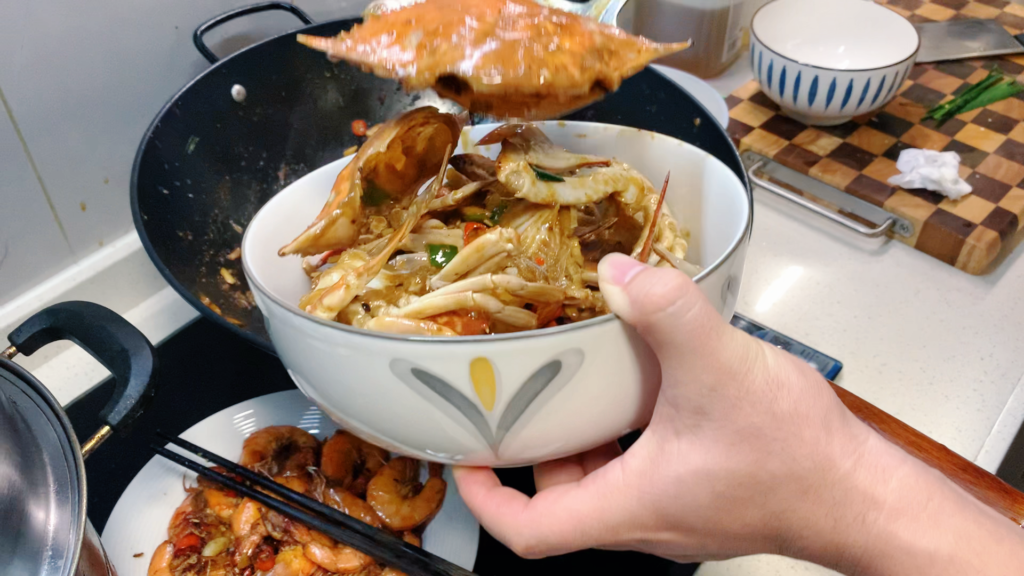
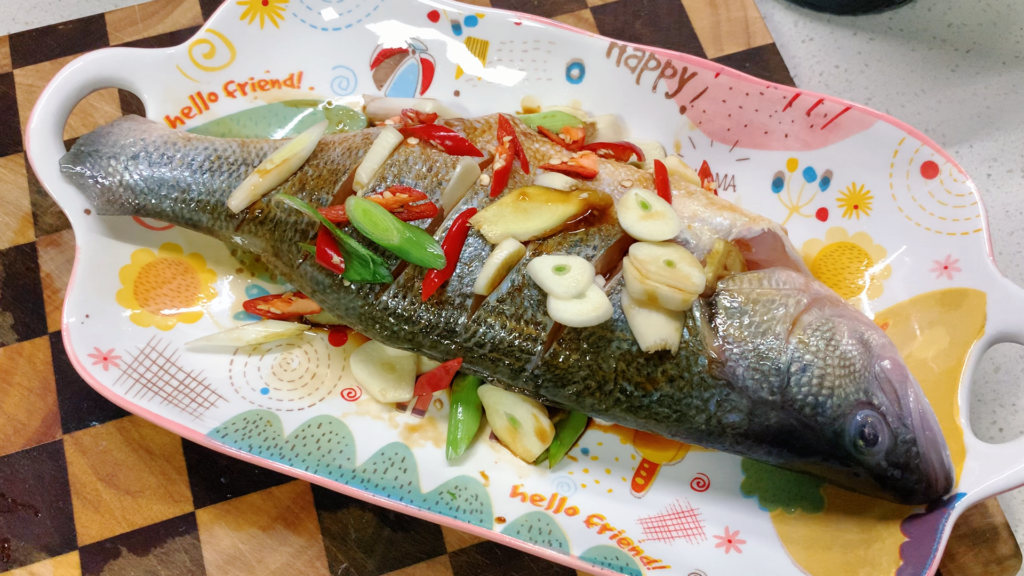
Five dishes made it to the table: crab, shrimp, a whole fish with scallion, garlic and chili, cabbage, and pork ribs in a clay pot. Everything except the ribs was requested by my daughter, by name. The ribs weren’t on her list, but they’re one of her favorites too.
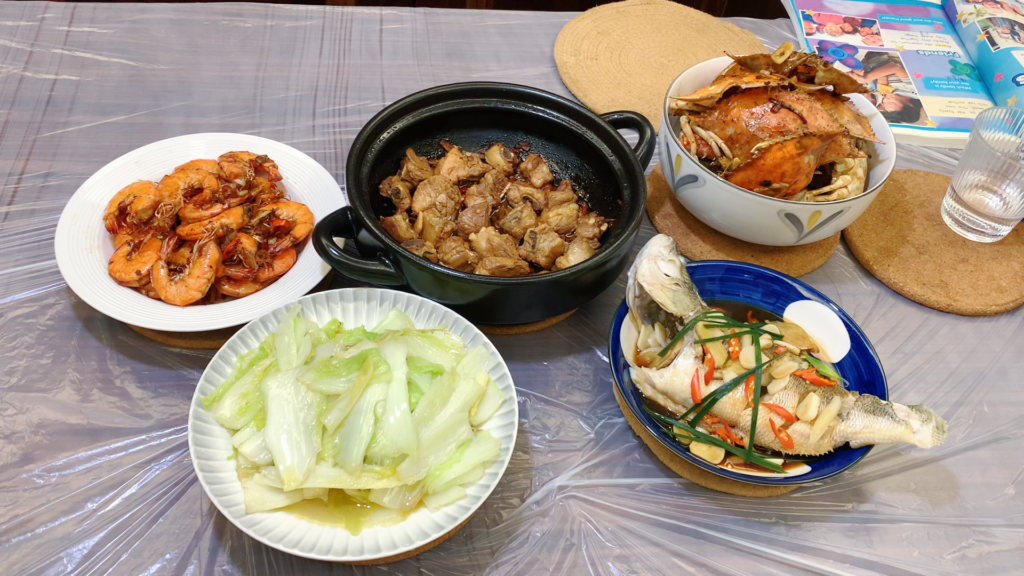
This birthday dinner in China was really nothing extraordinary. No crowds of relatives, no grand celebration, just an ordinary weekday. But to me it meant something more.
When I was a little girl, I felt small because I couldn’t even have a few oranges without asking. Now I can walk into a supermarket, buy the food my daughter loves, and come home and make it for her.
The thing that has changed isn’t really the food. It’s the little girl who once waited so carefully for someone else to choose her. She grew up, and she learned how to choose herself.
Our Birthday Dinner in China: Three of Us, One Table
We sat down together, the three of us.
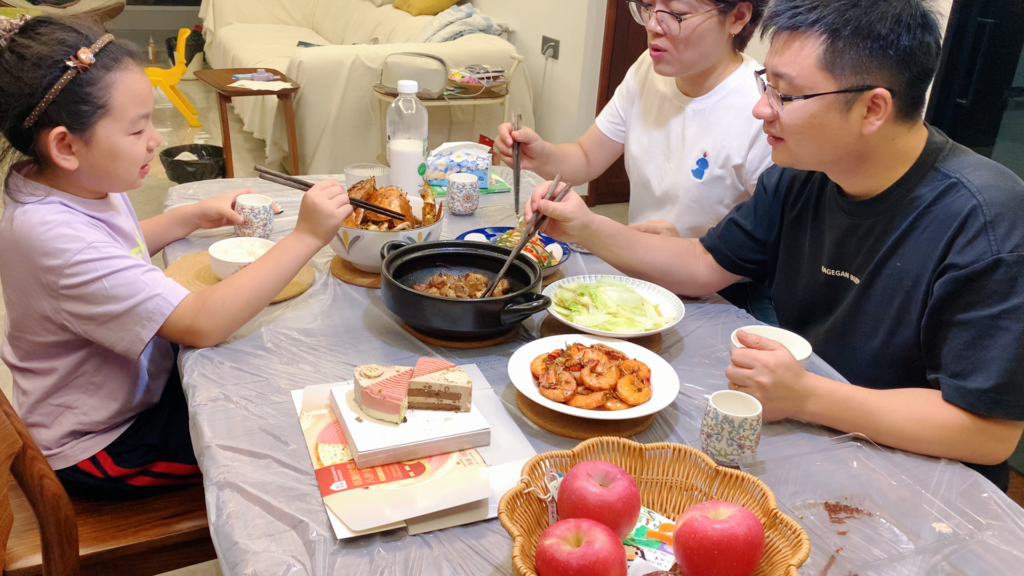
I never got all those oranges I wanted. But honestly, I don’t need them anymore. What I want is to give my daughter, in my own way, the tenderness I once didn’t receive. Not because I need to make up for everything, and not because I want to protect her from every disappointment she’ll ever face. Simply because I want her to know: she deserves to be treated with love.
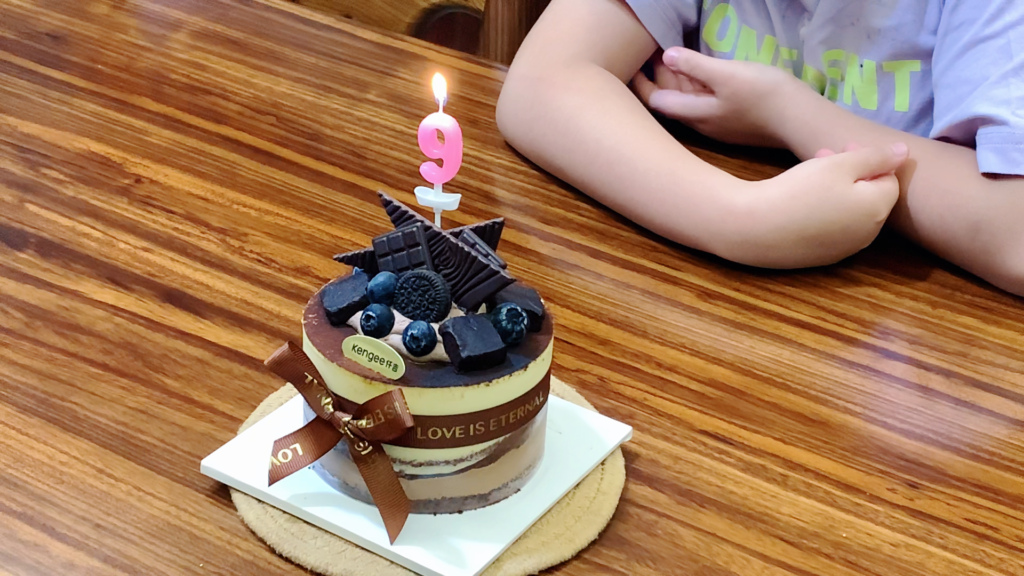
After dinner, we brought out the cake, lit the candle, and sang happy birthday. I won’t add any words for this part. In the video, you can hear the song, the laughter, and the candle being blown out.
A Letter to My Daughter
Happy birthday, my love.
I don’t know if you’ll remember today when you’re older. Maybe you won’t remember what we ate, or what the cake tasted like, or even that it was just an ordinary weekday. But I hope you remember how it felt: that on an ordinary day, someone took the time to celebrate you.
You don’t have to earn love by being obedient. You don’t have to make everyone happy by being the easy, well-behaved girl. And you never have to look at someone else’s love for another person and wonder if you’re somehow less worthy. Before you are anyone’s daughter, you are yourself. I hope you never forget that.
If one day this world doesn’t love you the way you hoped it would, I hope you still know how to love yourself. Because those oranges I didn’t get when I was little, I don’t need them anymore. But I hope that for the rest of your life, you can always reach for your own sweetness, without fear, without shame, and without feeling like you have to ask permission to deserve it.
My little girl, happy birthday. May you never have to live by someone else’s light. May you never spend your life waiting for someone else’s approval. May you be whole within yourself. May you stay gentle. May you shine in your own way. And may you always know how to be your own light.
Happy birthday, my daughter.
Frequently Asked Questions
What is a lunar birthday in China?
A lunar birthday in China is a birthday counted by the traditional Chinese lunar calendar instead of the solar calendar. Because the two calendars don’t line up, the date changes every year on the solar calendar.
Do Chinese people celebrate birthdays by the lunar calendar?
Many do, especially older generations and traditional families. Some people use the solar calendar, and some families keep track of both, depending on which date is more convenient.
What are Chinese longevity noodles?
Chinese longevity noodles are long noodles eaten on a birthday as a wish for long life. They are traditionally left uncut and often topped with an egg.
What does a birthday dinner in China look like?
It varies by family and region. Many families gather for a home-cooked meal with a few favorite dishes, sometimes longevity noodles, and a cake with candles at the end.
A Birthday Interview to Keep Every Year
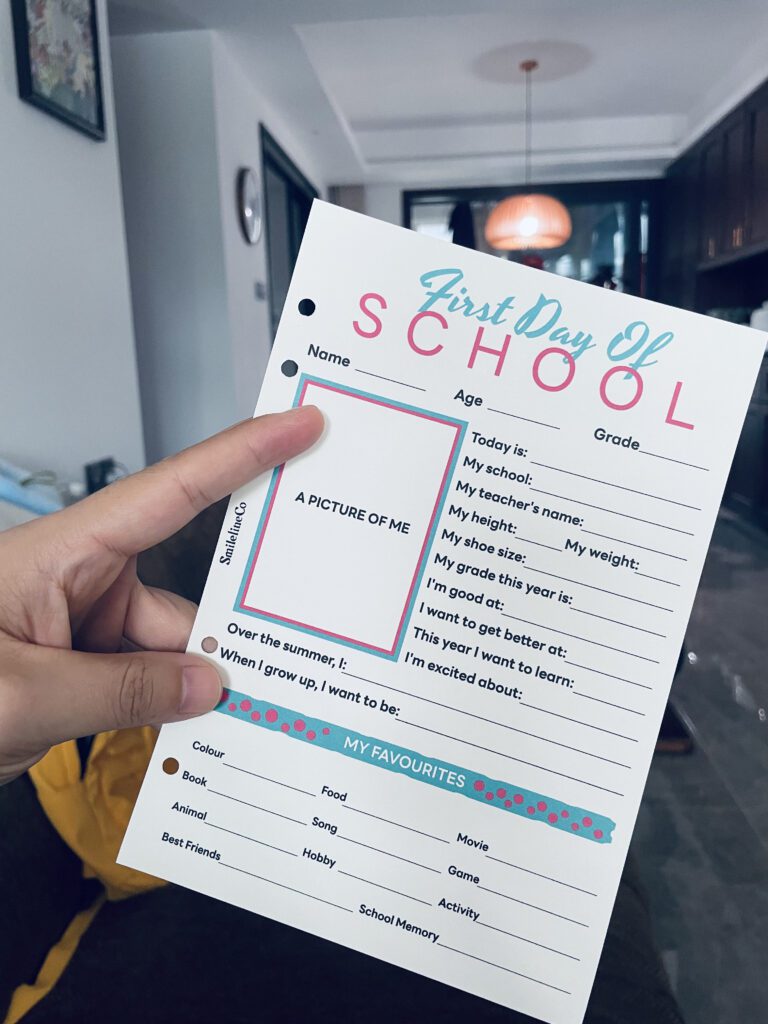
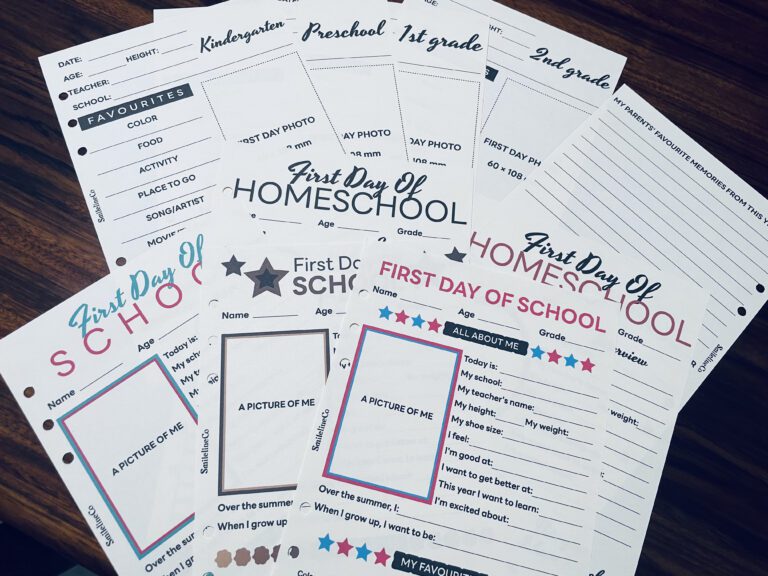
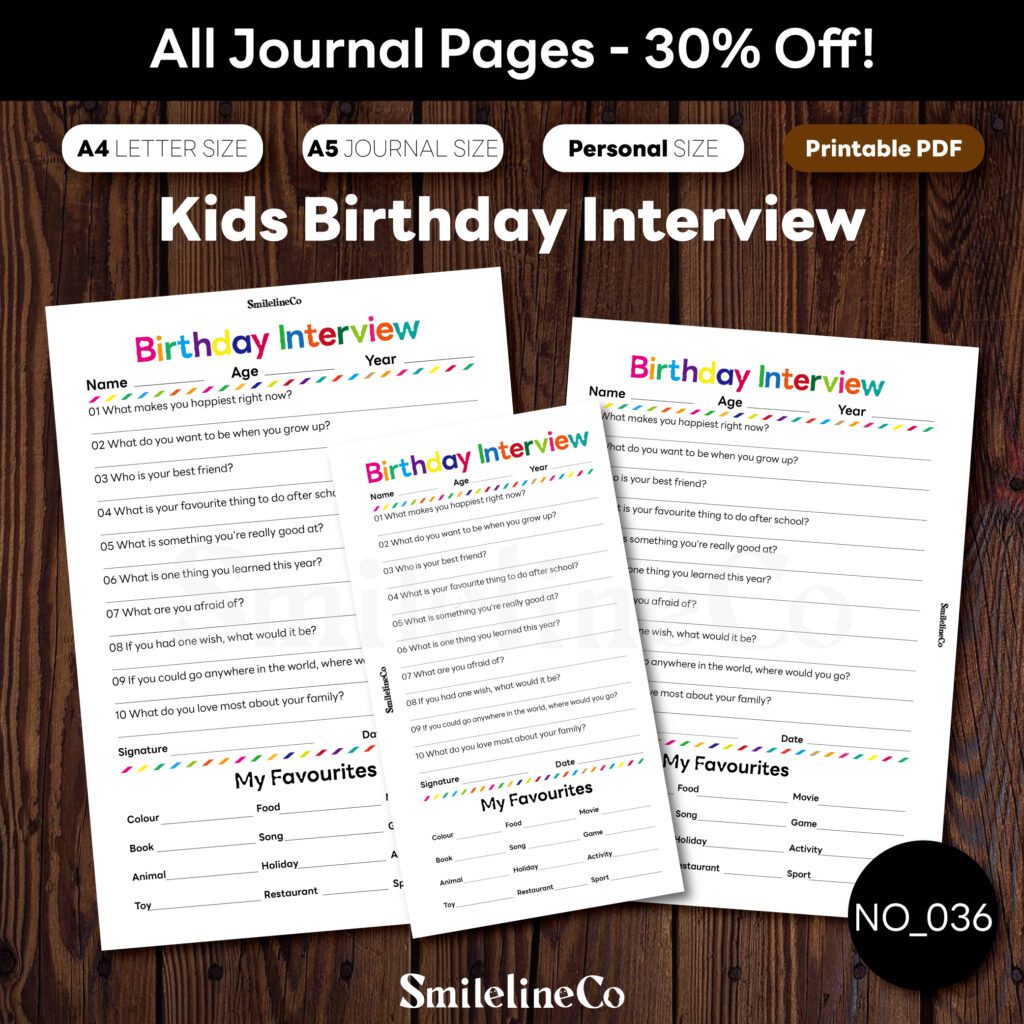
A child changes so much in a single year. If you’d like a simple way to capture who she is right now, in her own words, my Kids Birthday Interview printable is a yearly questionnaire insert made for exactly that.
It has ten heartfelt questions, like what makes your child happiest, who their best friend is, what they’re afraid of, and what they love most about family. A “My Favourites” section follows, for colour, food, movie, song and more. Fill one out each birthday and watch the answers change from year to year.
It comes as a print-ready PDF in A4, A5 and Personal size, as an instant digital download.
More Stories From My Side of the World
- A Family Bike Ride Around Songya Lake in Changsha
- Chinese Mid-Autumn Festival: A Real Family Celebration in China
- Our $8.16 Family Dinner in China: The $10 Challenge
- Things to Do in Changsha With Kids: A Family Day Out at a Farm in China
- National Day in Rural China: 6 Days at My Parents’ Home in Hunan
- Vegetables in China: What $22 Really Buys in a Week
- An Ordinary Family Dinner in China
Extended Reading: Kitchen Tools and a Book I Like
If you’d like to cook a birthday dinner like this at home, here are a few things that make it easier. And for the quieter side of this story, there’s a book I’d gently pass along.
- ZWILLING chef’s knife: a sharp, comfortable knife for everyday prep.
- ZWILLING kitchen shears: handy for cutting crab and shrimp neatly.
- CAROTE 21pcs Pots and Pans Set: for everyday stir-frying.
- YOSUKATA 14″ Black Carbon Steel Wok: for slow-braised dishes like pork ribs.
- Birthday Candles – Cake Numeral Candles: a simple candle for the cake.
- The Gifts of Imperfection: a gentle book on accepting yourself as you are.
A little note from SmilelineCo:
Printables, graphics, and design elements on this site are created by Smile of SmilelineCo and are for personal use only. Please don’t alter them, resell them, or redistribute them, for free or for profit, without written permission from me. If you’d like to share something with a friend, family member, or your community, please share the link to this blog post or to the shop page instead of the files themselves. Thank you for supporting my shop. Wishing you a wonderful life. ❤️