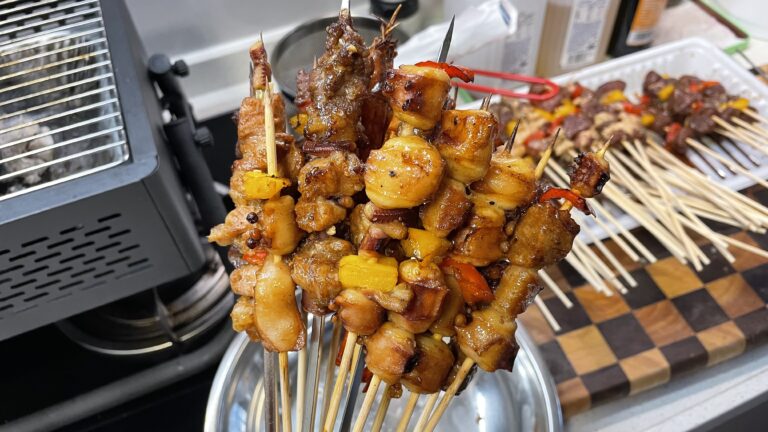
College Food in China: 7 Snacks for 69 Yuan (Real Prices)
College food in China is not only about canteen trays. Around many Chinese campuses there is a snack street, and on one lunch break my family of three tasted seven different things for just 69 yuan, roughly US$10. This is Chinese street food at its most honest: small portions, strong flavors, and prices printed right on the sign.
I’m Smile. I live in Changsha, in central China. We visited the Chinese university snack street next to Hunan University, and I wrote down every price so you can see for yourself what college food in China looks like. You’ll also meet a few Chinese words along the way, like choudoufu (stinky tofu) and tangyoubaba (sugar-oil rice cakes), because the names are half the fun.
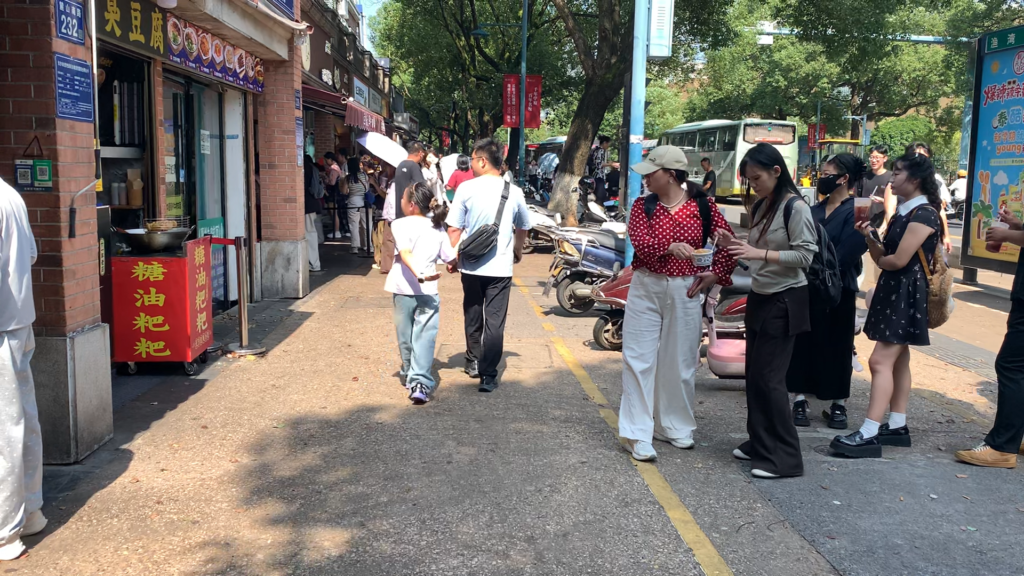
Quick answer: what does college food in China cost?
On this snack street, every single item we ordered cost between 5 and 10 yuan. Our big lunch for three, including one repeat order, came to 69 yuan in total, or 23 yuan each, about US$3 per person at recent exchange rates. Food is only one part of a student’s budget, and we are not students, but the prices on these signs are the real ones.
A Chinese university snack street, one noon at Hunan University
Hunan University sits at the foot of Yuelu Mountain in Changsha. When we visited, the university had just finished celebrating its 100th anniversary. It took the name Hunan University in 1926, and the celebration was held on October 16, 2026 (Xinhua covered the anniversary). Its roots go back much further: Yuelu Academy, founded in 976 AD, sits on the same campus, more than a thousand years of learning in one place.
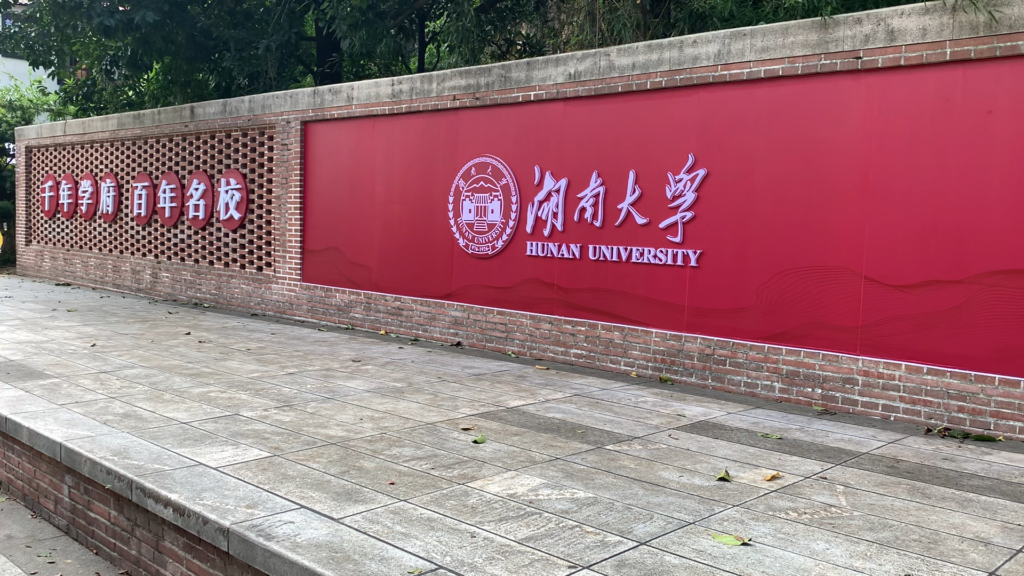
We came here once before in the evening, and there were so many people that we could hardly move. So this time we came at noon, when it’s calmer and you can take your time. If you ever visit a Chinese snack street, lunchtime is a gentler way to meet it.
A street like this works differently from a restaurant. Nobody sits down for a formal meal. You walk, you point, you eat standing up or on a small stool, and then you walk to the next stall. For a family it turns lunch into a little game: everyone picks something, and we share. The portions are small and the prices are low, so one family can taste a lot in a single visit.
The rules for our day were simple. We would go stall by stall, share everything, and see what we liked best.
Chinese street food prices at a glance (the cost of food in China, in yuan)
| # | Snack | Chinese name | Stall | Price (yuan) |
|---|---|---|---|---|
| 1 | White stinky tofu, large (9 pieces) | 臭豆腐 chou doufu | Doufu Susu (豆夫酥酥) | 10 |
| 2 | Preserved greens and braised pork pie | 梅菜扣肉饼 meicai kourou bing | Master Shao (邵师傅) | 8 |
| 3 | Beef pie ×2 (6 each) | 牛肉饼 niurou bing | Tianma (天马) | 12 |
| 4 | Iced lychees | 冰镇荔枝 bingzhen lizhi | Tianma (天马) | 7 |
| 5 | Black stinky tofu (6 pieces) | 臭豆腐 chou doufu | Luo Jia (罗家) | 10 |
| 6 | Sugar-oil rice cakes (4 pieces) | 糖油粑粑 tangyoubaba | Laotouzi (老头子) | 5 |
| 7 | Dragon fruit and coconut double-skin milk | 双皮奶 shuangpinai | dessert stall | 9 |
| 8 | Encore: a second meicai kourou pie | 梅菜扣肉饼 | Master Shao (邵师傅) | 8 |
| Total | 69 |
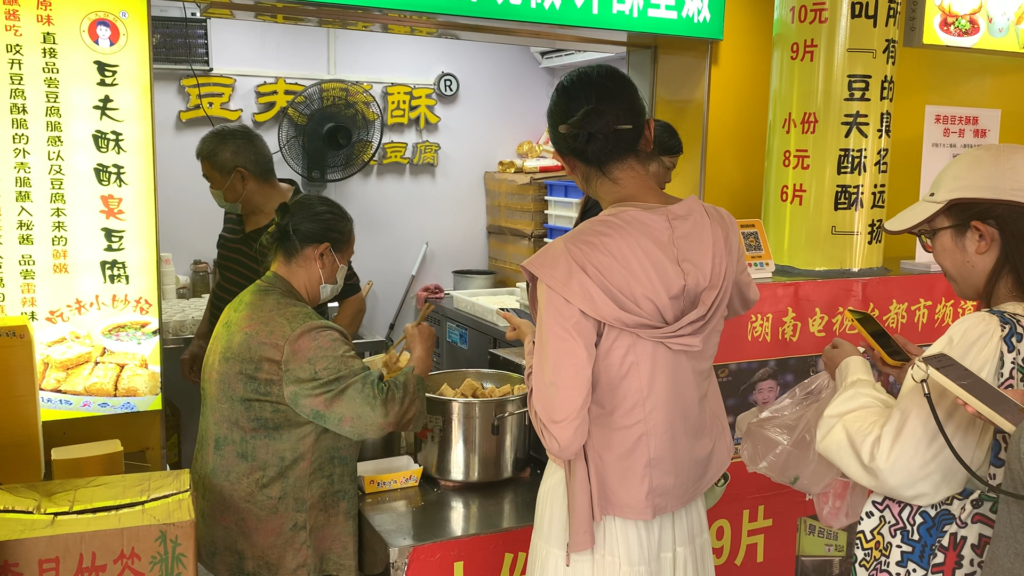
Stop 1: White stinky tofu in China (Doufu Susu)
Our first stop was Doufu Susu (豆夫酥酥), which sells stinky tofu, choudoufu (臭豆腐, chòu dòufu), the most famous smell in Chinese street food. A small portion is 8 yuan for six pieces, and a large portion is 10 yuan for nine pieces. We took the large one.
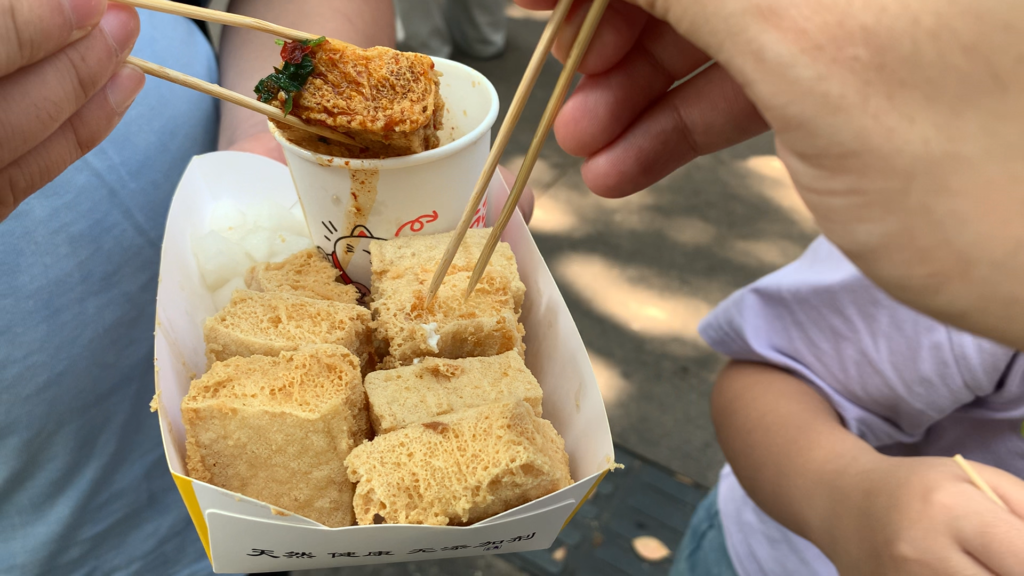
This white stinky tofu has a crispy, crunchy shell and stays very tender inside. Before you eat it, poke a small hole in a piece and dip it into the sauce. It tastes absolutely fantastic.
Stinky tofu has a reputation, and I should be honest about it. Almost everyone says the smell is stronger than the taste, and the first time you try it, the best thing you can do is not think about it. Just bite. My daughter, by the way, turned out to be the biggest fan of this white version.
Cost so far: 10 yuan.
Stop 2: Master Shao’s meicai kourou pie
The next stall was right next door, so we didn’t have to walk at all: Master Shao’s pie (邵师傅梅菜扣肉饼). The word shifu (师傅) is a respectful way to address a skilled craftsperson in China, and you’ll see it on many stall signs.
The filling is meicai (梅菜), preserved mustard greens, with kourou (扣肉), pork belly that has been slowly braised until it’s soft. Meicai kourou is a classic home-style dish in China, normally eaten with rice. Here it comes in a stuffed flatbread you can hold in one hand, for 8 yuan each.
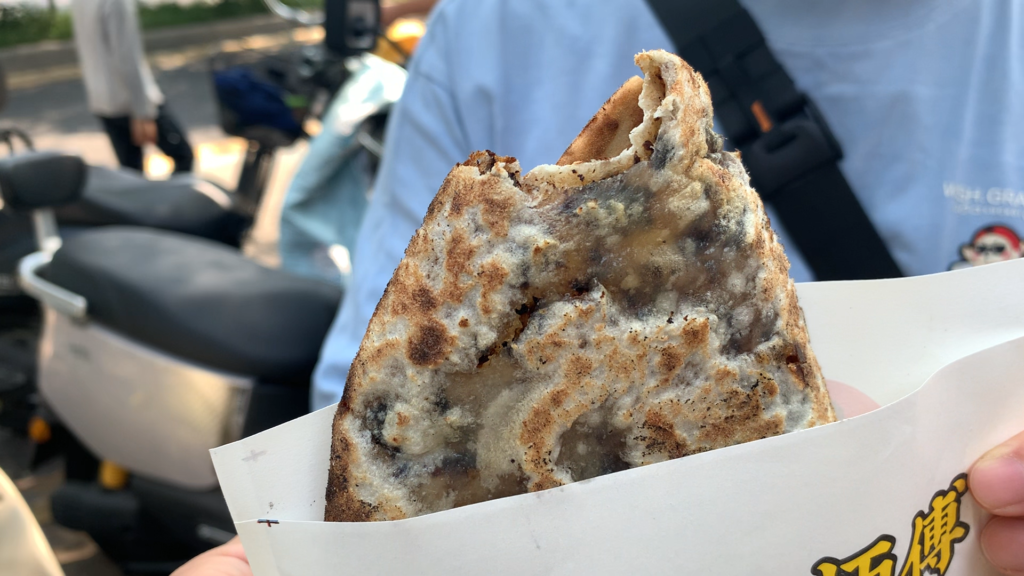
The moment I got it in my hands, the rich, savory aroma of the preserved greens hit me, and the first bite was absolutely incredible. The oven-baked crust is crisp and toasty, and it wraps the filling perfectly. At home this dish takes a long time to cook. Here, you get it in a few minutes, and you can eat it while you walk.
Cost so far: 18 yuan.
Stop 3: Tianma beef pie and iced lychees
Stop three was the Tianma beef pie (天马牛肉饼). Tianma (天马) means “heavenly horse,” and it’s a name many people around here know. It’s commonly said that the name comes from the nearby student apartment complex called Tianma.
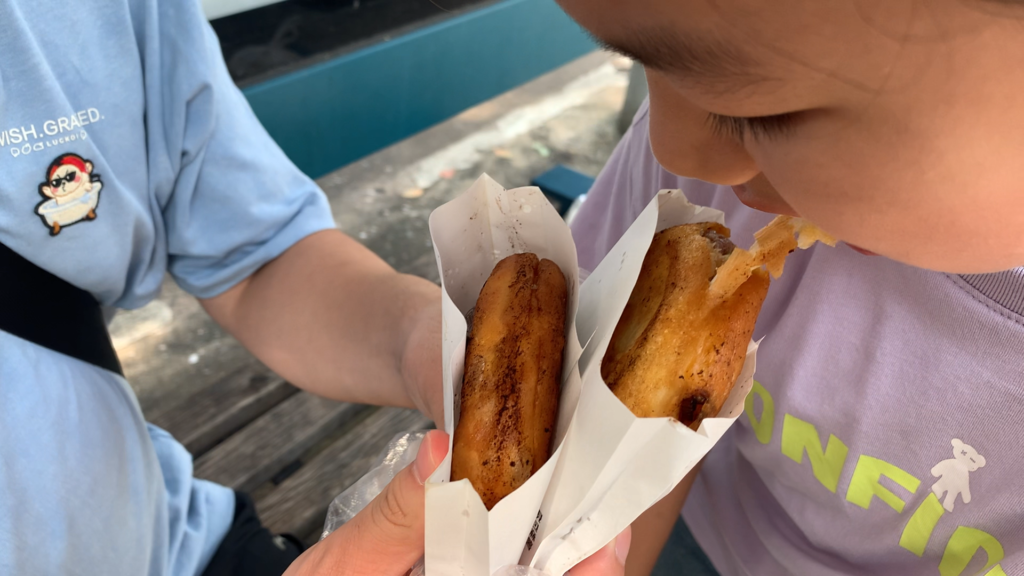
The pies are 6 yuan each, and we bought two to share among the three of us. The crust is crispy and flaky, and the beef filling is savory and juicy, with a numbing, mildly spicy flavor that really packs a punch.
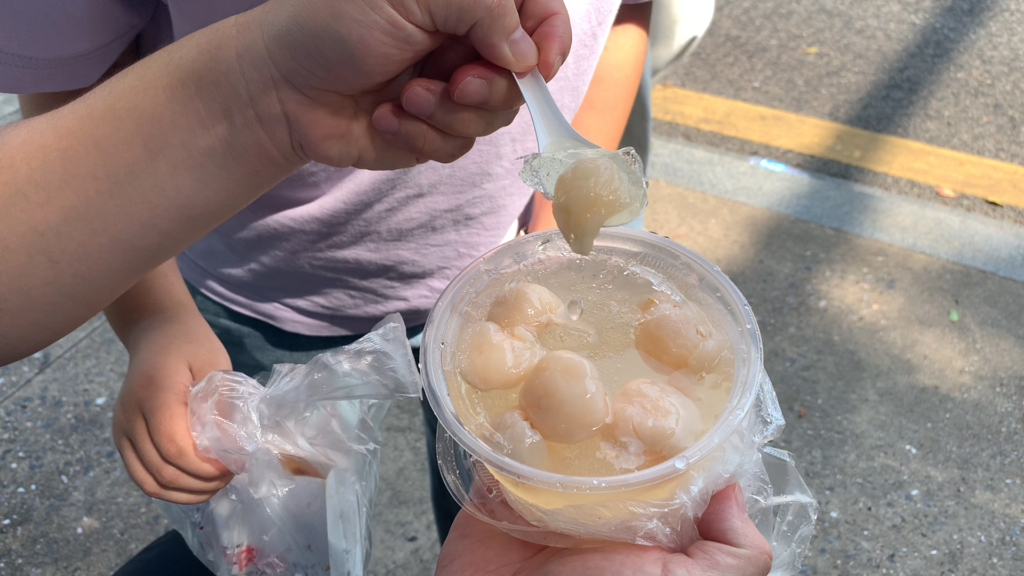
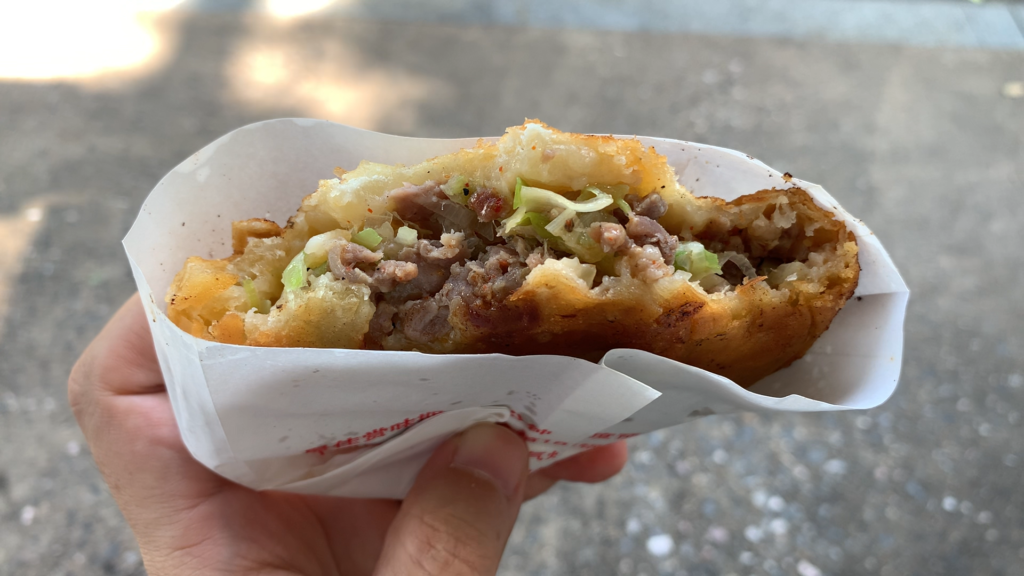
The same stall also sells iced lychees (冰镇荔枝, bingzhen lizhi), and my daughter ordered a cup for 7 yuan. The lychees are soft and chewy, and even the chilled water carries a hint of lychee juice. One sip takes you straight back to summer. After a warm, savory pie, a cold, sweet lychee is exactly what you want.
Cost so far: 37 yuan (12 for the pies and 7 for the lychees).
Stop 4: Black stinky tofu in China (Luo Jia)
Now for the Changsha classic: Luo Jia (罗家) black stinky tofu, 10 yuan for six pieces. Changsha-style stinky tofu is black, because the tofu is soaked in a fermented brine and then fried until the outside turns dark and crispy. According to Wikipedia’s overview of stinky tofu, the Changsha brine is traditionally made with winter bamboo shoots, koji and shiitake mushrooms, and the usual toppings are chopped pickled mustard greens, chili and shallot. Our stall covered it in sauce.
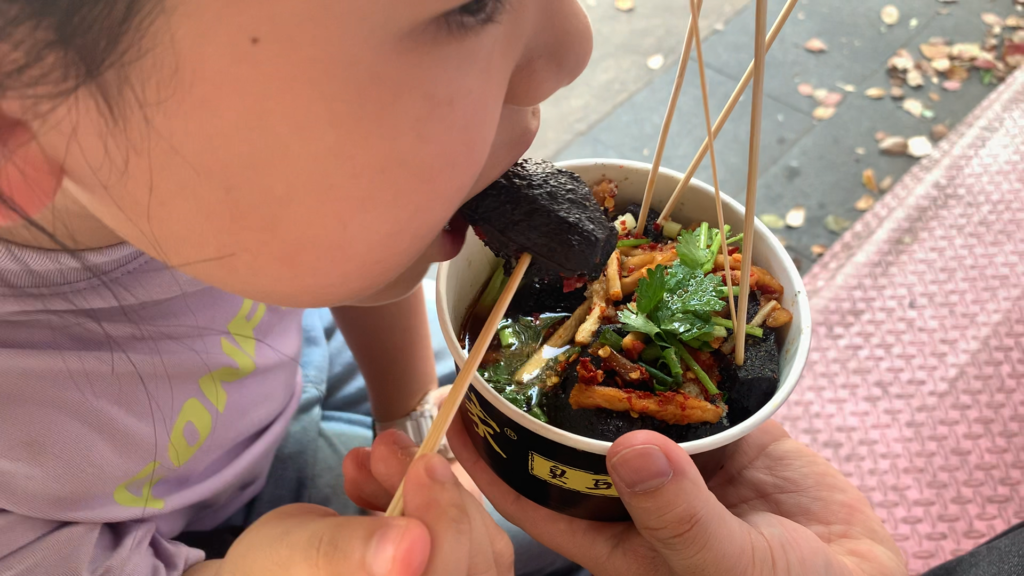
We ordered the “mildly spicy” version. One bite, and you get that signature flavor: it truly smells pungent, but it tastes delicious.
Now the family vote. For the same 10 yuan, the white stinky tofu gave us nine pieces and the black gave us six. My husband and I both prefer the black one. My daughter likes the white one more. So in our house the vote is two to one, but the youngest member of the family has a very clear opinion.
Cost so far: 47 yuan.
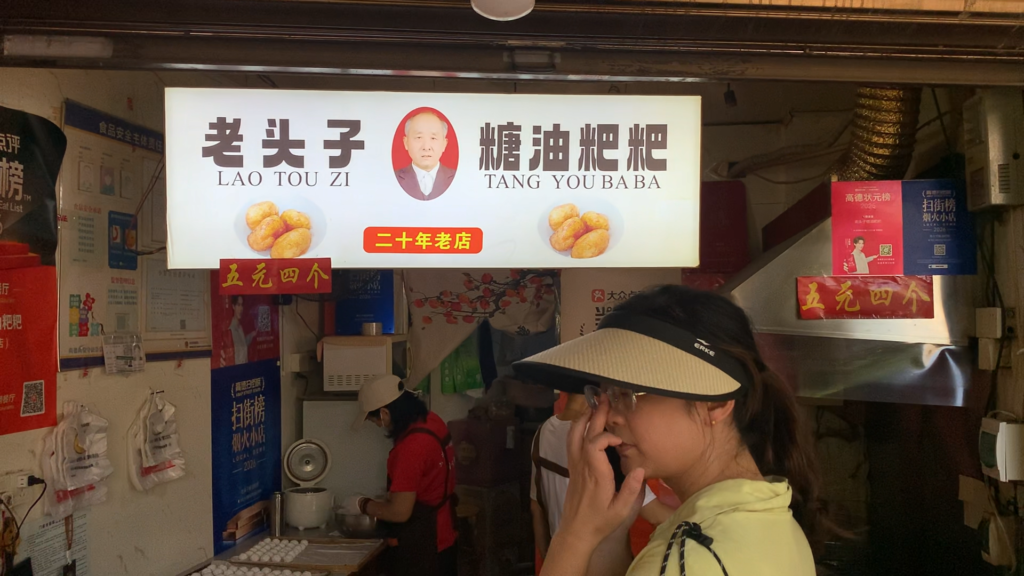
Stop 5: Laotouzi tangyoubaba, a twenty-year-old sugar-oil rice cake stall
Stop five was Laotouzi’s tangyoubaba (老头子糖油粑粑, tángyóu bābā). Laotouzi means “Old Man,” and this stall has been here for twenty years.
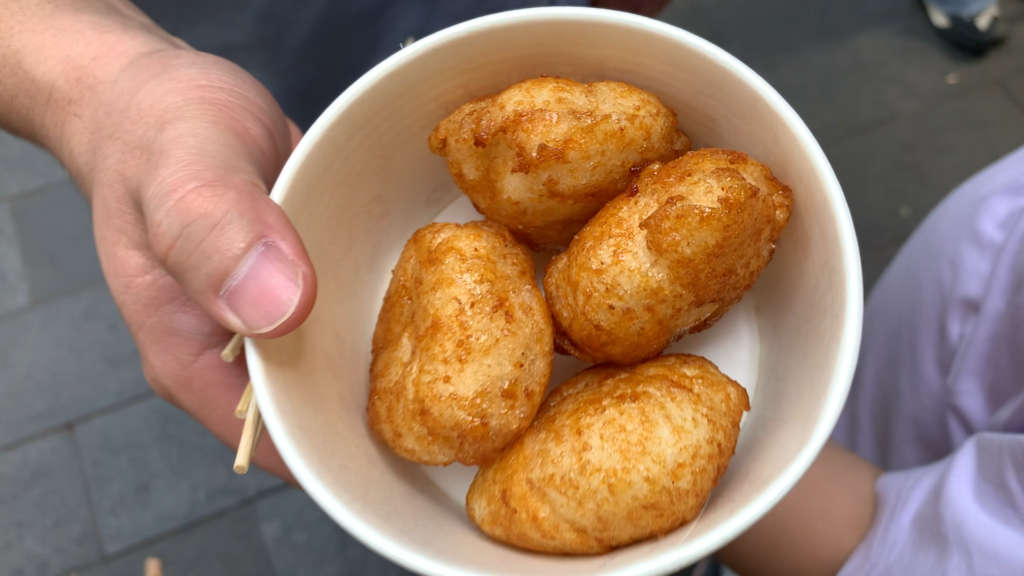
It’s one reason my husband wanted to come back. Last time we visited, the Old Man himself was still working here, and my husband came this time partly hoping to see him again. But today, only two women were busy inside the stall. We had already eaten quite a lot by then, and without the Old Man, my husband didn’t really feel like eating anymore.
It was my daughter who said, “Let’s try it anyway.” So we ordered one portion: 5 yuan for 4 pieces.
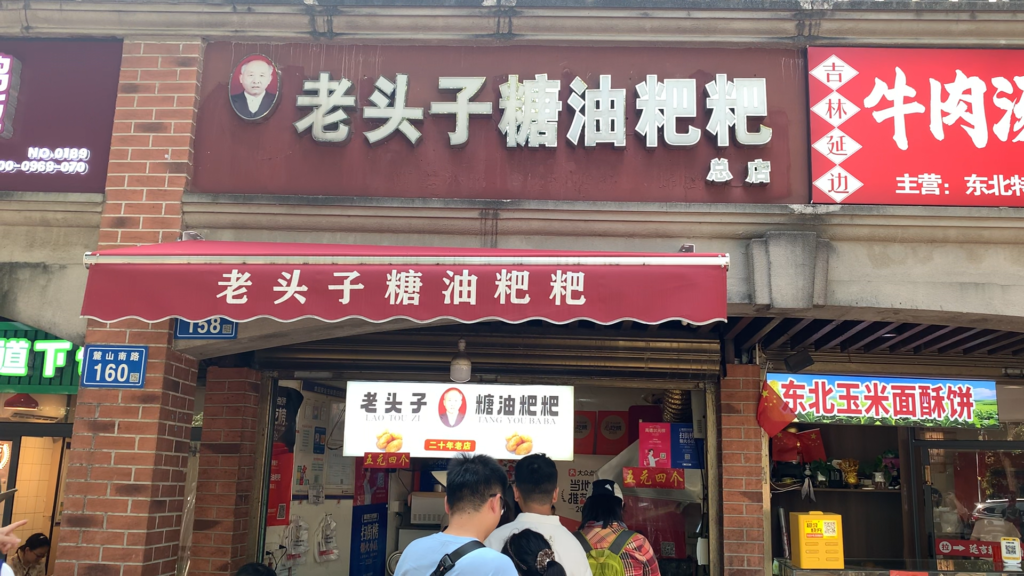
Tangyoubaba are balls of glutinous rice, fried in oil and rolled in brown sugar. They’re sticky, chewy and dangerously hot, crispy outside and soft inside. I’m trying to lose weight, so I only had one bite, and my husband and my daughter finished the rest.
It reminded me that on a street like this, a place is never only about the food. It’s about the people you remember behind the counter.
Cost so far: 52 yuan.
Stop 6: Dragon fruit and coconut shuangpinai
For the real dessert, we chose shuangpinai (双皮奶, shuāngpínǎi), a double-skin milk pudding, topped with dragon fruit and coconut jelly, 9 yuan. It’s smooth and creamy, a soft landing after all the fried and savory food.
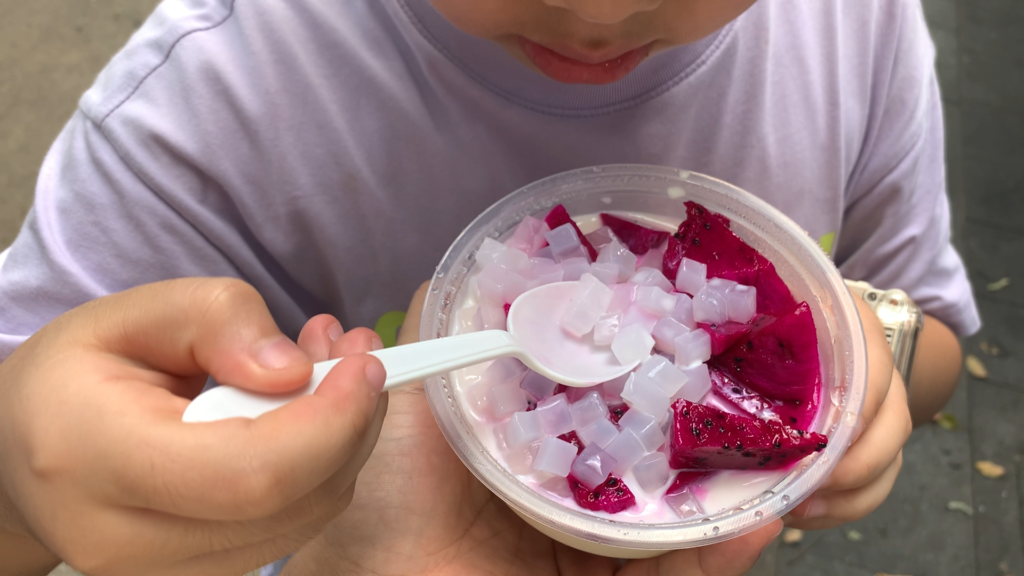
Dessert after a spicy, savory meal is like fire meeting ice. It doubles the bliss.
Cost so far: 61 yuan.
Stop 7: The encore pie
And then something happened that I did not expect. After everything we’d eaten, my daughter said she wanted another preserved-greens pie. Another one! Out of everything we tried, that is the one she chose to come back for.

As a parent, that’s the best review I could ask for. A child doesn’t politely pretend. If she wants a second one, it’s good.
Final cost: 69 yuan.
The total: what college food in China really cost us
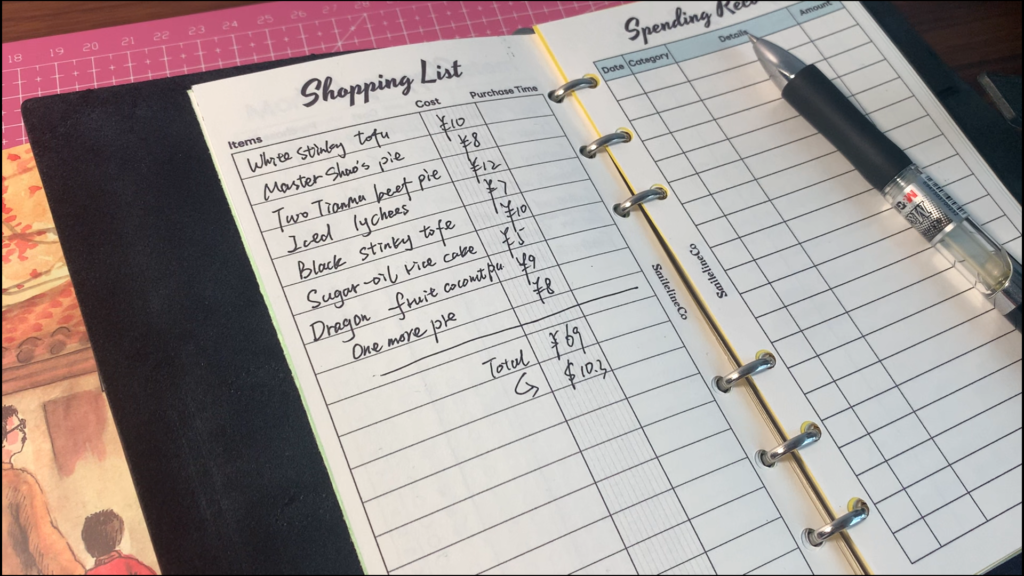
Let’s add it up: white stinky tofu 10, Master Shao’s pie 8, two Tianma beef pies 12, iced lychees 7, black stinky tofu 10, sugar-oil rice cakes 5, dragon fruit coconut pudding 9, and one more pie for my daughter, 8. The total is 69 yuan.
So, back to the question we started with: what does college food in China cost? On this street, every item we ordered cost between 5 and 10 yuan. Split three ways, our big lunch came to 23 yuan each. We’re not students, and food is only part of a student’s budget, but it gives you a real sense of what the cost of food in China looks like next to a campus.
The real value, though, isn’t the price. It’s a few hours when three people walked slowly, shared everything, and every few minutes someone said, “Try this.”
What this Chinese street food taught me
If you’re new to Chinese street food, here are the little things I’d tell a friend before visiting:
- Walk first, then choose. Most snack streets let you see the whole lineup before you commit.
- Share everything. Small portions mean you can taste more when you split them.
- Look at the price signs. Many stalls list portion sizes and prices clearly, like Doufu Susu’s 8 yuan for six pieces or 10 yuan for nine.
- Sweet and spicy belong together. In Hunan, a very strong flavor and a very sweet one often share the same evening, and nobody finds it strange.
- Go at noon if crowds bother you. Our evening visit was far too crowded, and lunchtime felt much calmer.
- Write the prices down. Jotting down every price on the spot is the only reason I can tell you exactly what this lunch cost. If you’d like to do the same with your own food money, I made a free spending record printable for exactly that.
If you’d like to see where Chinese families buy everyday ingredients, I also visited a wet market in China with my husband. And if you’re curious about what we cook at home, here’s An Ordinary Family Dinner in China. Maybe you like this one: Our $8.16 Family Dinner in China: The $10 Challenge.
For more of our Hunan outings, you can read about Huaguoyuan Farm, a family bike ride around Songya Lake, and National Day at my parents’ home.
Track your own food spending: two free printables
Writing down what we ate and what it cost turned a casual lunch into a real answer to “what does college food in China cost?” You can do the same at home, whether you’re planning a trip, feeding a family, or just curious where your money goes.

- Free spending record printable: a simple way to see where your money actually goes, from snacks to groceries to everything else.
- Free printable shopping list template: an A4 and A5 (personal size) list for smarter grocery trips, so you buy what you planned instead of what you spotted.
From the SmilelineCo shop
If you’d like to go a step further, these printables fit the story of this post best:
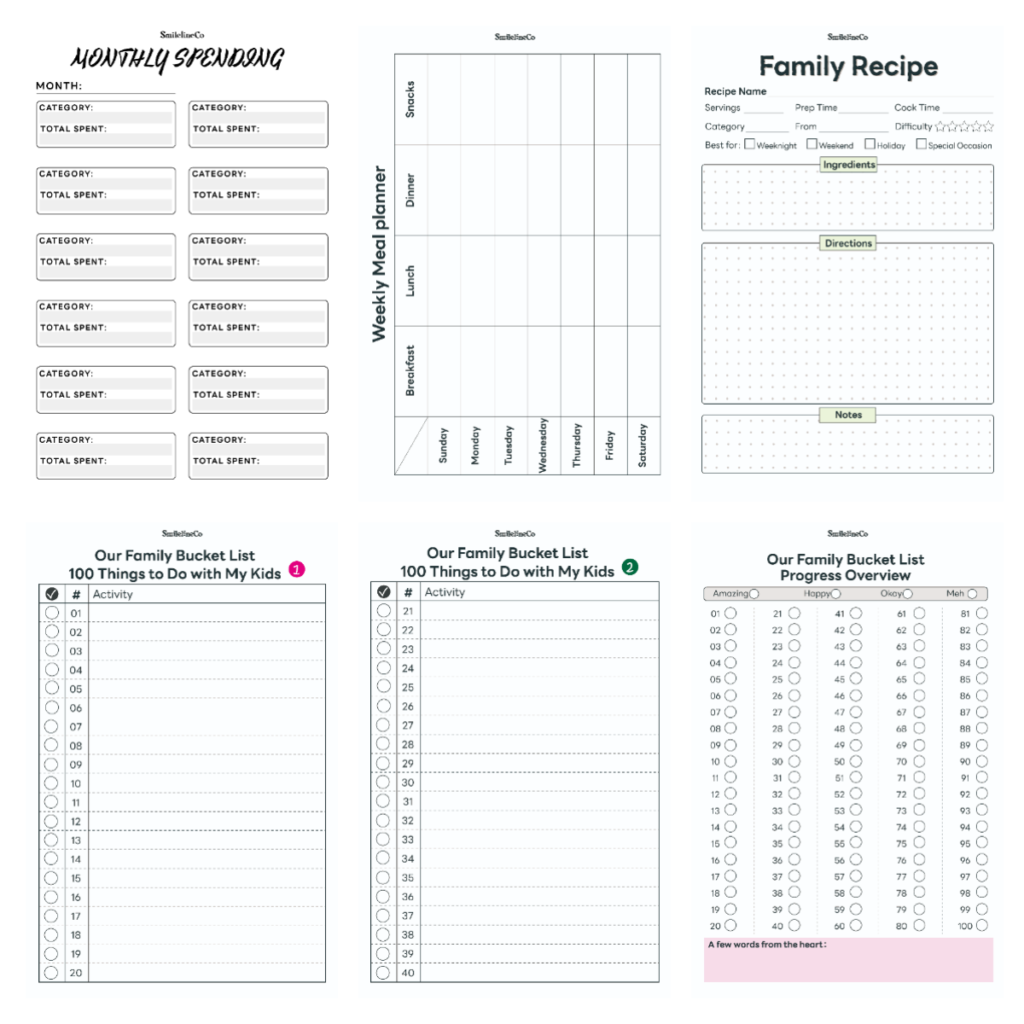
- Monthly Spending By Category printable: see how much of your month goes to food compared with everything else.
- Weekly Meal Planner printable: plan breakfast, lunch and dinner for the week, then shop from your plan.
- Family Recipe card printable: a keepsake page for the dishes your family loves, like a home version of meicai kourou.
- Our Family Bucket List: 100 things to do with your kids, and a snack street lunch is a good one to tick off.
Bring these flavors home: snacks and gear
This post contains affiliate links. If you buy through them, I may earn a small commission at no extra cost to you. Packaged versions will never taste exactly like a freshly fried snack from a street stall, but they’re a good way to get close, and availability varies by country and seller.
Ready-to-eat versions
- Changsha-style black stinky tofu snack packs. Look for packs labeled “Changsha stinky tofu” or “black classic stinky tofu.” They’re a packaged snack rather than freshly fried, but the closest flavor you’ll find overseas. Asian grocery apps like Weee! list several brands.
Cook-at-home ingredients
- Glutinous rice flour and dark brown sugar for a home attempt at tangyoubaba. Look for glutinous (sweet) rice flour, such as Erawan or Mochiko, plus dark brown sugar.
- Meicai (preserved mustard greens) or canned meicai kourou. Use the greens for your own braised pork belly, or look for canned braised pork belly with preserved vegetables when you want a shortcut.
- Hunan chopped chili and chili crisp. Hunan food is famous for its heat, and chopped chili (duojiao, 剁椒) is a classic Hunan flavor. Chili crisp, like Lao Gan Ma, is an easy everyday add-on.
- Glass pudding cups and canned lychees for a home version of shuangpinai and iced lychees. Chill the lychees well and serve them in their syrup with ice.
Read and carry
- Revolutionary Chinese Cookbook: Recipes from Hunan Province by Fuchsia Dunlop. A Hunan-focused cookbook with recipes and stories from the region, published by W.W. Norton. Stock varies by retailer.
- Reusable travel chopsticks. A small set in your bag is handy if you’re traveling and eating street food.
FAQ
What does college food in China cost?
On the snack street we visited, every item cost between 5 and 10 yuan. Our lunch of seven snacks plus one repeat order cost 69 yuan for three people, or 23 yuan each, about US$3 per person.
What is stinky tofu in China?
Stinky tofu, choudoufu (臭豆腐), is fermented tofu with a very strong smell, usually deep-fried and served with sauce. Most people say the smell is stronger than the taste. In Changsha the classic version is black and crispy, and locals often call it chou ganzi (臭干子).
What is tangyoubaba?
Tangyoubaba (糖油粑粑) is a Changsha street snack made of glutinous rice balls that are fried in oil and rolled in brown sugar. They’re sticky, chewy and very hot when fresh, so wait a moment before the first bite.
What’s the difference between black and white stinky tofu?
We tried both. The black one from Luo Jia is the Changsha classic: fermented brine, deep-fried until dark and crispy, then covered in sauce. The white one from Doufu Susu has a crunchy shell and a very tender inside, and you dip it in sauce after poking a small hole in it. My husband and I preferred the black one, and my daughter preferred the white.
When is the best time to visit a Chinese university snack street?
For us, noon was much better than the evening. Our evening visit was so crowded that we could hardly move, while lunchtime was calmer and let us take our time at each stall.
Final thoughts on college food in China
Seven snacks, one repeat order, 69 yuan, and a lot of “try this.” That’s our answer to what college food in China costs, at least on one noon on one street. If you ever visit a Chinese university snack street, come hungry, and go stall by stall.
If you enjoyed this, watch the full video on my YouTube channel, Smile in China, and tell me in the comments: which street food would your family order a second time?
A little note from SmilelineCo:
Printables, graphics, and design elements on this site are created by Smile of SmilelineCo and are for personal use only. Please don’t alter them, resell them, or redistribute them, for free or for profit, without written permission from me. If you’d like to share something with a friend, family member, or your community, please share the link to this blog post or to the shop page instead of the files themselves. Thank you for supporting my shop. Wishing you a wonderful life. ❤️