Autumn Break in China: A Real Day With My Family (Day 1)
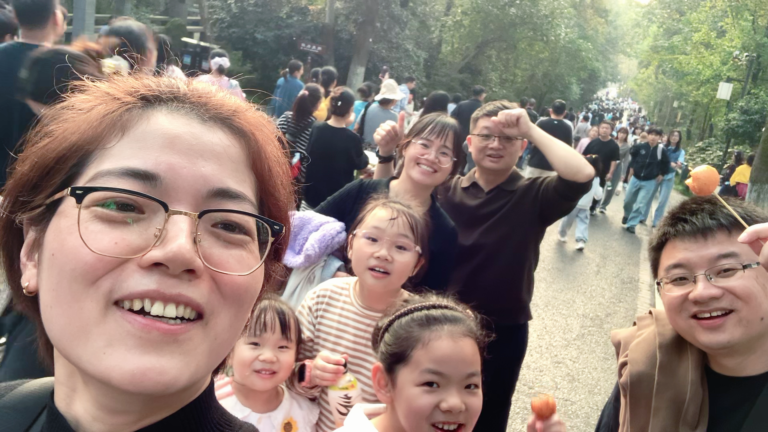
Autumn break in China is brand new for our family. This year, for the first time, my daughter’s school gave her a few days off in November, so I filmed the whole first day, from a bowl of breakfast noodles to the last shopping bag.

Nothing dramatic happens in this post. We eat, tidy up, squeeze in some work, cook lunch, and go shopping for birthday gifts. But ordinary days are the ones I most want to remember, and I think they show what daily life in China really looks like.
Disclosure: This post contains affiliate links. If you buy through them, I may earn a small commission at no extra cost to you. As an Amazon Associate, I earn from qualifying purchases.
Prefer reading? Here is the full story of our first autumn break in China, plus some context about why China is adding these new school breaks.
What Is Autumn Break in China?
In many places, Chinese primary and middle school students used to rely on two long holidays, winter and summer vacation, plus the usual public holidays. Spring and autumn breaks add a few more days off, usually in April and November.
The idea is not completely new. According to Sixth Tone, Hangzhou piloted it back in 2004, and the rollout sped up in 2025 when central authorities urged more schools to adopt it. By now, at least 15 provinces have introduced a spring and autumn break in China’s compulsory education schools, along with many cities elsewhere. Each place sets its own dates, and the breaks usually last four to five days.
Where we live, this is the first year of the system. Our autumn break is three school days, joined to the weekend, for five days in total. So if you are wondering what an autumn break in China looks like in real life, this is ours.
Some cities also waive entrance fees at tourist spots for students, and some encourage employers to give parents leave on the same days. We did not travel this time. For us, the first day of the autumn break in China meant a slow, ordinary day at home and around town.
Why I Am Filming Our Life for Ten Years
This is my 11th video, and I have only been sharing our everyday life for about a month. When I started, I never expected to enjoy filming this much.
Recently I read a sentence that stayed with me: “Recording life is how ordinary people write their own history.” It made me realize that our meals, our errands, and the little things my daughter says are worth remembering too.
So I decided to give myself ten years, and filming our first autumn break in China felt like a good place to begin. Maybe in ten years my English will be more fluent, this channel will have a circle of familiar faces, and my daughter’s own children will be able to see what their mom was like when she was little.
If you are new here, you can also watch how we spent National Day in rural China or an ordinary family dinner in China.
Daily Life in China: A Slow Breakfast and a Tidy Home
My daughter was home, so we ate breakfast together: noodles with egg and green peas, and the smell alone made it a good start.
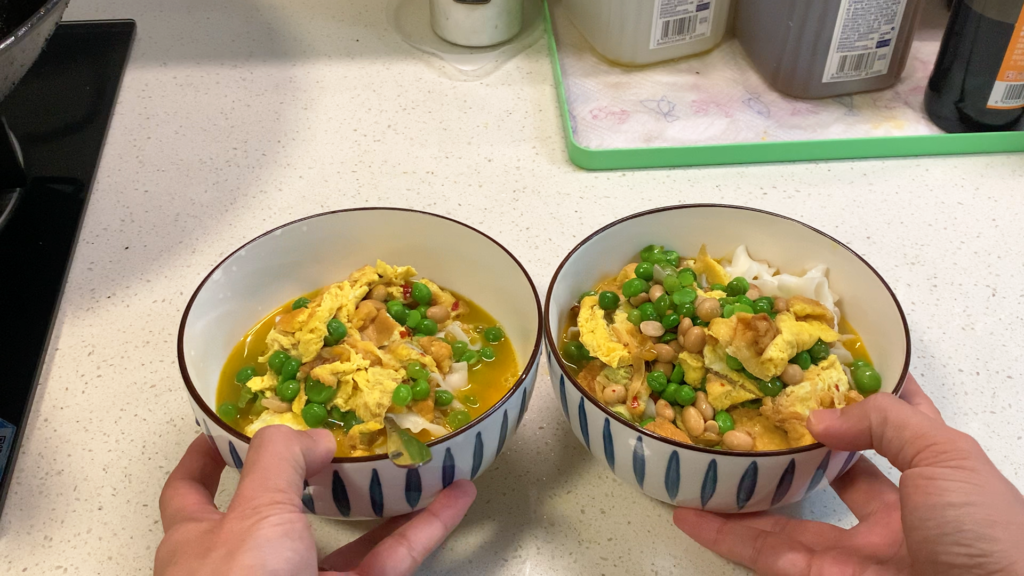
On normal school days our mornings run on a schedule. She gets ready for school, and I take care of my own tasks. During the autumn break in China, breakfast could be a little slower, and that small change makes a holiday feel like a holiday.
After breakfast, we each got busy. I started with housework, folding clothes and putting them in the wardrobe. On rainy autumn and winter days we usually dry laundry in a dryer. Traditionally, many Chinese families hang clothes on a balcony instead, so a dryer is a small modern convenience that helps when the weather stays damp.
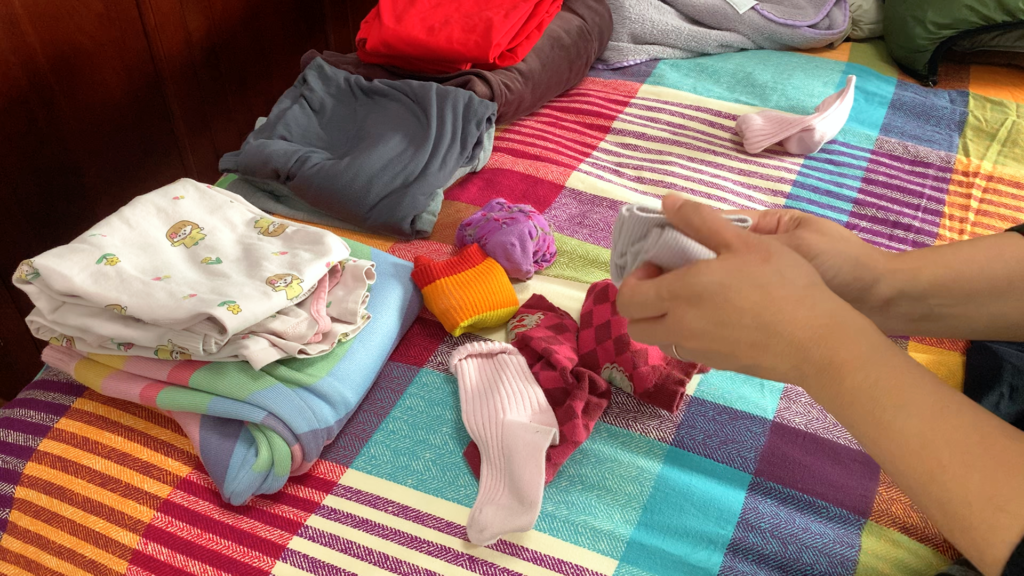
Housework never really ends. I finish one corner, and another one needs attention. Still, I like to tidy up before I start work. An orderly space helps me feel comfortable and focus.
Does a China School Autumn Break Mean No Homework?
Not always. Reports from some regions say education authorities have reminded schools to avoid written homework during the breaks, since an autumn break in China is meant to leave time for family and real-world experiences (Xinhua, via The Borneo Post). Every school and teacher handles it differently, though.
In our case, my daughter had one Chinese language (yǔwén, 语文) test paper to finish. Her teacher asked for 90 minutes, strictly timed. If a student goes over the time, even by one second, the parent records it in the top left corner of the paper.
She takes this seriously. She often works slowly, and she wants to improve. So she took out her stationery, I set the timer, and she got started.
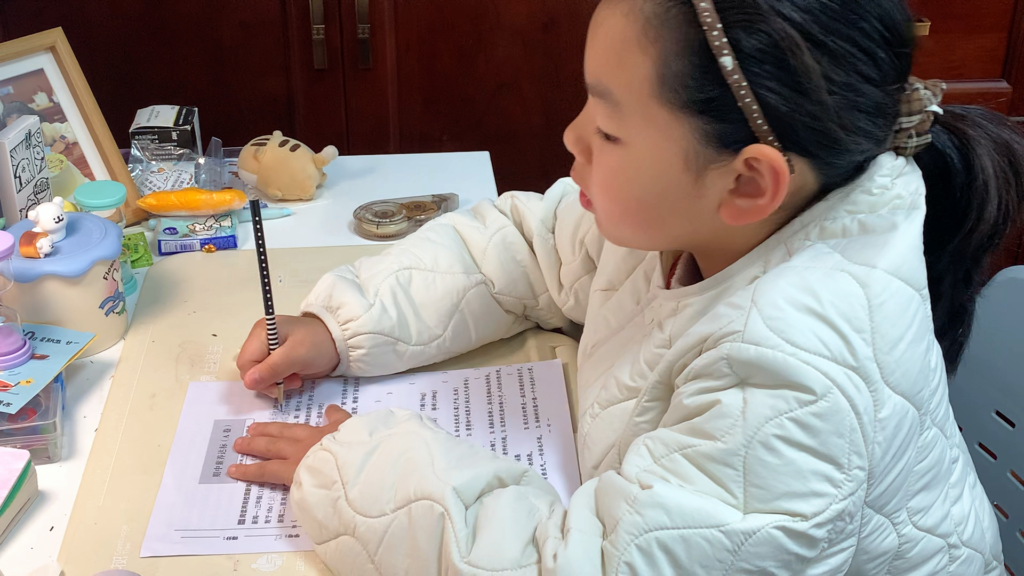
While she wrote, I finished tidying. Partway through, my mom sent a video call, and we chatted for a few minutes. When my daughter finally put down her pen, she was 17 minutes over time. I wrote it in the top left corner of the paper, and we agreed she needs more speed practice.
If your child also needs help seeing where homework time goes, a simple tracker can make it less stressful. My Daily Homework Tracker is a monthly page where kids track subjects, completion, effort, and accuracy. For timed work like this paper, a visual countdown timer for kids is also useful, because a child can see the time shrinking instead of hearing “hurry up.” And if your kid’s desk is a mess, a multi-compartment pencil case keeps stationery in one place.
Working From Home Between Everything Else
Once the room was tidy, I sat down to work on my website. Besides making videos, I run a small online business selling printable planner inserts. I design the products, update the site, and write blog posts like this one.
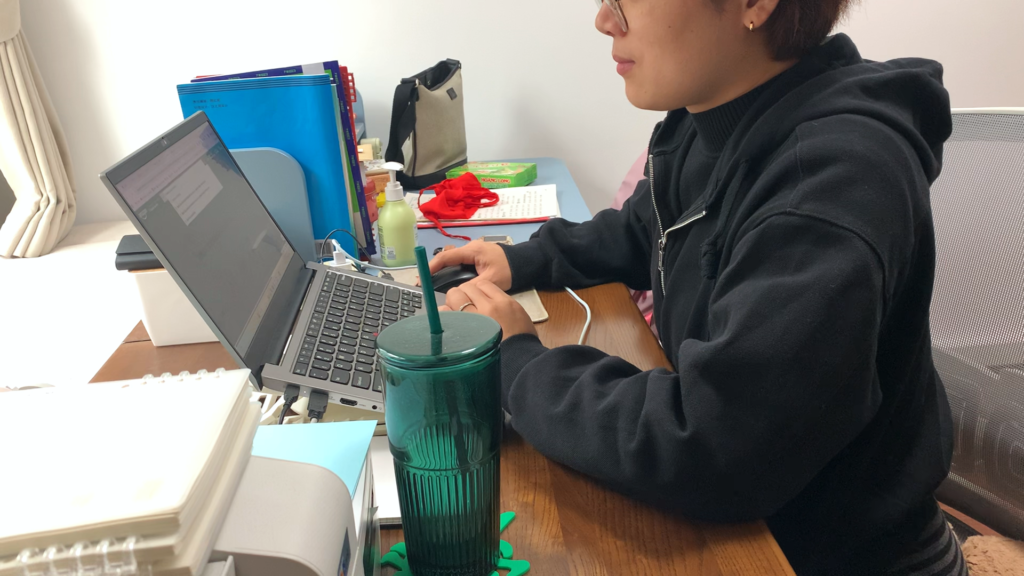
The best part is that I can do it from home and fit it in around family life. The hard part is that a small website does not show visible results every day. Designing one product, writing one article, or fixing one tiny detail feels small, but it all adds up over time. Even during an autumn break in China, a small website still needs a little care every day.
I hope I can take care of my family and fulfill myself too. If you are curious how I got here, I wrote about quitting my job at 32 in China, and you can browse my printable planner inserts or the full shop.
Stir-Fried Cauliflower With Cured Pork for Lunch
Before I knew it, it was lunchtime again. When my daughter is home, I have to watch the clock, because I cannot let her go hungry while I cook. First, I started the rice.
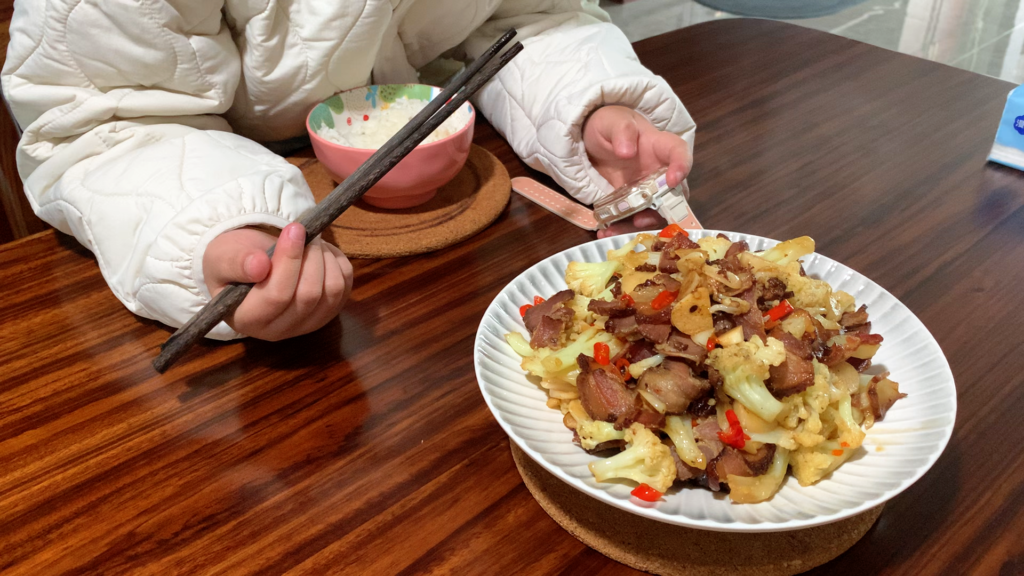
Today’s dish was stir-fried cauliflower with cured pork (花菜炒腊肉, huācài chǎo làròu). It goes beautifully with rice, which Chinese cooks call xià fàn (下饭), meaning a dish that makes you want more rice. My daughter loves cauliflower, and the smoky cured pork was a gift from my aunt.
What Is Chinese Cured Pork?
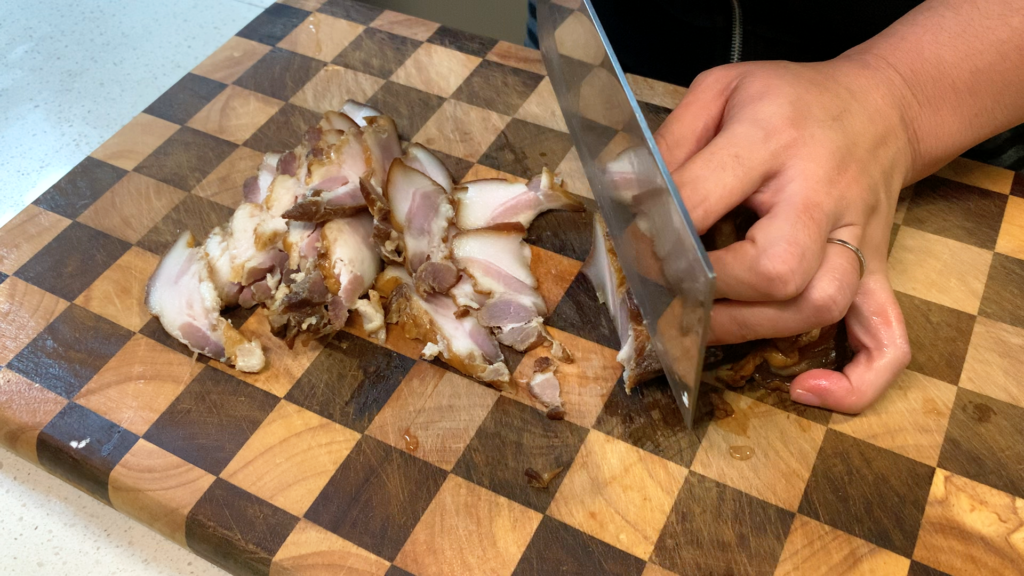
Làròu (腊肉) is pork that has been cured, smoked, and air-dried. Traditionally it is made in the colder months, and it is especially popular in Hunan, where we live. You usually just slice it and cook it.
Here is the rough flow in my video:
- Cook the rice first.
- Wash the cauliflower with a little starch and salt, then rinse. This helps clean it better.
- Slice the cured pork.
- Cook the cured pork first, so the extra fat melts out.
- Add onions and a bird’s eye chili (朝天椒, cháotiānjiāo) for color and aroma.
The leftover cured pork oil is fragrant, and it is great for stir-frying leafy greens the next time.

If you cannot find cured pork where you live, Chinese sausage or smoked bacon can be a smoky, salty stand-in, although the flavor is not identical. Chinese sausage (lap cheong) is usually the easiest to find online. A carbon steel wok also makes stir-fries like this much easier.
I have noticed that I enjoy filming cooking more and more. I used to rush to finish the food. Now I notice the color of the vegetables, the sound in the pan, and the steam rising.
An Old Saying About Everyday Life
There is a Chinese saying about daily life: 柴米油盐酱醋茶 (chái mǐ yóu yán jiàng cù chá), meaning firewood, rice, oil, salt, soy sauce, vinegar, and tea. It lists the small things a household needs every single day. Three meals a day, through every season, that is what life is made of.
Lunch was simple. My daughter said it was delicious, and she read a book while she ate, which she likes to do.
If planning lunches wears you out, a Weekly Meal Planner covers breakfast, lunch, dinner, and snacks across all seven days.
Shopping for Two Grandpas’ Birthdays
Later in the afternoon, we headed out to the mall. Two dads in our family have birthdays on back-to-back days: my dad, and my father-in-law. My mom’s birthday is also this month, one or two weeks after my dad’s, so it is a busy month for celebrations.
Two Words for Grandpa
English has one word for grandpa. Chinese has two. My daughter’s maternal grandfather is her 外公 (wàigōng), and her paternal grandfather is her 爷爷 (yéye). Grandmothers work the same way: 外婆 (wàipó) and 奶奶 (nǎinai).
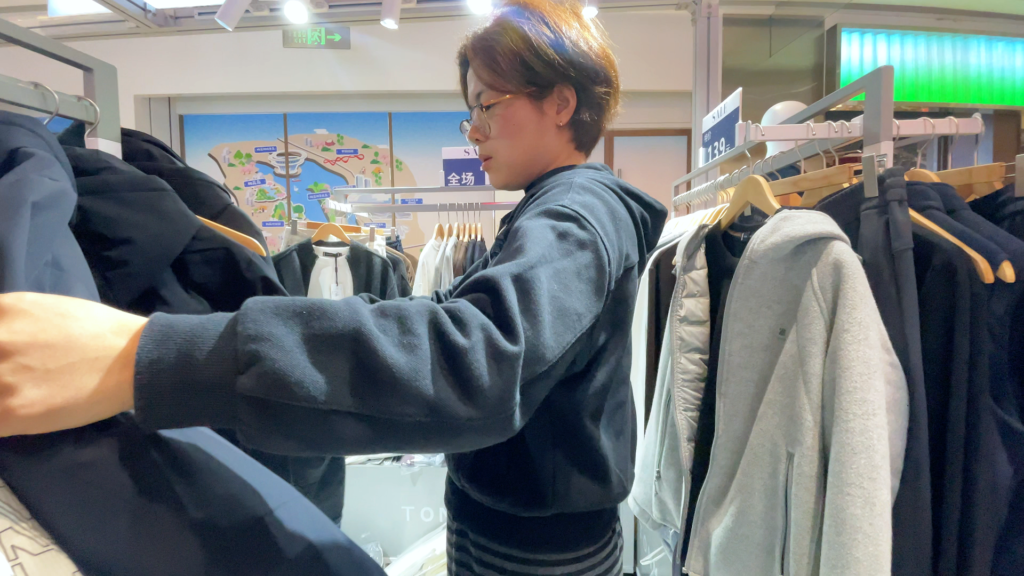
We wanted to buy both gifts in one trip, which is a handy use of an autumn break in China. My daughter and I wandered through the mall, looking for gifts for both dads. Picking gifts takes longer than you would think. For my father-in-law, I was not sure about the clothing size, so I bought the style that looked right and planned to have my husband try it on after work.
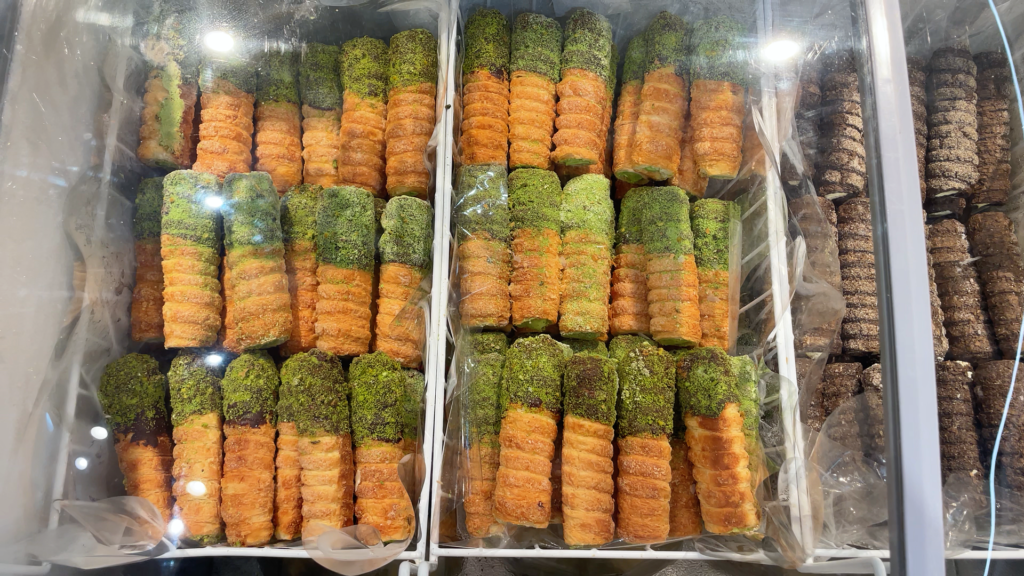
While we waited, I took my daughter to get an ice cream bread roll. A small sweet treat makes an ordinary day feel a little more special. I enjoyed mine so much that I decided to skip dinner.
Then we browsed a department store. My daughter accidentally tried a shower gel sample and had to go wash her hands, joking about it the whole time. Then her dad arrived and tried on his father’s clothes to check the size. Size confirmed, both gifts bought!


Clothes are a common gift for parents in China, but they carry a size risk, so trying them on matters. On a birthday, many families also eat longevity noodles (长寿面, chángshòu miàn), because the long noodles stand for a long life. Some Chinese families celebrate birthdays by the lunar calendar too, which I wrote about in my lunar birthday story.
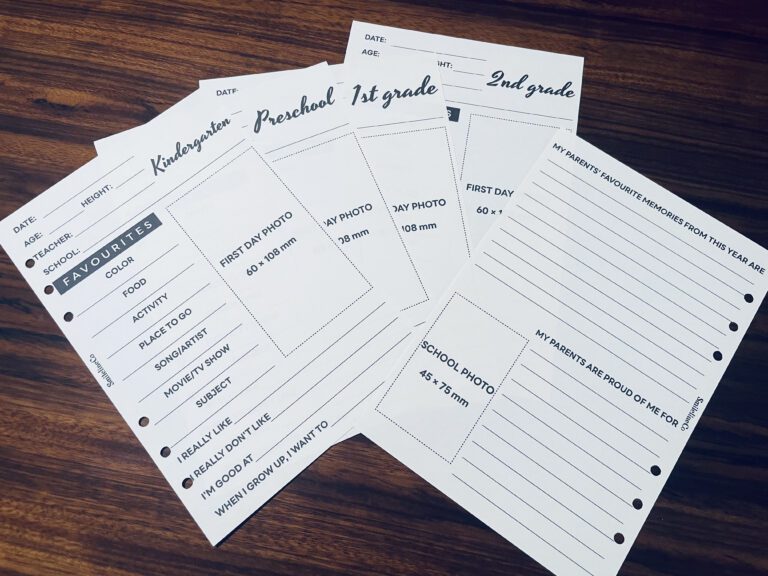
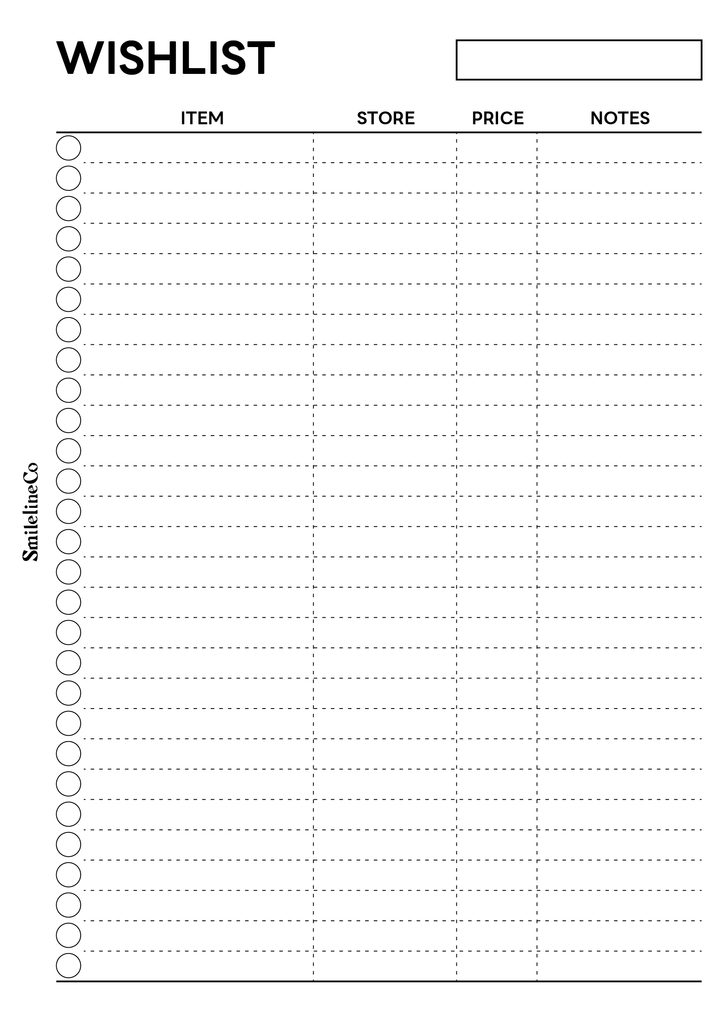
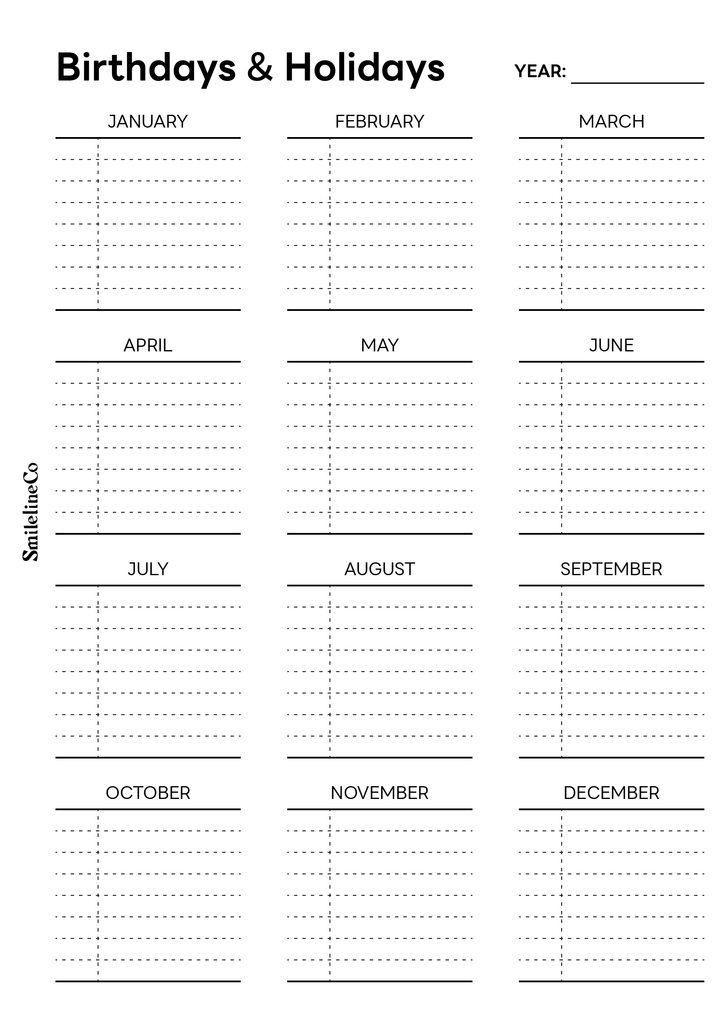
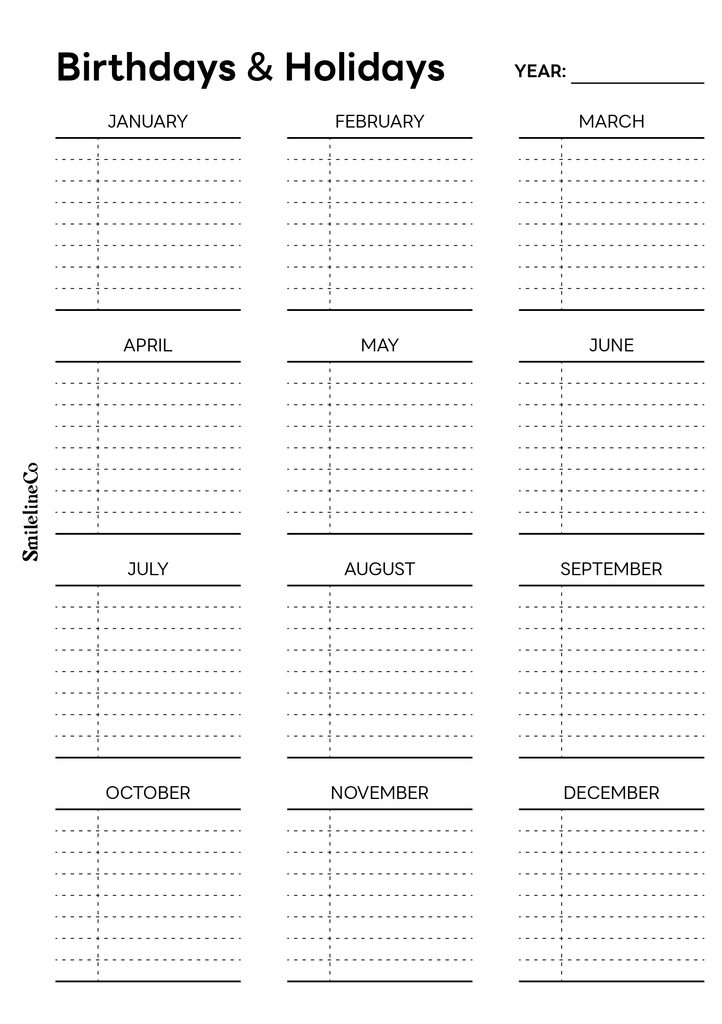
Two birthdays, two households, and a long list of sizes can feel like a lot. I use a Family Celebration Planner for gift plans, day schedules, and menus, a Birthdays & Holidays Yearly Calendar to see all twelve months on one page, and a Holiday Wishlist Tracker to note the item, store, price, and any notes like sizes.
What Happens on Day Three of Our Autumn Break in China
My father-in-law has other plans these next few days, so we will mail his clothes to him. We are visiting my parents the day after tomorrow instead. My dad’s birthday falls on a school day, so we are celebrating early, during the break.
I will share that trip in my next video. In the meantime, if you like family days out, you might enjoy our farm day out with kids or our family bike ride around Songya Lake.
Printables and Finds From Our Day
Here is everything I mentioned from our autumn break in China, in one place.
Printables from SmilelineCo
- Daily Homework Tracker: a monthly page for subjects, completion, effort, and accuracy.
- Family Celebration Planner: gifts, schedule, and menu for multi-family holidays.
- Birthdays & Holidays Yearly Calendar: twelve months on one page.
- Holiday Wishlist Tracker: item, store, price, and notes.
- Weekly Meal Planner: breakfast, lunch, dinner, and snacks for seven days.
- Autumn Bucket List: a fall checklist for the season.


Kitchen and homework finds
- Visual countdown timer for kids
- Multi-compartment pencil case
- Chinese sausage (lap cheong)
- Carbon steel wok
You can browse more in my printables collection.
FAQ: Autumn Break in China
How long is autumn break in China?
It depends on the city or province. Breaks are usually four to five days in November, including weekends. Ours was three school days plus the weekend, for five days in total.
Do all Chinese students get a spring and autumn break?
Not yet. The spring and autumn break in China is being rolled out step by step. At least 15 provinces have introduced it across all compulsory education schools, and some other cities have their own schedules, according to Sixth Tone. It covers primary and middle school students.
Do Chinese kids have homework during an autumn break in China?
It varies. Some education authorities have asked schools to avoid written homework during the breaks, but every school and teacher decides for themselves. Our daughter had one timed Chinese test paper.
What do Chinese families do during an autumn break in China?
Many families travel, visit museums or scenic spots, or see relatives. Our first day was simple: housework, schoolwork, lunch at home, and a shopping trip for birthday gifts.
Final Thoughts
Nothing extraordinary happened on our first day of autumn break in China, and that is exactly why I wanted to record it. The routines, the food, the little errands, and the moments in between are what a family life is made of. Maybe one day, these ordinary days will be the memories I treasure most.
Thank you for spending this day with us.
Your turn: Do kids where you live get an autumn break? Tell me in the comments. And if you could look back on one ordinary day from your past, which day would you choose?
A little note from SmilelineCo:
Printables, graphics, and design elements on this site are created by Smile of SmilelineCo and are for personal use only. Please don’t alter them, resell them, or redistribute them, for free or for profit, without written permission from me. If you’d like to share something with a friend, family member, or your community, please share the link to this blog post or to the shop page instead of the files themselves. Thank you for supporting my shop. Wishing you a wonderful life. ❤️