How to Get a Passport in China: My Real Experience (2026)

How to get a passport in China is something many people outside the country may be curious about. I recently applied for my second Chinese passport, and this time the process felt much easier than I remembered.
My application fee was ¥120 RMB, I booked my appointment on my phone, and I collected the finished passport from a self-service machine after seven working days. That was my experience applying in the city where my household registration (hukou) is registered.
I filmed the day I went to collect it, along with a few ordinary moments from home. So this is not a complete official application tutorial. It is a personal account of what I did, what I noticed, and how a simple errand became part of an ordinary day in Hunan, China.
Affiliate disclosure: This post contains affiliate links. If you make a purchase through one of these links, I may earn a small commission at no additional cost to you. I only include products that are relevant to the story or that I believe may be useful.
A Quick Note: This Is My Personal Experience
I am a Chinese citizen, and I applied for an ordinary passport in the city where my hukou is registered.
The word hukou (户口) refers to China’s household registration system. It records a person’s registered place of residence and is used in a range of public services and administrative processes. For passport applications, the location where you apply can affect the official processing time.
This article is not an official guide, and my experience should not be taken as a guarantee that every city or applicant will follow exactly the same steps. Application arrangements, appointment systems, collection methods, and processing times can vary. Always check with the local Exit-Entry Administration office before you go.
A Slow Start to Passport Pickup Day
It was passport collection day, but my morning began in a very ordinary way. I got up, made the bed, washed up, and started getting everyone ready.

In Hunan, autumn and winter mornings can feel quite chilly indoors. Many homes in southern China do not have the kind of central heating that is common in some colder countries, so a warm duvet becomes one of those small comforts you really appreciate. As the weather gets cooler and drier, I also find myself reaching for facial moisturizer more often.
We were running a little late. I helped my daughter get ready for school, brushed her hair, and grabbed a quick breakfast before heading out. That morning, I had a vermicelli-filled bun. It was much spicier than I expected, but delicious. Hunan food is known for its bold flavors, and in my home province, chili is never very far away — even at breakfast.
After dropping my daughter off at school, I went on to take care of my own business.
If you enjoy these small details of everyday life here, you might also like my story about buying a week’s worth of vegetables in China for about $22. It is another ordinary day in Changsha, with a little look at how local families shop.
Chinese Passport Renewal: Why I Had to Apply in Person Again
This is my second Chinese passport. Both of my passports have been valid for ten years.
My first passport expired in February this year. I had planned to renew it online before it expired, but I forgot. By the time I remembered, I had to go through the in-person application process again.
To be honest, I had not travelled overseas during the ten years I held my first passport. I had visited Hong Kong, but for mainland Chinese residents, travel to Hong Kong generally involves a separate permit rather than an ordinary passport. Even so, I like having a valid passport ready. You never know when an opportunity to travel might come along.
This was also a reminder to keep important dates somewhere visible. If you tend to forget renewal dates, a simple calendar or planner can help. My Monthly Planner Printable includes an important-dates section alongside monthly goals and a schedule, so reminders do not have to live in a separate notebook.
How to Get a Passport in China: The Process I Followed
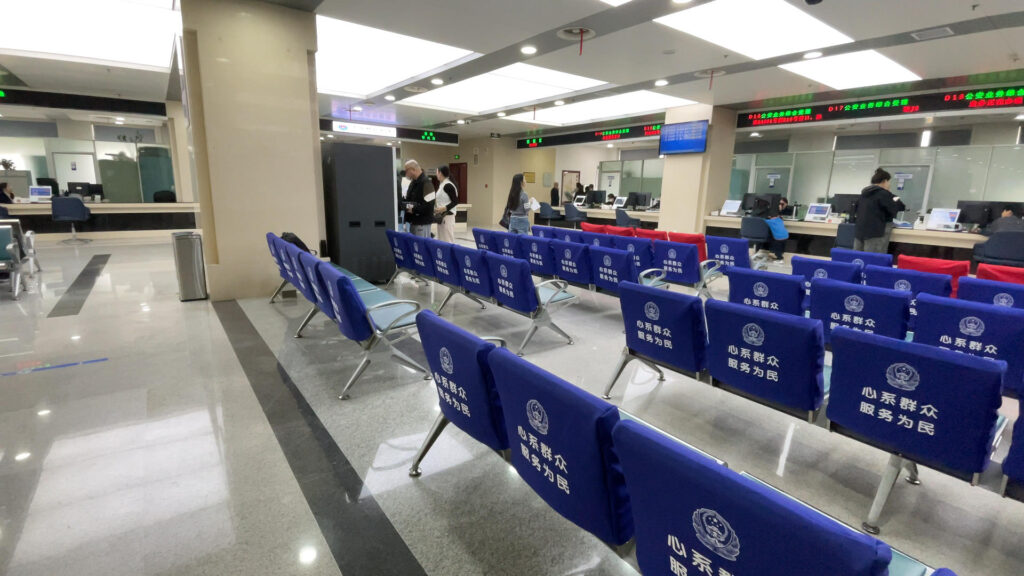
Here is how my China passport application went, based on what I did:
- Book an appointment on your phone. I used the online appointment service to choose a time and a location.
- Go to the selected service center. At the office, I completed the required information at the self-service area.
- Have your photograph taken. The photo was taken at the service center.
- Take a queue number. I waited until my number was called at the service counter.
- Pay the application fee. I paid ¥120 RMB.
- Keep the receipt. It showed the collection date and the information I needed for pickup.
The application visit itself took less than 30 minutes for me. I returned seven working days later to collect the passport.
The official National Immigration Administration service information lists the ordinary passport fee as ¥120RMB per passport. It also states a processing time of seven working days for applications made at the applicant’s place of household registration, and 20 days for applications made in a different province. These are official service time limits, not a promise that every local situation will be identical. Check the latest local instructions before applying.
Official reference: National Immigration Administration — Ordinary Passport Issuance Service Guide
Here is a quick summary of my own experience:
| Detail | My experience |
|---|---|
| Appointment | Booked on my phone |
| Application location | City where my hukou is registered |
| Fee | ¥120 RMB |
| Time at application visit | Less than 30 minutes |
| Processing time | 7 working days |
| Collection | Self-service pickup machine |
| Passport validity | 10 years |
Passport Processing Time in China: 7 Working Days or 20 Days?
The location of your application matters.
According to the National Immigration Administration’s published service guide:
- Applying where your hukou is registered: the stated processing time is seven working days.
- Applying in a different province: the stated processing time is 20 days.
Notice that the second period is described as 20 days, not 20 working days. Special circumstances and local arrangements may affect the actual timeline, so do not leave your application until the last minute if you have a planned trip.
I applied in the city where my hukou is registered, so my waiting period was seven working days.
Self-Service Passport Pickup
On collection day, I arrived around midday. The service center was fairly easy to navigate. I even noticed that the restrooms were simple and clean — a small detail, but one that made the public building feel well maintained.

The application area had people completing forms, taking photos, and waiting for their queue numbers. I also noticed a dedicated service counter for older visitors. Public service centers in China often have different counters or arrangements to help people with different needs, although the exact setup depends on the location.

I did not need to queue at a service counter to collect my passport. Instead, I went to the self-service machines on the first floor.
I checked the collection information on the screen, and it told me that my passport was in machine number 15.
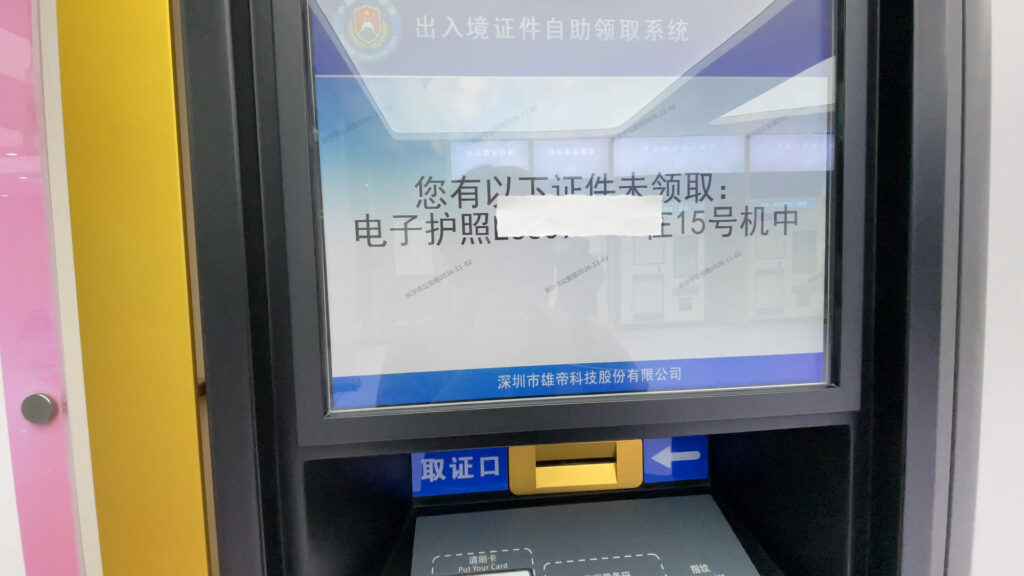
I found machine 15, followed the instructions, and collected my passport.
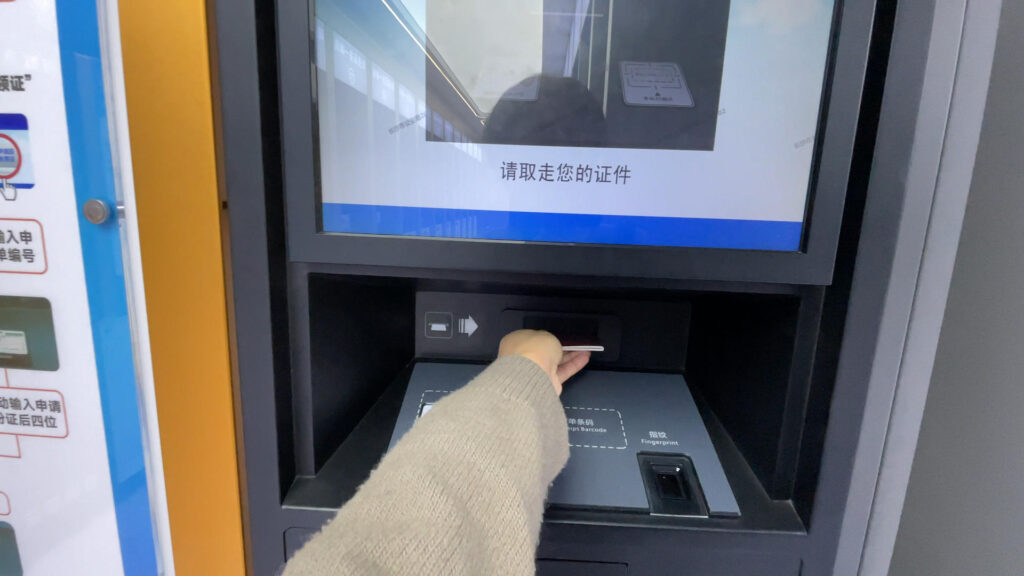
The experience reminded me of collecting a parcel from a self-service locker. It was quick and straightforward, at least in this service center. Not every city or office necessarily uses the same equipment, but I was pleasantly surprised by how convenient the collection process had become.
Then and Now: What Ten Years Changed
When I applied for my first passport ten years ago, I remember waiting three or four hours on the application day.
This time, my application visit and collection visit took less than an hour combined, excluding the seven-working-day processing period.
Of course, this is only a comparison between my two experiences. I cannot say that every passport office in China is now this quick. But for me, the difference was noticeable. A task that once took most of an afternoon felt much easier to fit into an ordinary day.
Little Things I Noticed on the Way Home
On my way home, I spotted a message written on a white car:
“Hope you have a great day today!”
It was such a small thing, but it made me smile. Sometimes an ordinary day gives you a tiny reminder to be kind, even when you are busy thinking about the next thing on your to-do list.
Back Home, a Late Lunch, and a Reminder to Myself
By the time I got home, it was already around 2:20 in the afternoon. That was when I realized I still had not eaten lunch. I grabbed two oranges to tide me over.
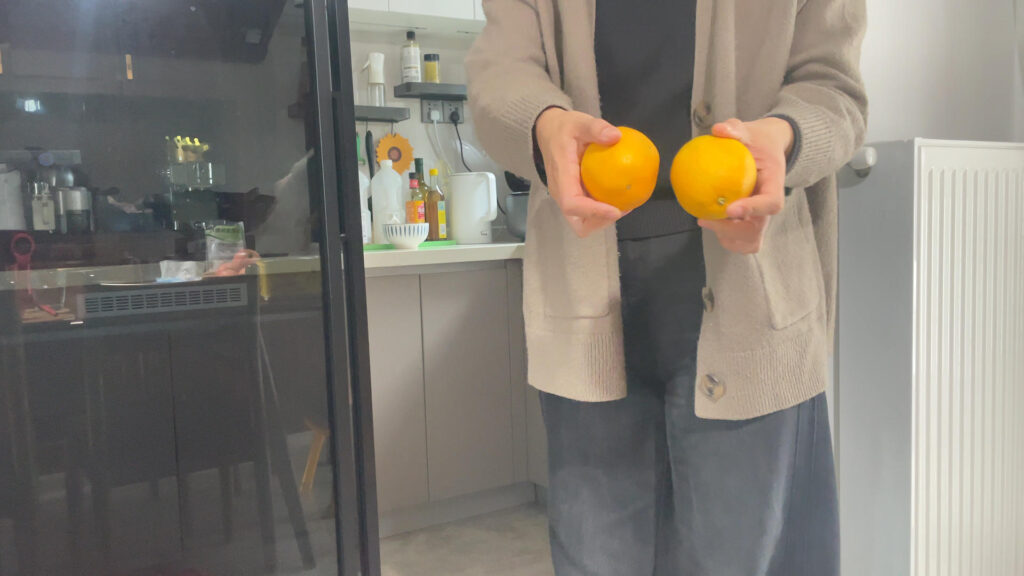
I have become quite used to being home alone during the day. If something needs doing, I do it. If I get hungry, I sometimes grab whatever is easiest — fruit, a snack, or something quick from the kitchen.
I know that is not the best habit. I know I should stop and make myself a proper meal. But when you work for yourself, work and daily life can become tangled together.
There is no clear clock-out time. There is always another website detail to fix, another article to write, another product to design, or another idea that I want to try. Even when I feel hungry, I sometimes tell myself, “Let me finish this one thing first.”
I imagine many self-employed people know this feeling. You keep promising yourself that once this busy period is over, you will slow down, eat properly, and take better care of yourself. But when you are building something of your own, there is always another task waiting.
Lately, I have been reminding myself of something:
We work hard to make life better, not to push life itself to the bottom of the list.
A business, a website, or a personal goal can always ask for more time. But our bodies and our lives cannot be put on hold until everything is finished.
I am still learning how to build something meaningful without forgetting the person who is doing the building.
A few small tools can help me make that intention more practical:
- My Monthly Planner Printable can help me give important tasks — including lunch breaks — a visible place in the day.
- A simple habit or routine tracker can help me notice whether I am making time for the basics, rather than only tracking work.
- A weekly plan can make it easier to see the difference between what truly needs to be done today and what can wait.
I do not want planning to become another way to pressure myself. I want it to help me make room for the parts of life that matter.
And when I do make time to cook, it is usually something simple and homey, like the meal in my post about an ordinary family dinner in China.
A Few Things That Make Everyday Life Easier
These are a few practical items that fit naturally with the things I mentioned in this story. They are suggestions, not things required for a passport application.
- Passport holder or travel document organizer : A simple way to keep a passport and travel documents together when you do travel.
- Compact document folder : Useful for keeping appointment receipts, forms, and other important papers in one place.
- Visual timer or desk timer : A gentle reminder to step away from the screen, take a break, or stop working through lunch.
- Insulated lunch container : Handy for preparing a meal ahead of time on days when work gets busy.
Helpful Printable Pages from SmilelineCo
This story also made me think about the small systems that help us remember what matters. If you use a paper planner, these are the most relevant pages currently available in my shop:
- Monthly Planner Printable | Goals & Schedule — combines monthly goals, a to-do list, important dates, a daily schedule, and a simple money-in/money-out section. It is useful for keeping appointments and everyday priorities visible.
- Daily Money Tracker Printable — a practical option if you like recording small daily money movements alongside your routines. Confirm the live product URL before publishing.
- Explore all SmilelineCo printables — browse pages for planning, tracking, family life, health, money, and everyday memories.
I design these pages for real life, not for a perfectly organized version of it. Sometimes a planner page is simply a place to write down one thing you do not want to forget.
FAQ: Getting a Passport in China
How much does an ordinary Chinese passport cost?
The official fee listed by China’s National Immigration Administration is ¥120 per ordinary passport. That was also the amount I paid.
How long does a Chinese passport application take?
The published service time is seven working days when applying where your hukou is registered. The stated time for an application made in a different province is 20 days. Local arrangements and special circumstances may affect the actual timeline.
Can I book a Chinese passport appointment on my phone?
I booked my appointment on my phone and selected a time and location. The exact online service and appointment process may differ by city.
Can you collect a Chinese passport from a self-service machine?
In my case, yes. I checked the collection information at the service center and retrieved my passport from machine number 15. Self-service collection may not be available at every office, so follow the instructions from your local Exit-Entry Administration office.
How long is a Chinese passport valid?
For an ordinary electronic passport, the validity period is generally ten years for applicants aged 16 or older, and five years for children under 16. Both of my passports were valid for ten years.
Final Thoughts
If you are wondering how to get a passport in China, my experience was fairly straightforward: I booked an appointment on my phone, completed the application in person, paid ¥120, waited seven working days, and collected the passport from a self-service machine.
But this day was about more than a passport. It was also breakfast at home, getting my daughter ready for school, a small errand, a kind message on a car, and the realization that I had almost forgotten to eat lunch.
Those ordinary moments are a big part of life here. They are also a reminder to me that building a business should make room for living, not replace it.
If you would like to see more everyday life in Hunan, you might enjoy my family bike ride around Songya Lake in Changsha or our family day out at a farm in Changsha.
Thanks for spending a little time with me. ❤️
Please note: This article reflects my personal experience and is not official legal or administrative advice. Passport requirements, appointment systems, fees, processing times, and collection options can change. Check the latest information with your local Exit-Entry Administration office before applying.
A little note from SmilelineCo:
Printables, graphics, and design elements on this site are created by Smile of SmilelineCo and are for personal use only. Please don’t alter them, resell them, or redistribute them, for free or for profit, without written permission from me. If you’d like to share something with a friend, family member, or your community, please share the link to this blog post or to the shop page instead of the files themselves. Thank you for supporting my shop. Wishing you a wonderful life. ❤️