How to Track Your Mood: A Simple Daily Mood Check-In
You probably know what it feels like to have a “bad week.” You were tired. A little stressed. Maybe more impatient than usual. You didn’t sleep particularly well.
But if someone asked you, “What actually happened?”, you might struggle to give them a clear answer.
Was Monday the problem? Was it work? Too little sleep? Too much screen time? A difficult conversation? Or were you simply having a rough few days?
This is one reason mood tracking can be useful.
Instead of relying on a vague memory of how your week felt, you create a small record of what you actually experienced. And you don’t need a complicated journal or a 30-minute nightly reflection. You can start with two minutes a day.
A daily mood check-in is a short, repeatable pause to notice how you feel, give the day a simple rating, and capture one piece of context. Done consistently, it can make your emotional experience easier to observe instead of relying entirely on memory.
1. What Is a Daily Mood Check-In?
A daily mood check-in is simply a brief moment when you stop and notice your current emotional state. You might ask how you feel, how you would rate the day, what affected your mood, and what you may need tomorrow.
You might record:
- Your overall mood
- A specific emotion
- Your energy level
- A simple 1–5 rating
- Something that affected your day
- A short note about what happened
You do not need a long journal entry or the perfect emotion word. The goal is to create a small pause between experiencing your day and moving on to the next thing.
The American Psychological Association describes self-monitoring as keeping a record of behaviors, feelings, or other experiences over time. Its behavioral-health materials also provide daily mood-record formats for observing changes from day to day. This makes a simple check-in a practical self-observation habit, not a requirement to diagnose yourself.
There is no single “correct” way to track your mood. The goal isn’t to create perfect data. The goal is to become more aware of your own patterns.
2. Why Track Your Mood?
Your memory is useful, but it isn’t a perfect diary. When you look back on an entire week, one particularly stressful day can easily color your impression of the whole week.
Mood tracking gives you something different: a record you can actually look back at.
Over time, you may notice things you wouldn’t have noticed otherwise.
Maybe:
- Your mood tends to dip on Sunday evenings.
- You feel more irritable when you’re sleeping less.
- You have better days when you get outside.
- Certain work situations consistently leave you drained.
- You aren’t actually having “bad weeks”—you are having two difficult days surrounded by several perfectly normal ones.
Mood tracking doesn’t automatically explain why these things happen. But it can help you notice that they happen. And noticing is a useful first step.
3. Why Two Minutes Is Enough to Start
A habit only helps if you can actually keep doing it. A 30-minute journaling routine may sound useful, but it becomes difficult on busy evenings, during travel, or when you are simply tired.
Two minutes is deliberately small. You can attach the check-in to something you already do: after dinner, before bed, with morning coffee, or while planning tomorrow.
The point is not to spend more time analyzing yourself. It is to spend a tiny amount of time noticing yourself consistently.
4. How to Track Your Mood in 3 Simple Steps
You can make mood tracking surprisingly simple.
Step 1: Ask, “How do I feel?”
Don’t overthink the answer.
You might feel:
- Happy
- Calm
- Tired
- Anxious
- Frustrated
- Sad
- Excited
- Overwhelmed
- Neutral
You can choose one word, several words, or simply give your day a rating. The important thing is to pause long enough to notice your current state.
Step 2: Give Your Day a Simple Rating
If choosing an emotion feels like too much work, use a scale.
For example:
1 = Very difficult
2 = Not great
3 = Okay
4 = Good
5 = Really good
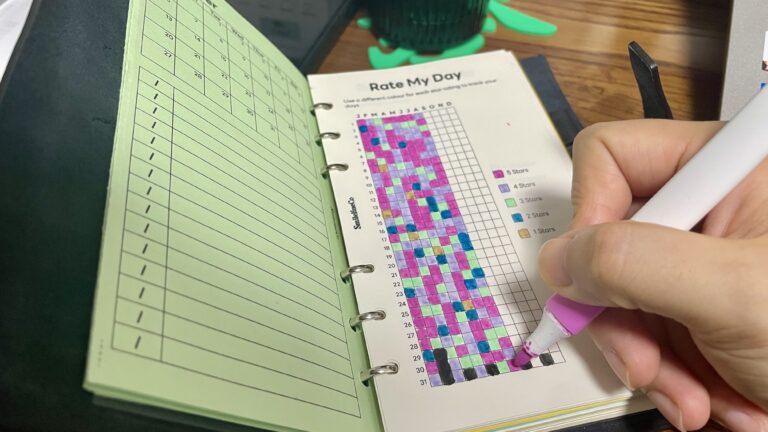
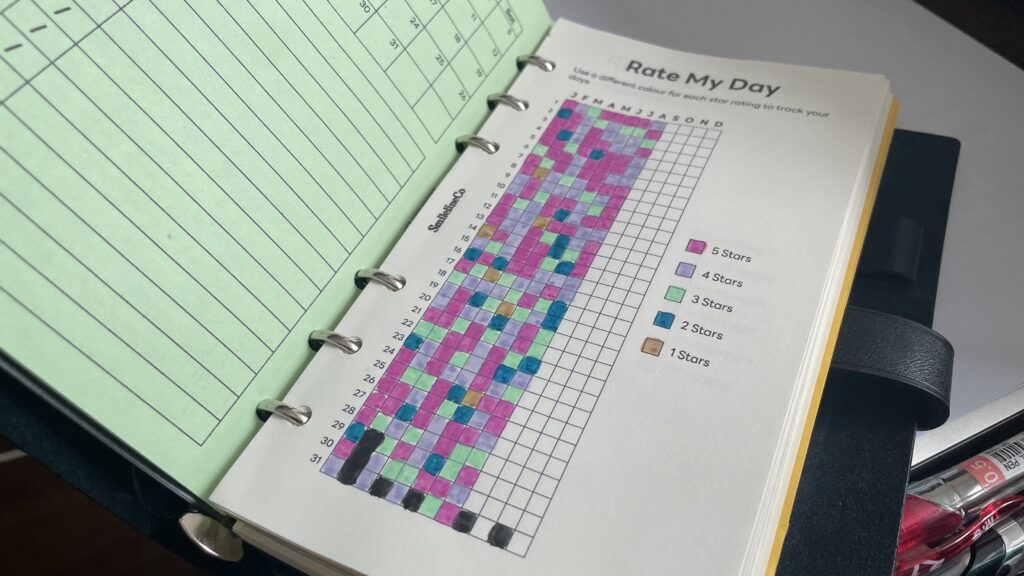
This is where a simple tool such as a daily rating tracker can be especially useful. You don’t have to explain everything. You simply record the overall feeling of the day.
If you prefer a quick visual system, our Rate My Day printable uses a simple 1–5 rating approach.
Step 3: Add One Small Note
This is optional, but it can become extremely useful later.
Write one short answer: What affected my mood today?
It could be:
“Busy morning.”
“Had lunch with a friend.”
“Didn’t sleep well.”
“Finished a difficult project.”
“Too much time online.”
You don’t need to write a paragraph. One sentence is enough.
5. How Often Should You Track Your Mood?
For most people, once a day is a great place to start.
You could do it:
- Before bed
- After dinner
- First thing in the morning for the previous day
- During another consistent part of your routine
The exact time matters less than making the habit easy enough to repeat.
The APA has also highlighted the value of regular reflective check-ins—essentially taking a moment to notice your emotional “weather” without judgment.
Think of it like checking the weather. You don’t ask: “Was yesterday objectively a good day?” You simply ask: “What was the weather like?”
Mood tracking works similarly. You’re observing rather than judging.
6. Don’t Turn Mood Tracking Into Another Chore
This is where many people make mood tracking harder than it needs to be.
They create a system with:
- 15 mood categories
- Sleep duration
- Water intake
- Exercise
- Food
- Social interactions
- Productivity
- Screen time
- Stress
- Gratitude
- Journaling
And by Day 4, the tracker feels like homework. You don’t need all of that.
Start with: Mood + rating + one note. That’s enough.
Once the habit becomes automatic, you can add more information if it genuinely helps you.
7. Mood Tracker or Simple Daily Rating?
There are two useful ways to approach this.
If you want more detail
Use a traditional mood tracker. You can record specific emotional states and gradually see which emotions appear most often.
Our Mood Tracker printable is designed around this idea, giving you a visual overview of your moods over time.
If you want something effortless
Use a simple daily rating.
Instead of asking: “What exactly am I feeling?”
you simply ask: “How was today?”
Then choose a number.
That’s the idea behind Rate My Day.
Neither approach is “better.” The best tracker is the one you will actually use.
8. What Should You Look for After a Few Weeks?
Don’t expect one or two days of information to reveal your entire emotional life.
Give yourself some time. After a few weeks, look back and ask:
What days consistently felt better?
What days consistently felt harder?
Do certain situations keep appearing?
Are there particular days of the week that stand out?
Do I notice any connection between my mood and my routines?
You don’t need to find a dramatic answer. Sometimes the most useful discovery is surprisingly ordinary.
“I thought I was stressed all week. Actually, Wednesdays were consistently the hardest.”
That’s information you didn’t have before. And once you have information, you can start asking better questions.
9. Don’t Try to Fix Every Bad Mood
This is an important part of mood tracking. A bad mood isn’t necessarily a problem that needs to be solved. Sometimes you’re simply tired. Sometimes something disappointing happened. Sometimes life is difficult.
The purpose of tracking isn’t to force yourself to feel positive every day. It’s to become more familiar with your own emotional landscape.
Think of it as moving from: “I don’t know what’s wrong with me.” to: “I’ve noticed something.” That is a much more useful starting point.
10. Start Small
If you’ve never tracked your mood before, don’t promise yourself that you’ll write a page every night for the next year.
Start tonight. Ask yourself: How do I feel? How would I rate today from 1–5? What affected my mood?
That’s it. Two minutes.
Then do it again tomorrow. And the day after that. Eventually, those tiny observations become something more valuable: a clearer picture of yourself.
And once you have enough observations, you can start looking for patterns—not just individual days. That’s where mood tracking becomes much more interesting.
11. Frequently Asked Questions
Is a daily mood check-in the same as journaling?
No. Journaling is open-ended and can be as long as you like. A daily mood check-in is structured and intentionally brief.
How long should a mood check-in take?
Two minutes is a practical starting point. If you want to write more, you can, but consistency matters more than length.
Should I track my mood every day?
Daily tracking can make patterns easier to see, but the best frequency is one you can maintain without becoming burdensome.
What if I cannot identify my emotion?
Use a simple rating or write “not sure.” Emotional vocabulary can develop over time; you do not need a perfect label to begin observing yourself.
Can a mood tracker diagnose a mental health condition?
No. A personal tracker is not a diagnostic instrument. If you are experiencing persistent or severe distress, seek help from a qualified professional.
Is mood tracking proven to improve mental health?
Evidence is mixed and depends on the population and type of intervention. Recent systematic-review evidence does not support treating mood monitoring as a guaranteed way to reduce symptoms, so it is better viewed as an observation and self-reflection tool.
Next: [What Is a Mood Tracker? Benefits, Ideas, and How to Use One]
Note: Mood tracking is a self-reflection and awareness tool, not a substitute for professional mental-health care. If you’re experiencing persistent or severe emotional distress, consider speaking with a qualified healthcare professional.